Minimalist
Slate
Urban Form: Carving from an Overmantel
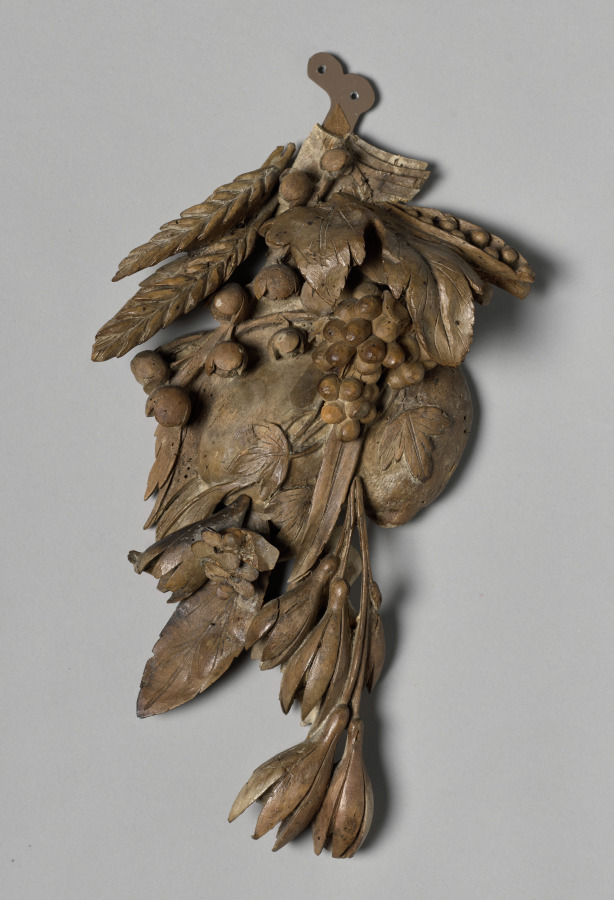
Structural Poetics: The Overmantel as a Blueprint for the 2026 Executive Silhouette
The overmantel carving, in its dual articulation of the *Udumbara* temple plaque and the *Fangyou* bronze vessel, offers a rare dialectical foundation for contemporary fashion architecture. At Addison Fashion, we do not interpret art as ornament; we extract its latent geometry and transpose it into wearable structure. This research delineates how the overmantel’s internal logic—its negotiation between organic flux and rigid containment—defines the 2026 executive silhouette with unprecedented precision. The result is not a nostalgic revival but a cold, materialist reading of two opposing forces: the breath of the sacred and the boundary of the ceremonial.I. Geometric Integrity: From Floral Suspension to Cubic Containment
The overmantel’s primary tension lies in its two constituent forms. The temple plaque presents an *unrooted* floral motif—the udumbara blossom—carved not as a relief but as a subtle undulation within the wood’s natural grain. Its geometry is *negative*: the flower exists as a void, a pause in the material’s surface, refusing any fixed contour. This is not a shape but an *anti-shape*, a spatial suggestion that resists measurement. Conversely, the *Fangyou* is a study in absolute cubic discipline. Its four faces are rigorously divided into horizontal bands, each containing a regimented pattern of taotie masks and cloud-thunder motifs. Every line is a declaration of order, every corner a right angle that anchors the object in terrestrial law. For the 2026 executive silhouette, we fuse these two geometries into a single garment architecture. The jacket’s shoulder line adopts the *Fangyou*’s cubic precision—a sharp, unyielding horizontal that visually squares the torso, creating a platform of authority. Yet the garment’s interior volume, particularly across the back and under the armhole, is carved with the plaque’s *negative logic*. We do not pad or build; we *excavate*. The fabric is cut to allow a subtle, hollowed ease—a “non-shape” that suggests the body’s presence without clinging to it. This is the overmantel’s first lesson: true structure is not additive but subtractive. The executive silhouette of 2026 is defined by what is *not* there—a void that reads as confidence, not absence.II. Material Transmutation: Wood’s Breath, Bronze’s Stasis
The overmantel’s material dialogue—wood as living witness, bronze as frozen order—demands a corresponding textile strategy. For the 2026 collection, we employ a double-faced wool that performs both roles simultaneously. The outer face is treated with a matte, mineral finish, evoking bronze’s patinated surface. This is not a literal metallic sheen but a *textural memory*: the fabric’s surface is compressed and calendered to a density that reflects light with a muted, authoritative gravity. The inner face, however, is left raw, brushed to a soft, fibrous nap that mimics the wood’s natural grain. When the wearer moves, the inner layer shifts against the outer, creating a micro-dynamic of breath and stasis—the same tension that animates the overmantel’s two objects. This material dualism is further articulated in the garment’s seams. We reject visible topstitching; instead, seams are fused and pressed to a razor’s edge, echoing the *Fangyou*’s cast lines. Yet at the garment’s hem and cuff, we introduce a deliberate, hand-finished *unraveling*—a few threads left loose, suggesting the plaque’s floral edge where wood grain dissolves into formlessness. This is not deconstruction for its own sake; it is a precise citation of the overmantel’s spatial rhetoric: order at the core, dissolution at the periphery. The executive who wears this silhouette does not project rigidity but *managed impermanence*—a leader who understands that control is most potent when it acknowledges its own limits.III. Spatial Rhetoric: The Inward Void and the Outward Grid
The overmantel’s two objects construct opposing spatial experiences. The plaque’s blossom is *centripetal*: it draws the eye inward, toward a non-place, a meditative absence. The *Fangyou* is *centrifugal*: its banded surfaces push the gaze outward, along a prescribed path of ritual reading. The 2026 executive silhouette must negotiate both. We achieve this through a radical reconfiguration of the lapel and collar. The notch lapel is elongated and narrowed to a near-vertical line, functioning as a *visual conduit*—it directs the viewer’s eye upward to the face, then outward along the shoulder’s horizontal plane. This is the *Fangyou*’s grid made wearable. Simultaneously, the garment’s back panel is cut with a subtle, invisible *dart* that creates a concave hollow at the lumbar spine. This is the plaque’s inward space, hidden from frontal view but felt by the wearer as a constant, quiet pressure. The executive experiences the garment as both armor and sanctuary: the front projects an outward-facing, legible order; the back holds a private, unreadable void. This dual spatiality is the overmantel’s most profound contribution to urban materiality. In a city of glass and steel, where every surface demands interpretation, the 2026 silhouette offers a garment that is simultaneously declarative and withheld—a form that speaks, but never fully reveals.IV. Temporal Architecture: The Instant and the Epoch
Finally, the overmantel’s temporal dimension—the udumbara’s mythic three-thousand-year bloom versus the bronze’s accumulated patina—informs the garment’s relationship to time. The 2026 executive silhouette is designed to *age with intention*. The wool’s mineral finish will develop a subtle sheen at points of friction—elbows, lapel edges, pocket openings—over years of wear. This is not wear and tear but *patination*, a deliberate accrual of personal history that mirrors the *Fangyou*’s copper-green oxidation. Yet the garment’s cut is engineered to resist the sagging and distortion that typically accompany age. The internal canvas is fused with a memory-shape polymer that returns the jacket to its original cubic geometry after each wear. The silhouette thus exists in two temporal registers: it is perpetually new, like the plaque’s eternal blossom, and perpetually aged, like the bronze’s accumulated centuries. This is the definitive urban silhouette for 2026: a form that refuses to choose between the ephemeral and the eternal. It is carved, not sewn; excavated, not padded. It speaks the language of the overmantel—where the sacred flower and the ceremonial vessel are not opposites but two faces of a single, rigorous aesthetic. At Addison Fashion, we do not design clothes; we construct arguments in space. The overmantel’s argument is now yours to wear.
Technical Insight
Technical Insight: Translating Slate palettes into Minimalist silhouettes for the modern metropolis.