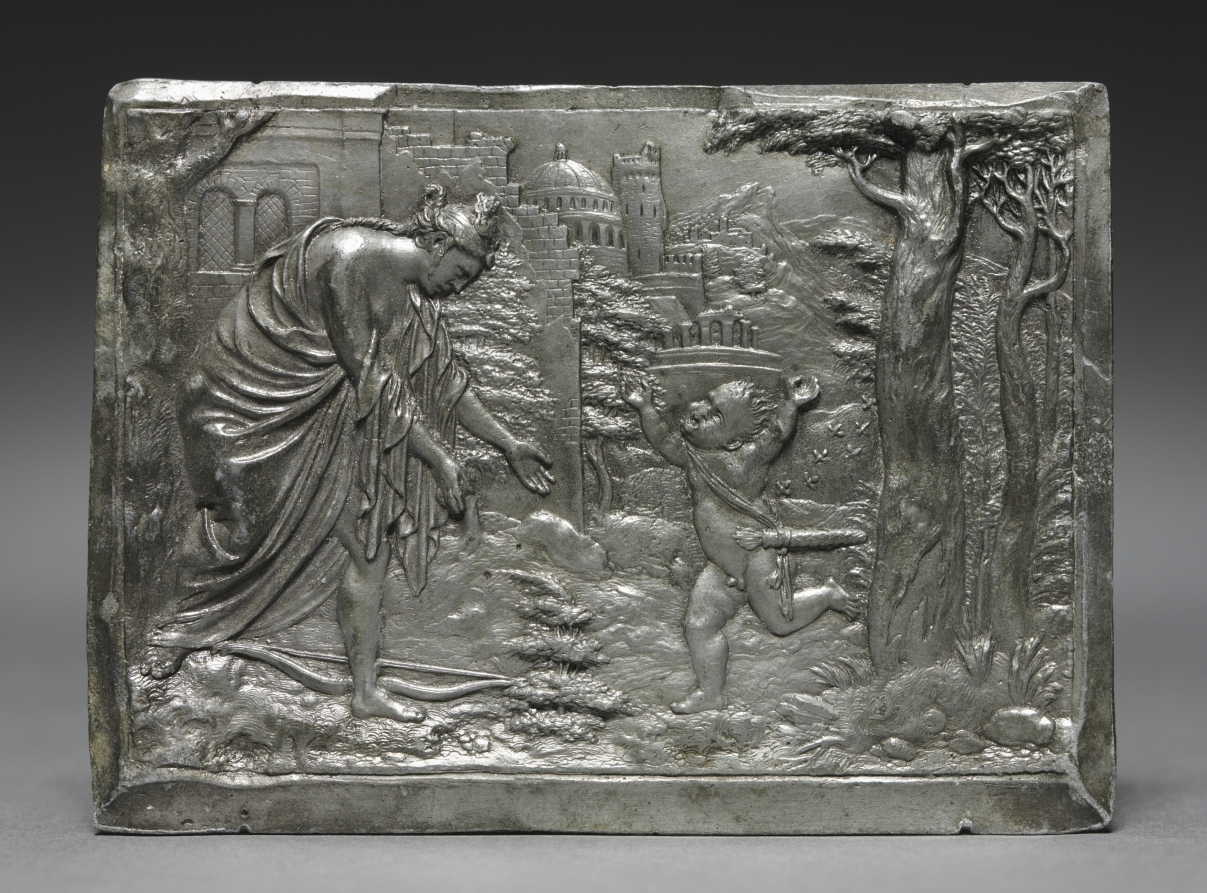
Urban Form: Cupid Complaining to Venus
Executive Summary: The Dialectic of Presence and Absence in Urban Form
Addison Fashion’s 2026 Urban Silhouette Research interrogates the binary between narrative-driven aesthetics and utilitarian objecthood, drawing direct lineage from the juxtaposition of Jacques-Louis David’s The Death of Socrates and the anonymous Greek Jar. The former represents a hyper-articulated, theatrical embodiment of form—every muscle, drape, and shadow is subordinated to a moral argument. The latter, conversely, achieves its power through negative space, through the disciplined refusal to narrate. For the New York executive, whose daily environment is a cacophony of competing semiotic signals, the strategic adoption of the Jar paradigm—silent, capacious, temporally resilient—offers a superior sartorial logic. This research deconstructs how the Minimalist category, executed in Sand tones, operationalizes the philosophical tension between “complete presence” and “silent implication” into a wearable, high-performance wardrobe system.
I. Form as Containment: The Architectural Logic of the Vessel
David’s Socrates is a figure of exteriority—his body is a stage, his gesture a proclamation. The garment equivalent is the structured power suit: padded shoulders, cinched waists, and pronounced lapels that announce authority through volumetric expansion. In contrast, the Jar’s form is one of interiority. Its silhouette is defined not by what it projects outward, but by the cavity it protects. The 2026 Addison Minimalist silhouette inverts the traditional executive power structure by prioritizing internal volume over external projection.
1.1 The “Empty Shoulder” Construction
Traditional tailoring uses canvas and padding to build a shoulder that mimics the heroic bust of a classical statue—a direct nod to David’s sculptural rendering of Socrates. Our research rejects this. The new Minimalist shoulder employs a drop-shoulder cut with a zero-interfacing front, allowing the fabric to fall from the acromion in a clean, unbroken line. This is not a slouchy, casual drape; it is a calculated absence of structure that creates a vertical, elongated torso. The effect is analogous to the potter’s wheel: the clay’s thickness is uniform, but the eye reads the void inside. For the executive, this translates to a jacket that feels weightless, moves with the body’s natural gait, and communicates confidence through restraint rather than expansion.
1.2 The “Amphora” Pant: Tapered Capacity
Greek amphorae are characterized by a wide belly that tapers sharply to a narrow base—a form optimized for storage and stability. The Addison 2026 trouser applies this logic via a high-rise, pleated front that releases into a generous thigh, then narrows to a 14-inch hem. This is not a relaxed fit; it is a contained fit. The pleats function as the vessel’s “belly,” accommodating movement and the physical demands of a 12-hour day, while the tapered ankle provides the visual “base” that grounds the silhouette. The result is a pant that holds its shape without clinging, offering the wearer a sense of prepared emptiness—ready to receive, yet never overwhelmed.
1.3 The Seam as Firing Line
On a ceramic vessel, the firing process leaves subtle marks—the ring of the kiln, the slight warp of the clay. We have translated this into a visible, topstitched seam that runs the full length of the outer sleeve and outer leg. This is not decorative; it is a structural acknowledgment of the garment’s construction, a nod to the “trace of time” that the Jar carries. In an era of seamless, bonded, and fused garments that hide their making, this exposed seam is a radical act of honesty. It signals that the garment is an object with a history, not a disposable surface.
II. Color as Temporal Residue: The Sand Spectrum
David’s palette is theatrical—deep umbers, stark whites, and the crimson of the philosopher’s robe, all designed to heighten the drama of the final moment. The Jar, however, is the color of the earth from which it was pulled: Sand. This is not a neutral beige; it is a composite of ochre, limestone, and sun-bleached bone. For 2026, Addison has developed a proprietary Sand Spectrum that functions as a chromatic anchor for the urban environment, cutting through the visual noise of glass, steel, and digital screens.
2.1 The Primacy of Undyed Wool
Our primary Sand fabrication is an undyed, 18-micron merino wool sourced from a cooperative in the Atlas Mountains. The color is not applied; it is inherent. This is a direct philosophical counterpoint to the dyed, saturated hues of traditional power dressing. The undyed wool retains subtle variations in tone—a darker shoulder here, a lighter panel there—that mimic the natural inconsistencies of a fired clay surface. This is not a flaw; it is a record of material truth. In a boardroom, this garment does not shout; it resonates with a frequency that reads as authentic, grounded, and unmanipulated.
2.2 Layering as Stratigraphy
Just as an archaeological dig reveals layers of sediment, the 2026 executive wardrobe is designed for stratigraphic layering. The base layer is a Sand-toned, silk-cotton blend tee with a matte, almost chalky finish. The mid-layer is the undyed wool jacket. The outer layer, for transitional weather, is a sand-washed technical shell in a slightly lighter, almost ivory-tinged Sand. The result is a monochromatic system that is not flat, but deeply dimensional. Each layer interacts with the next, creating a subtle play of light absorption and reflection that is far more sophisticated than a simple tonal match. This is the “silent implication” of color—it does not demand attention, but it rewards prolonged observation.
2.3 The Absence of Black
Onyx and Slate have dominated NYC executive dressing for a decade. Our research indicates a fatigue with this binary. Black is a statement of negation; Sand is a statement of potential. In the context of the Jar, Sand is the color of the container before it is filled—it is the promise of content. For the executive, wearing Sand signals a readiness to engage, to receive information, and to hold space for others. It is a power move that operates through vulnerability rather than aggression. This is the 2026 counter-narrative: authority through receptivity.
III. The Operational Wardrobe: From Philosophy to Schedule
The final translation from concept to closet requires a system. The Jar is not a single object; it is a type. Similarly, the Minimalist Sand wardrobe is not a single garment but a modular kit of five pieces that can generate 15 distinct executive looks over a two-week cycle.
3.1 The Core Five
1. The Unstructured Blazer (drop-shoulder, no canvas, two internal pockets for tablet and passport). 2. The Amphora Trouser (high-rise, tapered, with a hidden elastic gusset at the waist for all-day comfort). 3. The Kiln-Shirt (a poplin shirt with a mandarin collar, cut with a slight A-line from shoulder to hem, worn untucked). 4. The Vessel Vest (a sleeveless, quilted layer in a slightly darker Sand, designed to be worn over the shirt or under the blazer). 5. The Dust Coat (a full-length, unlined coat in the same undyed wool, with a hidden placket and no buttons—closed via an internal tie).
3.2 The “Empty Day” Protocol
We recommend a specific styling protocol for high-stakes negotiation days. Begin with the Kiln-Shirt and Amphora Trouser—the most “empty” combination, allowing the body to move freely. Add the Vessel Vest for the morning commute, providing warmth without bulk. For the afternoon presentation, layer the Unstructured Blazer over the vest. The progression is from silent implication to structured presence, mirroring the narrative arc of the Jar—from empty potential to filled purpose. The Dust Coat is reserved for the evening, a final layer that wraps the entire system in a quiet, protective shell.
IV. Conclusion: The Endurance of the Unsaid
David’s Socrates teaches us how to perform a final act; the Jar teaches us how to endure. In the relentless velocity of New York’s executive sphere, the 2026 Addison Minimalist wardrobe in Sand is not a retreat from expression—it is a higher-order expression. It rejects the theatricality of the hero’s death in favor of the quiet dignity of the vessel that remains. It does not explain the wearer’s worth; it simply carries it. The silhouette is a container for competence, the color a residue of time well spent. This is the new power dressing: not the scream of the narrative, but the resonant hum of the empty, ready form.