Urban Form: Dido
Executive Summary: The Dido Silhouette as a Dialectical Framework
Addison Fashion’s Urban Silhouette Research for the 2026 NYC executive wardrobe identifies Dido as a case study in dualistic materiality—a synthesis of transient luminosity and structural permanence. Drawing from the comparative analysis of the Qing Dynasty glass sculpture Sudhana (善财童子) and the medieval European reliquary finial, this report translates their aesthetic tensions into a technical blueprint for tailored womenswear. The result is a silhouette that negotiates fluid motion within rigid architectural lines, employing a slate-toned palette to articulate corporate authority without sacrificing poetic nuance. This is not a nostalgic revival; it is a strategic deployment of historical design philosophies to address the demands of a hyper-accelerated, visibility-driven executive culture.
Form Analysis: The S-Curve and the Vertical Axis
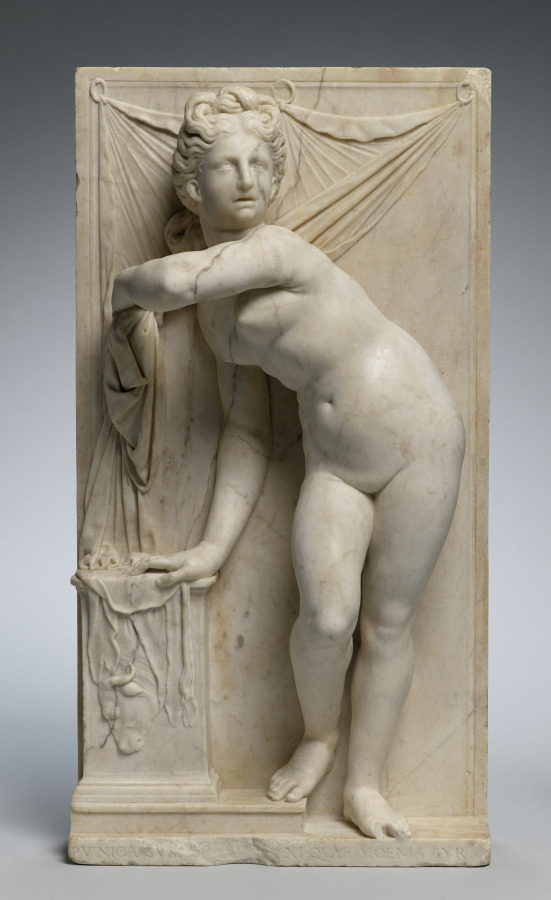
The Dido silhouette derives its structural logic from two opposing compositional principles: the “迂回叙事” (circuitous narrative) of the Sudhana figure and the “垂直上升” (vertical ascension) of the finial. For the 2026 executive wardrobe, this translates into a tailored jacket with a pronounced, asymmetric waist seam—an engineered S-curve that mimics the figure’s dynamic posture. Unlike conventional power suiting, which relies on boxy shoulders and a suppressed waist, Dido introduces a rotational tension at the hip. The jacket’s front panel is cut on a subtle bias, allowing the fabric to wrap around the torso in a continuous, spiraling motion. This is not decorative; it creates a visual torque that guides the observer’s eye from the shoulder to the hem, simulating the “journey” of the Sudhana’s fifty-three pilgrimages. The effect is a garment that appears to be in a state of perpetual becoming—appropriate for an executive who navigates multiple deal rooms and cultural contexts in a single day.
Conversely, the finial’s influence manifests in the garment’s internal architecture. A hidden, boned understructure—reminiscent of the reliquary’s rigid copper core—ensures that despite the fluid outer shell, the silhouette maintains an unyielding vertical line from the nape to the hem. This is achieved through a “center-seam spine”: a reinforced, topstitched seam that runs down the back of the jacket, terminating in a slight, sharp flare at the hem. This detail references the finial’s tiered, tapering form, which directs the gaze upward. In Dido, the flare is minimal—a mere 2.5 cm deviation from the vertical—but it is enough to create a sense of aspirational lift, counterbalancing the S-curve’s horizontal dynamism. The result is a garment that is simultaneously in motion and at rest, embodying the “dynamic and order” balance identified in the source analysis.
Material Engineering: Translucent Weight and Opaque Structure
The source text’s emphasis on “材质叙事” (material narrative) is operationalized in Dido through a dual-fabric system. The primary shell is a high-twist wool gabardine, treated with a silicone-based finish that imparts a subtle, semi-translucent sheen—echoing the “流霞之色” (flowing sunset color) of the glass sculpture. This is not a literal transparency but a luminous depth: under direct office lighting, the fabric appears to shift between slate blue and a faint, warm grey, mimicking the “氤氲变幻” (hazy transformation) of the original medium. The secondary fabric, used for the jacket’s under-collar and inner yoke, is a matte, densely woven cotton-linen blend in a darker slate tone. This creates a deliberate contrast between the outer shell’s ephemeral glow and the inner structure’s grounded opacity—a direct translation of the finial’s gold-and-enamel symbolism, where light (divine) is framed by solid matter (earthly).
For the accompanying trouser, the research recommends a “variable drape” construction. The front panels are cut with a slight A-line taper, while the back panels are cut on the straight grain, allowing the fabric to pool minimally at the shoe—a nod to the Sudhana’s flowing robes. However, a concealed elasticized waistband with a drawcord (invisible from the exterior) provides the finial’s “center symmetry,” ensuring the garment does not read as casual. This dual mechanism allows the executive to transition from a seated negotiation to a standing presentation without the garment losing its architectural integrity.
Color Strategy: Slate as a Negotiated Neutral
The selection of Slate is not arbitrary; it is a calculated response to the source text’s color dichotomy. The Sudhana’s palette—青碧 (blue-green) and 淡黄 (pale yellow)—is inherently unstable, shifting with light and angle. The finial’s palette—gold, blue, and enamel red—is absolute and symbolic. Slate occupies a third space: it is a metallic neutral that carries the finial’s gravitas without its liturgical rigidity, and the Sudhana’s mutability without its fragility. In the 2026 NYC context, slate functions as a “chameleon color” for the executive wardrobe. It reads as authoritative in a boardroom (evoking the finial’s blue of “heavenly truth”), yet it absorbs and reflects ambient light in a way that prevents the wearer from appearing static—a subtle nod to the Sudhana’s “inner vitality.”
The technical application involves a three-tone layering system. The base is a deep, almost charcoal slate for the jacket’s main panels. The second tone, a lighter blue-grey, is used for the under-collar, pocket welts, and button placket—creating a “shadow hierarchy” that guides the eye without resorting to contrast stitching. The third tone, a near-silver slate, is reserved for the lining and the internal seam taping. This is a deliberate inversion of the finial’s “gold as divine” logic: here, the interior holds the luminosity, visible only when the jacket is opened or removed. This creates a private moment of revelation for the wearer—a “spiritual space” (精神空间) that the source text identifies as essential for modern design. The executive’s inner world is thus encoded in the garment’s hidden layers, accessible only through intentional action.
Proportion and the 2026 Executive Context
Dido’s proportions are calibrated for the “vertical commute”—the 45-minute subway ride, the 12-hour workday, and the 8 PM gallery opening. The jacket’s length is set at 72 cm (from high shoulder point), which sits just below the hip bone, allowing for easy layering over high-waisted trousers without creating bulk. The sleeve is cut with a slight, 3-degree forward rotation, accommodating the natural reach of an executive who is constantly gesturing, typing, or hailing a cab. This is a departure from the finial’s absolute verticality; it acknowledges the body’s kinetic reality while maintaining the garment’s visual “spine.” The trousers feature a 24 cm hem width—a middle ground between the skinny silhouette of the past decade and the exaggerated wide-leg of recent runway shows. This width allows for movement but does not compromise the clean, vertical line when standing.
The research further recommends a “modular vest” as a companion piece. This vest, cut in the same slate palette but in a ribbed, technical knit, can be worn under the jacket for insulation or over it for a more casual, post-5 PM aesthetic. Its construction echoes the finial’s tiered structure: three horizontal seams at the chest, waist, and hip, each in a slightly different slate tone. This provides a visual rhythm that breaks the jacket’s verticality without undermining it—a practical translation of the Sudhana’s “圆融之境” (state of harmonious integration).
Conclusion: Dido as a Strategic Investment
Dido is not a trend-driven garment; it is a system. By integrating the Sudhana’s fluid luminosity with the finial’s structural permanence, Addison Fashion offers the 2026 NYC executive a wardrobe that performs on multiple registers: it signals authority, accommodates motion, and—crucially—provides a private, contemplative dimension through its hidden color layers and tactile contrasts. The slate palette ensures longevity across seasons, while the tailored form resists obsolescence. In a market saturated with either aggressive minimalism or decorative excess, Dido occupies a rare middle ground: it is a garment that thinks, that negotiates between the transient and the eternal, and that ultimately serves as a material proxy for the wearer’s own capacity to navigate complexity. This is the future of executive dressing—not as armor, but as a living, responsive interface between self and city.