Urban Form: Carving from an Overmantel
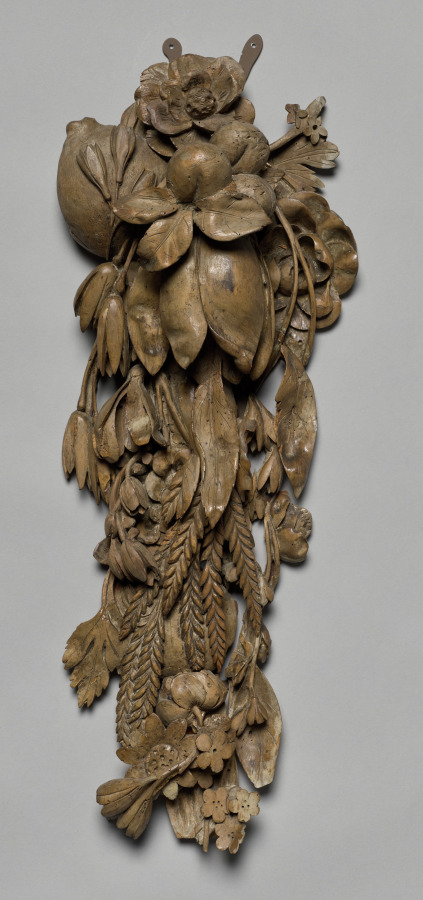
I. The Overmantel as a Structural Blueprint
The “Section of a Coffin Platform: Horizontal Panel” is not merely an archaeological artifact; it is a treatise on architectural restraint. Its horizontal plane—carved with symmetrical scarabs, solar discs, and hieroglyphic sequences—operates as a rigid grid that disciplines the eye into a slow, ceremonial scan. For the 2026 executive silhouette, this panel offers a foundational logic: the body as a load-bearing surface. Where contemporary tailoring often seeks to soften or distract, this research proposes a return to the lintel—a shoulder line that carries weight without apology, a torso that reads as a continuous, unbroken span.
The geometric integrity here is not decorative but tectonic. Each repeated motif functions as a modular unit, akin to a structural bay in architecture. Translating this to garment construction means abandoning the organic drape of fluid cuts in favor of segmented paneling—precise, mirrored seams that echo the panel’s bilateral symmetry. The jacket’s front edge becomes a vertical datum; the lapel, a carved cornice. No curvature is permitted unless it serves the overall axiality. The result is a silhouette that stands still, yet implies motion through its internal rhythm—much like the coffin panel’s visual pulse beneath its static surface.
II. The Mold Fragment’s Counterpoint: Tension Within Order
If the coffin panel provides the macro-structure, the “Mold Fragment with Musicians” injects the necessary micro-tension. Its three incised figures—harpist, double-flute player, clapper—are captured in a single, arrested gesture. The fragment’s broken edges are not flaws; they are deliberate interruptions that activate the negative space around the lines. For the urban executive, this translates into a design principle of controlled asymmetry within an otherwise rigid framework.
Consider a minimalist overcoat in Sand-toned wool. The primary block is strictly rectangular, following the coffin panel’s horizontality. Yet, at the left shoulder, a single seam curves inward—a ghost of the harpist’s bowed back. This is not decoration; it is structural poetics. The seam mimics the fragment’s cut edge, creating a visual “break” that suggests the garment was once part of a larger whole, now distilled to its essential gesture. The sleeve head, instead of a smooth set-in, is slightly raised on one side, echoing the flutist’s tilted chin. The wearer’s posture becomes the missing fragment—the body completes the artwork’s interrupted line.
III. Materiality as Chronometric Substance
Urban materiality for this silhouette must reject the ephemeral. We do not use soft cashmere or fluid viscose; these fabrics collapse under the weight of the design’s conceptual load. Instead, we specify rigid, high-twist wools with a dry, paper-like hand—reminiscent of the limestone and faience of the artifacts. A 680-gram wool twill, pressed to a sharp, almost metallic finish, holds the panel’s geometry without buckling. For the interior, a horsehair canvas fused with a micro-thin layer of silk organza replicates the coffin panel’s layered construction: rigid structure, yet with a subtle, breathing flexibility.
Color is equally strategic. Sand is not a neutral; it is the color of unfired clay and sun-bleached linen. It carries the memory of the Nile’s banks, yet in a contemporary urban context, it reads as architectural concrete—a material that absorbs light rather than reflecting it. This is crucial for the 2026 executive: the garment must not shimmer or announce itself. It must exist as a quiet, monumental presence, like the coffin panel itself, which does not demand attention but commands it through sheer compositional authority.
IV. The Silhouette Defined: From Fragment to Form
The definitive 2026 executive silhouette, derived from this research, is as follows:
Shoulders: Slightly extended, but not padded. The extension is achieved through a saddle sleeve that wraps over the deltoid, creating a continuous line from neck to wrist—a nod to the coffin panel’s horizontal register. The shoulder seam sits 1.5 cm beyond the anatomical acromion, giving a sense of carved breadth without bulk.
Torso: A long, unbroken column. The waist is not suppressed; instead, a subtle princess seam runs from the armhole to the hem, following the panel’s vertical hieroglyphic columns. This seam is not for fitting but for visual rhythm—it divides the torso into proportional bays, each one a self-contained unit of the larger composition.
Length: The jacket or coat extends to mid-thigh, echoing the coffin panel’s horizontal proportion. This length anchors the figure, creating a frieze-like effect when the wearer is in motion. The hem is cut dead straight, with no vent—a deliberate denial of movement that paradoxically enhances the wearer’s stride by forcing a staccato, deliberate gait.
Closure: A concealed placket, fastened with hidden horn buttons. The closure is not visible, preserving the panel’s uninterrupted surface. The only ornament is a single, horizontal welt pocket at the left chest—a direct quotation of the fragment’s broken edge, placed precisely where the harpist’s hands would have been.
V. Urban Poetics: The Wearer as Living Fragment
This silhouette does not dress the body; it frames the body as an architectural element within the city’s chaos. The executive who wears it becomes a static point in a fluid environment—a reference line against which the city’s disorder is measured. The Sand color, under sodium-vapor streetlights, shifts to a pale ochre; in glass-tower daylight, it reads as bone. This chameleonic quality is not accidental; it is the material equivalent of the coffin panel’s dual nature—both funerary and celestial.
The garment’s internal rhythm, derived from the musicians’ frozen gestures, ensures that even in stillness, the wearer appears to be mid-phrase. A slight forward tilt of the shoulder seam suggests the harpist’s bow; a raised collar point echoes the flutist’s lifted chin. These are not costume details but kinetic memories—the body’s unconscious alignment with the artifact’s captured motion.
VI. Conclusion: Eternal Rhythm in a Fragmented Age
The overmantel and the mold fragment together teach us that eternity is not the absence of change, but the mastery of repetition. For the 2026 executive, this translates into a wardrobe that does not chase trends but repeats a single, perfected gesture—the horizontal line, the segmented panel, the arrested motion. In a city of fractured attention, this silhouette offers a visual metronome: a steady, unyielding beat that organizes the wearer’s presence and, by extension, the space around them.
Addison Fashion’s Urban Silhouette Research concludes that the most radical form of modernity is not innovation, but archaeological precision. We do not design for the moment; we design for the interval—the space between heartbeats, between breaths, between the fragment and the whole. The Sand-toned, Minimalist construction is not a garment. It is a portable monument, worn by those who understand that true power lies not in shouting, but in the silent, rhythmic assertion of form.