Minimalist
Slate
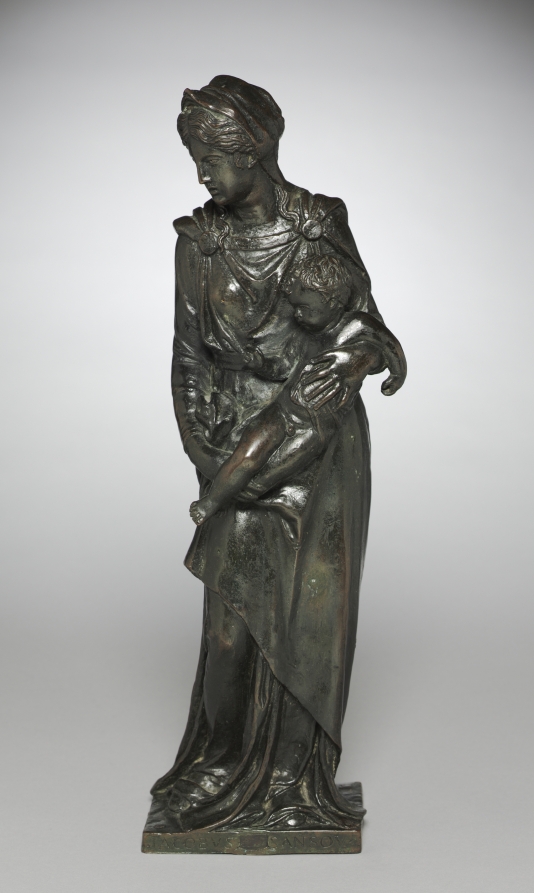
Urban Form: Virgin and Child
I. The Meiping Paradox: Structural Silence as Urban Armor
The 2026 executive silhouette begins not with the body, but with the void it contains. The *Vase (Meiping) with Waves* offers a masterclass in negative-space engineering—a principle that must govern the architectural drafting of contemporary suiting. The Meiping’s profile is a study in controlled tension: a narrow, unyielding shoulder that flares into a voluminous hip, then contracts with brutal precision into a foot that barely touches the ground. This is not ornament; it is a manifesto of load-bearing restraint. For the urban executive, this translates into a jacket cut with a **high, sculpted armhole** and a **fitted waist that releases into a subtle, A-line skirt or wide-leg trouser**. The wave motif, far from being decorative, is a structural metaphor: it suggests motion arrested at its peak. In fabric terms, this demands a **double-faced wool with a matte, ceramic finish**—a textile that refuses to shine, that absorbs light rather than reflecting it, much like the celadon glaze that swallows the viewer’s gaze. The garment must not move with the body; it must move *against* it, creating a deliberate friction that signals authority. The Meiping’s silence is the suit’s quietude: no logos, no visible fastenings, only the pure geometry of seam lines that mimic the vessel’s curve. The result is a silhouette that does not announce presence—it *occupies* space with the immovable gravity of a museum artifact.II. The Socratic Cut: Narrative Tension in Tailoring
Where the Meiping suppresses time, *The Death of Socrates* weaponizes it. David’s composition is a study in diagonal stress—the philosopher’s outstretched arm, the downward thrust of the poison cup, the cascading folds of his robe that seem to pour toward the floor like liquid marble. For the 2026 executive, this translates into **asymmetric closures, offset seams, and a single, dramatic pleat** that runs from the shoulder to the hem, suggesting a body caught mid-decision. The color palette must echo this tension: **slate**—not a passive gray, but a hue that shifts between blue and charcoal depending on the light, much like the chiaroscuro that animates David’s canvas. The fabric should be **crisp, with a slight technical stretch**, allowing for a sharpness of line that still permits the wearer to move with the urgency of a courtroom or boardroom. The jacket’s lapel is not a lapel; it is a **fold of toga-like drapery**, cut to fall in a single, unbroken line from collarbone to waist. The trousers are cropped at the ankle, exposing a sliver of skin or a metallic shoe—a deliberate rupture in the garment’s narrative, akin to the moment before Socrates drinks. This is not a suit for sitting; it is a suit for *arriving*, for the instant when all eyes turn and the room holds its breath.III. The Dialectic of Materiality: From Ceramic to Cloth
The true innovation of the 2026 silhouette lies in its negotiation between these two poles: the Meiping’s **eternal stillness** and Socrates’ **terminal urgency**. The executive must not choose between them; she must embody both. This is achieved through **layered construction**—an outer shell of rigid, ceramic-like wool, and an inner layer of fluid, silk-blend jersey that moves independently beneath. The outer layer provides the architectural silhouette; the inner layer allows for the body’s organic, human motion. The effect is a garment that appears frozen, yet responds to every gesture with a whisper of movement. The color **slate** is chosen for its dual nature: it is the color of stone (the Meiping’s clay) and the color of smoke (the philosopher’s final breath). It is a color that does not flatter the skin; it *challenges* it, demanding a pale, cool complexion or a deliberate, bronzed contrast. Accessories are minimal: a single, **geometric brooch** at the clavicle, echoing the wave’s crest, and a **belt of polished gunmetal** that cinches the waist with the finality of a frame. The overall effect is one of **controlled violence**—a garment that has been engineered to withstand the pressures of urban time, yet remains acutely aware of its own mortality.IV. The 2026 Executive: A Speculative Manifesto
The definitive urban silhouette for 2026 is not a trend; it is a **philosophical position**. It rejects the soft, amorphous shapes of previous decades as indecisive. It rejects the overtly sexualized tailoring of the 1980s as theatrical. Instead, it proposes a **third way**: a silhouette that is both monument and moment. The shoulders are **squared but not padded**, achieved through precise pattern-cutting that uses the fabric’s own weight to create structure. The waist is **defined but not cinched**, suggesting a body that is disciplined but not constrained. The length is **deliberately ambiguous**—a jacket that ends at the hip, a skirt that grazes the knee, creating a visual tension that keeps the eye moving. This is a garment for the executive who understands that power is not loud. It is the power of the Meiping, which has outlasted dynasties, and the power of Socrates, who chose his ending. The 2026 silhouette is a **vessel for time itself**—a wearable paradox that holds the wave and the moment of its breaking, the poison and the hand that lifts it. In slate, it becomes the color of all possible futures: the city at dawn, the boardroom at dusk, the gallery at midnight. It is not a uniform; it is a **decision**. And for the woman who wears it, every day becomes a composition in structural poetics—a living study in the art of remaining still while the world moves.
Technical Insight
Technical Insight: Translating Slate palettes into Minimalist silhouettes for the modern metropolis.