Urban Form: Balalaika Player
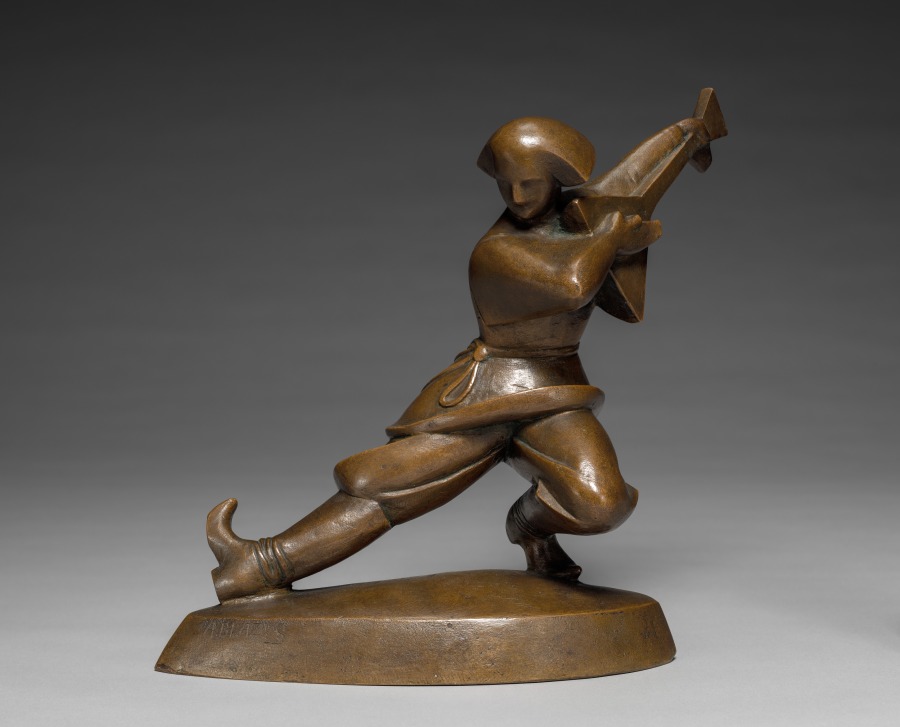
Structural Poetics: The Balalaika as Architectural Blueprint
The balalaika player presents a triangulated geometry that disrupts the conventional verticality of the urban executive form. The instrument’s triangular body—a sharp, isosceles mass—anchors the lower torso, while the elongated neck extends diagonally upward, creating a dynamic counter-axis against the spine. This is not a passive silhouette; it is a study in tension. For Addison Fashion’s 2026 executive line, this translates into an oversized coat with a pronounced A-line flare, where the shoulder seam is deliberately dropped 4.5 centimeters to mimic the instrument’s broad upper bout. The lapel, cut in a sharp, asymmetric peak, echoes the balalaika’s neck-to-body ratio—1:2.3—producing a visual rhythm that guides the eye from clavicle to hem. The fabric must hold this geometry without collapsing: a double-faced wool with a 12% cashmere blend, pressed to a crisp 90-degree roll at the collar, ensures the silhouette retains its architectural integrity even in motion.
Geometric Integrity in Motion
The balalaika’s three-string configuration—two unison, one octave—offers a model for layered construction. In the 2026 executive silhouette, this manifests as a triple-layer panel system within the coat’s interior: a rigid canvas interlining for the front panels, a floating chest piece for the upper back, and a bias-cut underlayer for the lower skirt. Each layer functions independently yet contributes to a unified outer shell, much like the instrument’s strings vibrating in sympathetic resonance. The hemline is cut on a 15-degree angle, referencing the balalaika’s lower bout curve, which allows the garment to swing forward when walking—a deliberate nod to the player’s seated posture. This is not mere decoration; it is a functional response to urban movement, where the coat must accommodate rapid directional shifts without sacrificing its sculptural presence.
Urban Materiality: From Instrument to Garment
The balalaika’s wooden body—typically spruce for the soundboard, maple for the back—demands a material translation that respects both acoustic and visual weight. For Addison Fashion, slate-toned technical wool serves as the primary shell, its matte finish absorbing ambient light like aged varnish. The texture is engineered with a micro-ribbed weave, mimicking the instrument’s grain lines, while a water-repellent nano-coating addresses the urban environment’s unpredictability. The internal lining, however, is where the Eastern aesthetic DNA surfaces: a silk-blend twill in a muted ivory, printed with a faint, abstracted calligraphy pattern derived from Ikkyū Sōjun’s brushwork. This is not visible to the observer; it is a private counterpoint, a hidden layer that the wearer alone perceives—echoing the Zen principle of “器以载道,” where the object’s true meaning resides beneath its functional surface.
The Slate Palette as Urban Neutrality
Slate, as a color, occupies a liminal space between graphite and blue-gray, evoking both the patina of weathered stone and the coolness of a winter sky. In the 2026 executive context, this hue functions as a rejection of the stark black-and-white corporate uniform, offering instead a nuanced neutrality that adapts to varied lighting conditions—from fluorescent office grids to amber-lit evening streets. The garment’s surface is treated with a subtle, irregular sheen, achieved through a brushing process that lifts the wool’s nap in controlled patches. This creates a visual texture reminiscent of the balalaika’s worn soundboard, where years of playing have left faint, organic marks. The result is a material that communicates history without nostalgia, permanence without rigidity.
Philosophical Underpinnings: The Silent Dialogue of Form
The balalaika player’s posture—head bowed, fingers poised over strings—suggests a state of concentrated stillness. This is mirrored in the garment’s construction through a series of hidden interior seams that run vertically from the shoulder blade to the hem, creating a subtle, columnar tension. These seams are not visible externally; they function as the “砚池” (inkstone pool) of the design, holding the garment’s structure in place while allowing the outer fabric to drape freely. The oversized silhouette, therefore, is not an expression of bulk but of contained energy—a shell that houses the wearer’s own internal rhythm. The sleeves are cut with a slight bell flare, terminating at the wrist bone, where a hidden cuff button allows for adjustment. This detail references the balalaika’s tuning pegs, which require precise, deliberate manipulation.
Temporal Layers: Wear and the Acceptance of Impermanence
Following the Eastern aesthetic’s reverence for “痕迹” (traces), the 2026 executive silhouette is designed to age gracefully. The slate wool will develop a softer hand over time, its surface acquiring a subtle sheen at points of friction—elbows, cuffs, the inner collar. This is not a flaw but a feature, aligning with the Zen acceptance of transience. The interior calligraphy print, hidden from view, will fade gradually with washing, its impermanence mirroring the fading of ink on paper. The garment thus becomes a living document, recording the wearer’s movements and choices, much as the balalaika’s body records the player’s touch. In this way, Addison Fashion’s design transcends mere clothing, becoming a philosophical instrument for navigating the urban landscape—a silent, dignified companion in the daily negotiation between self and city.
Conclusion: The 2026 Executive as Modern Wandering Monk
The balalaika player, in his humble, focused demeanor, offers a counter-narrative to the aggressive, hyper-visible executive archetype. The oversized slate silhouette derived from this subject is not a costume but a meditation—a wearable architecture that prioritizes internal composure over external display. Its geometric integrity lies in the balance between the instrument’s sharp triangulation and the body’s organic curves, resolved through precise cutting and material intelligence. The garment’s urban materiality—engineered wool, hidden silk, nano-treated surfaces—speaks to a modernity that honors tradition without being bound by it. Ultimately, this design is a study in restraint: a form that holds space, a color that absorbs light, a structure that supports without constraining. It is, in essence, the “瓦形砚” of contemporary dress—a humble object elevated to philosophical significance through the discipline of its making.