Urban Form: Head of an Angel
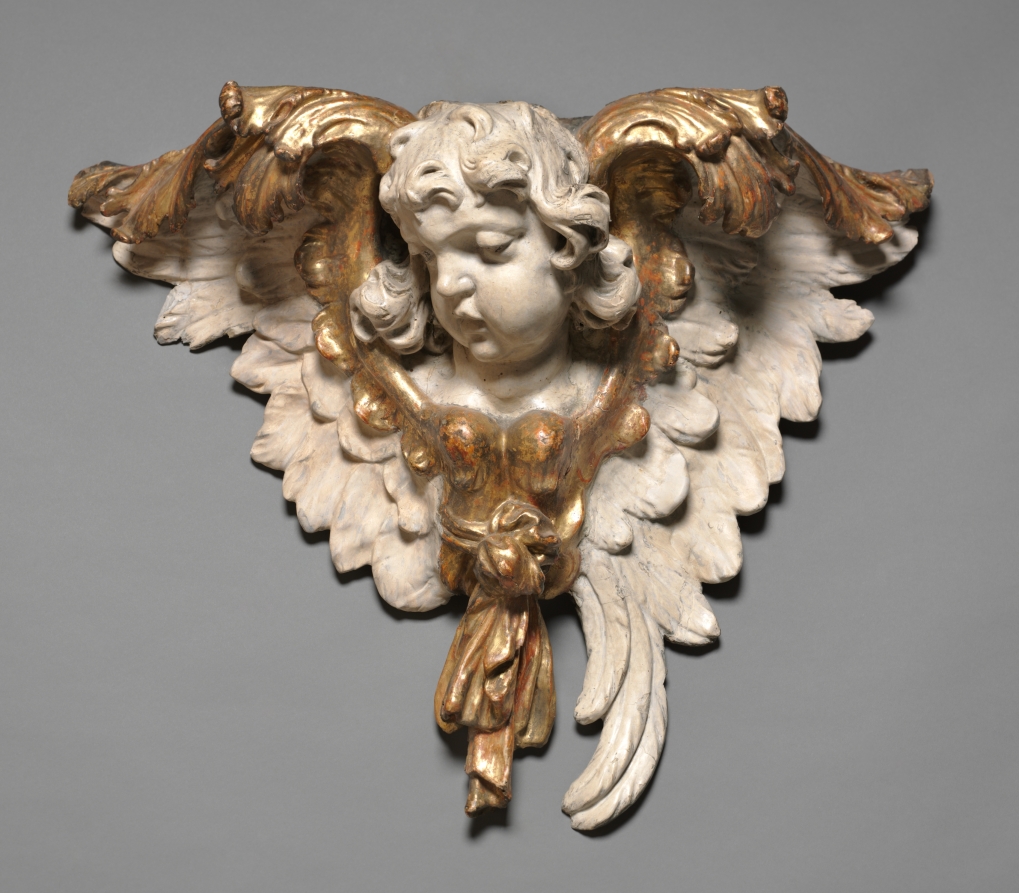
Technical Analysis: The Angel's Head as Urban Silhouette
The provided artistic DNA—a scholar’s rock embodying the principles of shou, zhou, lou, tou (thinness, wrinkling, perforation, transparency) and a narrative luohan painting—presents a profound case study in abstracted structuralism. For the 2026 executive silhouette, this is not a call for literal translation, but a mandate to distill its geometric and philosophical essence into a language of urban materiality. The core directive is the construction of a wearable, metaphysical architecture that prioritizes internal landscape over external adornment, echoing the "useless utility" of the scholar's rock. The resultant silhouette is one of severe, contemplative minimalism, carved from the urban palette of Slate—a color that exists in the liminal space between solid matter and shifting shadow.
Structural Poetics: The Geometry of Absence
The scholar’s rock operates on a paradox: it is a solid mineral form defined by its voids. Its negative space is its primary architectural element. This directly informs the 2026 silhouette’s construction. We move beyond the manipulation of darts and seams to consider the garment itself as a perforated form. Strategic, calculated voids—asymmetric armatures, laser-cut tessellations at the scapula, precisely engineered back décolletage—become integral to the structure. These are not decorative; they are load-bearing in a visual sense, creating a frame that light and shadow penetrate, much like sunlight through a mountain’s cavern. The silhouette becomes a "light theater," where the body’s movement alters the play of shadow within these defined apertures, creating a dynamic, living geometry.
Furthermore, the rock’s surface cunwen (wrinkles and textures) are not mere erosion but a "poem of geological time." In our urban context, this translates to textural integrity through advanced material manipulation. Imagine wool crepe subjected to a controlled, heat-set crumpling process, creating permanent, three-dimensional ridges that catch light like mineral strata. Or, a double-faced cashmere-Silk blend, where one face is meticulously sanded to reveal a sueded under-layer, creating a topographic map of tactility. These surfaces are records of process, rejecting flatness in favor of a rich, geological materiality that speaks of urban endurance and refined patina.
Urban Materiality: From Mineral to Fabric
The luohan painting contributes the narrative of tension: the static, mountainous folds of the robe against the servant’s dynamic presence. This is the dialectic of stillness and potential energy crucial for the executive form. The silhouette achieves this through engineered volume that appears static from one angle and fluid from another. A single-seam coat, cut from a rigid, moulded wool felt, stands away from the body in a clean, architectural curve—the "seated" form. Yet, its interior is lined with a weighted, fluid silk charmeuse that moves with a delayed, viscous drag, creating a silent, kinetic counterpoint. The exterior is rock; the interior is breath.
Material selection is paramount to this cold sophistication. Slate as a color anchors the collection in urban mineralogy. Fabrics are chosen for their inherent monolithic character and subtle luminosity: hammered silk ottoman that reflects light like wet stone, dense matte jersey with the heft of clay, technical gabardine with a graphite sheen. Embellishment is abolished. Instead, construction is the ornament. Seams are recessed or expressed as raised, topographic lines. Closures are hidden magnetic systems or asymmetric, structural knots that function as abstract fasteners, reminiscent of the rock’s natural form. The hardware, if any, is oxidized silver, a metallic echo of the Slate palette, never gold.
The 2026 Executive Silhouette: A Contemplative Architecture
The definitive silhouette for 2026 is therefore a sculpted, minimalist shell. It is defined by clean, parabolic lines that originate from a single, off-center point—often a shoulder or a hip—and radiate outwards, creating volume through geometry rather than gathering. The waist is acknowledged but not cinched; it is implied by the garment’s own architectural drape, much as the rock’s form implies a peak. Trousers are wide-leg and fluid, falling from a high, precise waist with the gravity of a waterfall, yet their cut is so exact they maintain a sharp, columnar line. Dresses are tubular, sheath-like, interrupted only by the strategic voids discussed earlier.
This is a silhouette of powerful restraint. It embodies the qi (vital energy) of the rock and the contemplative focus of the luohan. It rejects the utilitarian pragmatism of traditional suiting in favor of a spiritual pragmatism—garments that create a protected, psychological space for the wearer, a "metaphysical medium" for navigating the urban landscape. The executive is not just dressed but encased in a personal, portable architecture. The final aesthetic is one of profound calm and immense authority, achieved not through opulence but through the severe poetry of form, the mastery of negative space, and the deep, resonant materiality of Slate. It is the ultimate expression of "vessel conveying principle" (qi yi zai dao), where the garment becomes the interface between the individual's internal landscape and the external, concrete world.