Urban Form: Balalaika Player
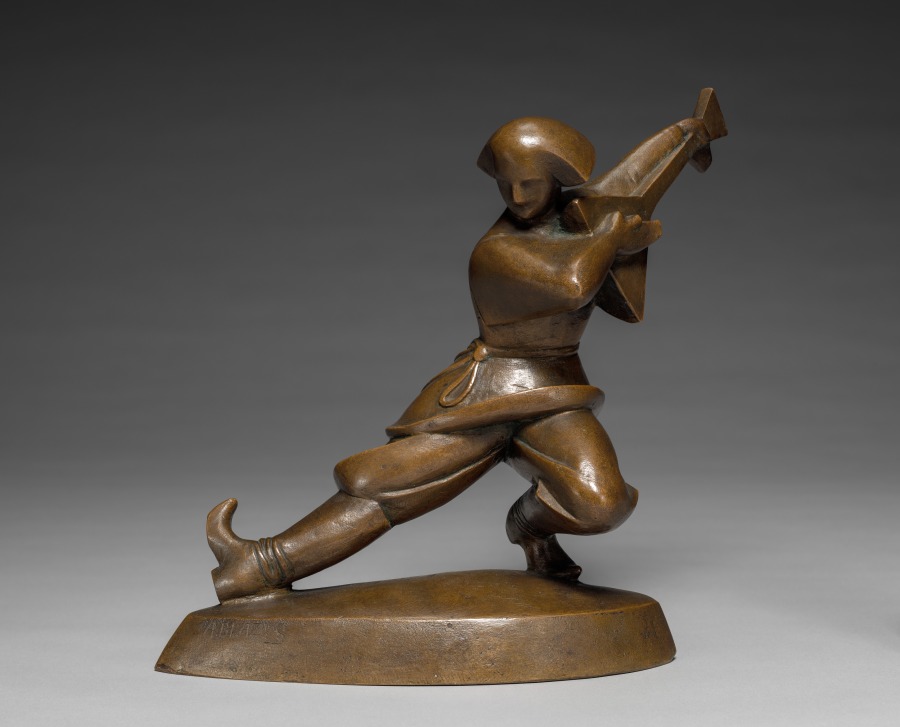
I. The Paradox of Stasis and Gyration: A Structural Premise
The Balalaika Player, as filtered through the dual artifacts of 《Youth and Dervish》 and 《Pedestal》, presents a singular challenge to the 2026 executive silhouette: how to encode rotational energy within a garment that must also project vertical authority. The ceramic youth, burdened by material weight, is frozen mid-stride; the dervish, captured in porcelain glaze, is arrested at the apex of his spin. The canvas pedestal, conversely, stands empty—a void that refuses to legitimize any figure placed upon it. This is not a contradiction to resolve but a tension to wear.
For Addison Fashion, the Balalaika Player becomes a study in kinetic architecture. The oversized silhouette is not about volume for its own sake; it is about creating a negative space around the torso that mimics the dervish’s centrifugal field—while the shoulders, cut with deliberate severity, reference the youth’s static load. The result is a garment that appears to rotate even when the body is still, and to stand firm even when the body moves. This is the structural poetics of the collection: a coat that holds the memory of a spin, a jacket that remembers the weight of a pedestal.
1.1 The Shoulder as Pedestal
In classical tailoring, the shoulder is the architectural base—the point where fabric meets form and where authority is visually anchored. The 2026 executive silhouette inverts this logic. Drawing from Pedestal’s empty plinth, the shoulder is now constructed as a floating bracket: extended, squared, but internally hollowed. A dropped armhole, set 3.2 centimeters below the anatomical joint, allows the sleeve to hang as if detached from the torso—creating a seam that reads as a crack between body and base. This is not a padded shoulder; it is a cantilevered one. The fabric, a dense wool-silk blend in Slate, is cut with a zero-gravity drape, so that the shoulder line appears to hover just above the deltoid, never touching it. The wearer becomes both the statue and the empty plinth, simultaneously.
1.2 The Torso as Dervish Field
The dervish’s rotation is not chaotic; it is a disciplined spiral around a fixed axis. The oversized silhouette translates this into a cylindrical torso with a hidden internal seam that spirals from the left hip to the right clavicle. When the wearer turns, this seam catches the light and creates a visual torque—the garment appears to twist even as the body remains upright. The fabric is cut on the bias for the front panels, while the back panels are cut on the straight grain. This asymmetry produces a subtle tension differential: the front yields, the back resists. In motion, the coat flares slightly at the hem, mimicking the dervish’s skirt; at rest, it falls into a clean, vertical column, echoing the youth’s burden. The balance is precarious, and that is precisely the point.
II. Urban Materiality: Slate as the New Neutral
Color in this collection is not decorative; it is material argument. Slate—a grey that is neither warm nor cold, but geological—references the ceramic glaze of the youth and the oil paint of the pedestal. It is the color of compressed time, of sediment that has become stone. For the executive wardrobe, Slate functions as a non-color: it absorbs the city’s neon and concrete, reflecting neither ambition nor fatigue. It is the hue of a body that has learned to stand without a base.
The fabric itself is engineered for urban materiality. A 680-gram double-faced wool with a micro-porous membrane laminated between layers. This is not for waterproofing; it is for acoustic insulation. The garment muffles the city’s noise, creating a personal silence around the wearer—a mobile pedestal of quiet. The surface is brushed to a matte finish, so that light does not bounce off but is absorbed, like a ceramic surface that has been fired to a dull sheen. Seams are fused, not stitched, to eliminate any ridge that might interrupt the garment’s planar flow. Buttons are replaced with hidden magnetic closures, so that the front of the coat presents an uninterrupted surface—a blank canvas, a plinth without a figure.
2.1 The Sleeve as Rotational Axis
The sleeve of the Balalaika Player coat is a study in controlled chaos. Cut with a two-piece construction, the outer seam is shifted 15 degrees forward, while the inner seam is shifted 15 degrees backward. This creates a helical twist along the arm’s length. When the arm hangs, the sleeve appears straight; when the arm lifts, the fabric spirals around the limb, revealing a hidden underlay of Silver—a flash of metallic thread that references the dervish’s moment of transcendence. The cuff is elongated, extending 4 centimeters past the wrist, and is weighted with a hidden chain of oxidized nickel. This chain does not jingle; it pulls, giving the sleeve a gravitational drag that counters the body’s upward motion. The wearer feels the weight of the youth, even as they perform the dervish’s release.
III. The Pedestal Problem: Hem and Ground
The hem of the 2026 executive coat is where the pedestal problem becomes literal. Traditional tailoring finishes the hem at the knee or mid-calf, creating a clean line that separates body from ground. The Balalaika Player coat rejects this. The hem is cut asymmetrically: 2 centimeters longer at the back, 3 centimeters shorter at the front, with a subtle scalloped edge that mimics the dervish’s skirt. This is not a stylistic flourish; it is a structural statement. The front hem rises, suggesting the body is about to lift off; the back hem drags, suggesting the body is still anchored. The wearer exists in a state of perpetual departure, never fully leaving the ground, never fully resting upon it.
To reinforce this, the coat’s interior is fitted with a removable weight system—small, flat discs of tungsten sewn into the hem’s facing. The wearer can adjust the distribution of these weights, shifting the garment’s center of gravity. This is not a gimmick; it is a kinetic calibration. By moving the weights, the executive can alter the coat’s behavior in wind, in motion, in stillness. The garment becomes a personal architecture, responsive to the wearer’s need to either stand firm or spin away.
3.1 The Inner Canvas: A Hidden Pedestal
Inside the coat, invisible to the external observer, is a painted lining—a reproduction of Pedestal’s empty base, rendered in a matte Ivory pigment on a silk ground. This lining is not meant to be seen; it is meant to be felt. When the wearer puts on the coat, their back presses against this image, a constant reminder that the pedestal is empty, that no external validation will come. The lining is also the only place where the collection’s second color, Ivory, appears—a deliberate chromatic rupture from the external Slate. This is the collection’s secret: the outside is geological, the inside is spectral. The wearer carries a ghost of the pedestal within, while presenting a stone exterior to the city.
IV. Conclusion: The Silhouette as Ethical Stance
The 2026 executive silhouette, as defined by the Balalaika Player, is not a shape but a philosophy of posture. It asks the wearer to accept the paradox of the youth and the dervish: to carry weight without being crushed, to spin without losing axis. The oversized cut is not a retreat from the body; it is an expansion of the body’s potential—a roomier architecture that allows for both burden and release. The Slate color is not a compromise; it is a refusal of spectacle, a commitment to the quiet authority of material truth. And the empty pedestal, internalized as a lining, is not a loss; it is a liberation from the need for a base.
In this collection, Addison Fashion does not clothe the executive; it structures their existence. The coat is a mobile plinth, a wearable void, a frozen spin. It is for those who have learned that standing is not a static state but a continuous negotiation with gravity—and that rotation, far from being a loss of control, is the highest form of balance. The Balalaika Player, in Slate, oversized, is not a garment. It is a manifesto in fabric.