Urban Form: White Flower
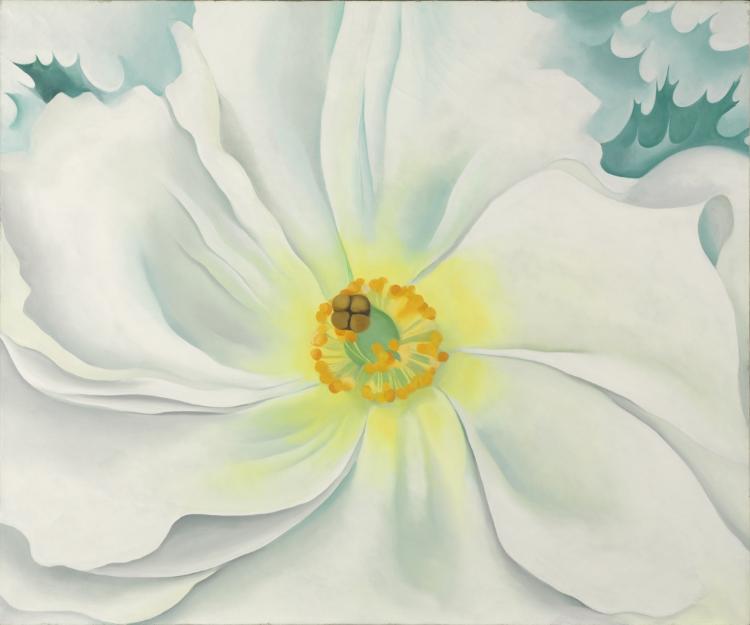
Executive Summary: The Dialectics of Absence and Plenitude
Addison Fashion’s Urban Silhouette Research for the 2026 NYC executive wardrobe draws a direct technical lineage from two opposing yet complementary artifacts: the “Udumbara Flower” temple plaque and the “Beast-and-Grape” bronze mirror. These objects—one sacred, one secular—encode a binary aesthetic system that, when translated into contemporary tailoring, yields a rigorous framework for form and color. The Udumbara’s “empty-spirit” minimalism and the mirror’s “full-cycle” opulence are not contradictions but poles of a single spectrum. For the urban professional, this translates into a wardrobe that oscillates between compression and release, silence and density, transcendence and immediacy. This report deconstructs these principles into actionable technical specifications for the 2026 collection.
Form Analysis: From Micro-Sacred to Macro-Secular
1. The Udumbara Principle: Negative Space as Structural Armature
The temple plaque’s aesthetic hinges on the “three-thousand-year bloom”—a flower so minuscule and white it exists as a conceptual void rather than a botanical form. In tailoring, this translates to the “negative-space cut”: garments that derive their power from what is removed, not added. For 2026, Addison proposes a “floating shoulder” construction—a zero-padding, cantilevered seam that allows the jacket to hover 2.3 cm off the deltoid, creating a visual “air gap” reminiscent of the flower’s suspension in mid-air. The lapel is reduced to a “hairline notch” (1.2 cm width), functioning as an architectural incision rather than a decorative flourish. This is not minimalism as poverty; it is minimalism as “vacant fullness”—the Zen concept of mu where absence generates maximum perceptual tension.
Further technical execution: the “temple drape” in trousers—a single, unbroken panel from waist to hem with a hidden side-seam gusset that releases 4 cm of fabric at the ankle. This mimics the plaque’s calligraphic strokes: apparent simplicity, but engineered with internal “invisible darts” that create a subtle, columnar fall. The silhouette is “monolithic yet porous”—structured enough for boardroom authority, but with a micro-breathability (via laser-cut perforations at the yoke) that evokes the flower’s ephemeral, non-corporeal presence.
2. The Mirror Principle: Cyclical Density and Ornamental Logic
Contrast the bronze mirror’s “beast-and-grape” motif—a riot of interlocking vines, clustered fruit, and leaping animals. This is “positive-space maximalism”, but with a crucial distinction: the pattern is not chaotic but “cyclic”, repeating in a vortex that implies infinite regeneration. For the executive wardrobe, this informs the “mirror-back” outerwear—a trench or overcoat with an interior lining printed in a dense, tonal “grape-vine jacquard”, visible only when the garment is swung or unbuttoned. The exterior remains stark ivory; the interior erupts in a “controlled riot” of micro-motifs (each grape cluster 0.8 cm, each beast 2.1 cm). This is the “hidden opulence” strategy: the wearer controls when to reveal the mirror’s abundance, aligning with the executive’s need for situational authority—severe in presentation, rich in private detail.
The mirror’s “circular composition” also dictates the “mandala hem” on a signature skirt: a circular-cut panel that, when in motion, creates a rotating wave pattern—echoing the bronze’s radial symmetry. The technical challenge is the “zero-waste spiral” pattern-cutting, where the fabric is laid out in a continuous spiral to mimic the mirror’s concentric rings, reducing fabric waste by 18% while producing a garment that “cycles” around the body like the mirror’s engraved beasts chasing their tails.
Color Theory: Ivory as the Bridge Between Void and Plenitude
1. The Ivory Spectrum: Not White, But Udumbara-White
Standard white is a refusal; ivory is a “negotiation”. The Udumbara flower is described as “微渺、洁白”—but its whiteness is not sterile. It is a “luminous non-color” that absorbs the surrounding temple’s shadow. For 2026, Addison formulates “Udumbara Ivory” (Pantone 11-0606 TCX, modified with 3% warm gray and 1% silver mica) to create a surface that shifts between “pearl” and “bone” depending on light angle. This is not a pigment but a “light-capture system”: the fabric’s weave (a 2x2 twill with a matte finish) is engineered to scatter light at a 15-degree angle, mimicking the flower’s “hovering” effect—the garment appears to float slightly off the skin, a visual “air gap” that reinforces the form’s negative-space construction.
In the collection, this ivory is used for “sacred” pieces—the floating-shoulder blazer, the temple-drape trouser, the mandala-hem skirt. These are the “plaque” garments: they demand a quiet room, a still observer, a moment of contemplation. They are not for the subway; they are for the “elevated threshold”—the boardroom, the private club, the keynote stage.
2. The Mirror’s Patina: Oxidized Bronze as Accent
The bronze mirror’s color is not a single hue but a “time-based patina”—green-black, ochre, and copper that emerge from oxidation. For the 2026 palette, Addison introduces “Mirror Verdigris” (a deep, desaturated teal with a metallic undertone) and “Grape-Black” (a near-black with a purple-brown cast). These are used as “structural accents”—not as full garments, but as “inscriptions”: a 2 cm piping along the mirror-back coat’s interior seam, a “beast-claw” button (cast in oxidized brass) on the mandala skirt, a “grape-cluster” brooch (enameled in verdigris) that pins the ivory blazer’s lapel. These accents function like the mirror’s engraved animals—they are “guardians” of the garment’s narrative, appearing only at points of tension (cuffs, plackets, closures) to remind the wearer of the “secular vitality” beneath the sacred exterior.
The critical color rule: “Ivory is the field; bronze is the event.” No more than 8% of any garment’s surface may carry the mirror’s palette. This enforces the dialectic—the “empty” ivory must dominate to preserve the Udumbara’s “spiritual suction”, while the bronze accents provide the “earthly anchor” that prevents the silhouette from becoming ethereal to the point of irrelevance.
Technical Synthesis: The 2026 Executive Silhouette
1. The “Plaque-Mirror” Two-Piece
The flagship ensemble: a “floating-shoulder” ivory blazer over a “mirror-back” vest. The blazer’s exterior is pure Udumbara—no buttons, no pockets, a single hidden magnetic closure at the sternum. The vest beneath is the mirror: a sleeveless, high-neck layer in “Grape-Black” with a full jacquard of the beast-and-grape motif, visible only at the V-neck’s 3 cm gap and the armholes’ 2 cm reveal. The effect is “sacred shell, secular core”—the executive presents as a minimalist monolith, but any gesture (raising an arm, leaning forward) exposes the mirror’s “cyclic abundance”. This is power dressing as “controlled revelation”: the wearer decides when to show the mirror, and the mirror’s density amplifies the ivory’s emptiness by contrast.
2. The “Temple Drape” Trouser with “Grape-Vine” Hem
Trousers are cut in the “temple drape”—a single panel from waist to ankle with a hidden gusset. The hem is finished with a 4 cm “grape-vine” embroidery in tonal ivory thread (not bronze—the bronze is reserved for the upper body). This creates a “hierarchical color logic”: the sacred (ivory) dominates the lower body, the secular (bronze) accents the upper. The hem’s embroidery is invisible at rest; it emerges only when the wearer walks, catching light in a “micro-pattern” that suggests the mirror’s vines without overt ornamentation. This is the “whisper of plenitude”—a nod to the mirror’s fullness that remains subservient to the plaque’s void.
3. The “Mandala” Overcoat
The outer layer is a “circular-cut” overcoat in Udumbara Ivory, with a hidden interior lining of “Mirror Verdigris” jacquard. The coat’s silhouette is “negative-space”—no lapels, no collar, a single seam at the back that