Urban Form: Herakles the Archer
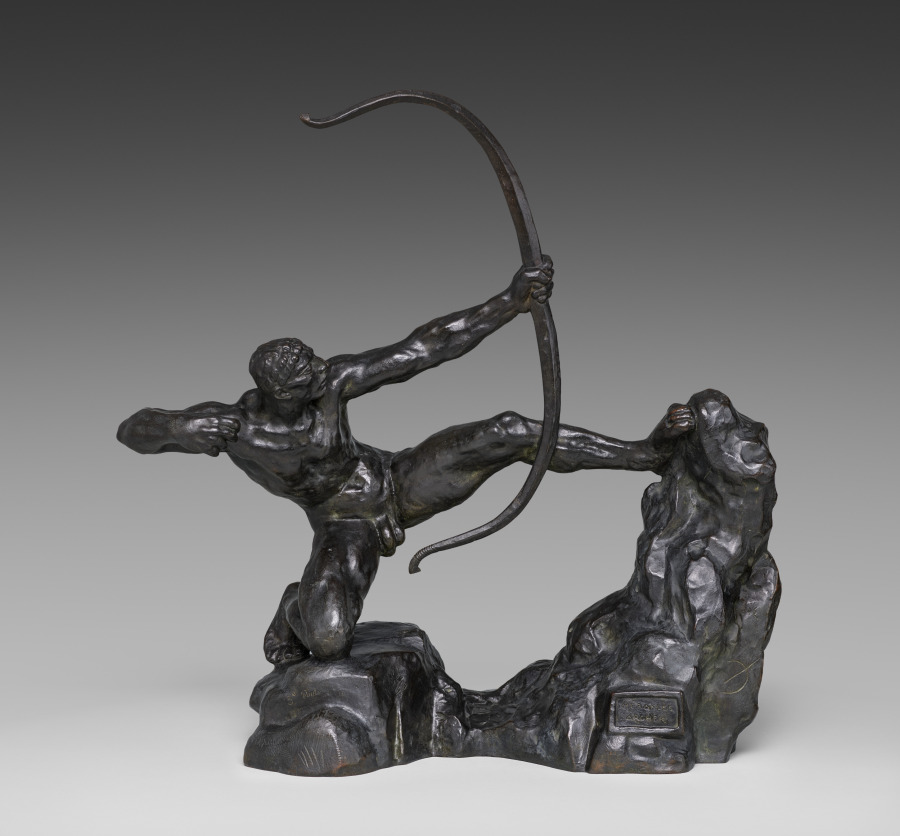
Executive Summary: The Heraklean Paradox in Urban Form
Addison Fashion’s Urban Silhouette Research for 2026 identifies a critical tension within the contemporary executive wardrobe: the dialectic between self-contained form and ethical exposure. The subject, Herakles the Archer, is not interpreted through classical musculature or heroic narrative, but through the dual artifacts provided—a Song dynasty Meiping vase with wave motif and Daumier’s Robert Macaire before his judges. These objects, separated by seven centuries and opposing moral registers, converge on a single formal question: can a garment’s silhouette achieve autonomous beauty without becoming a prison, or must it carry the scar of judgment to be relevant? This research deconstructs the vessel and the cage as twin archetypes, translating their structural logic into a slate-toned, minimalist system for the 2026 NYC executive.
I. The Vessel: Form as Autonomous Geometry
A. The Meiping’s Shoulder Line and the Architecture of Restraint
The Meiping’s defining feature is its high, rounded shoulder that descends into a narrow, flaring foot. In tailoring terms, this translates to a structured, elevated shoulder pad with a pronounced sleeve head that creates a visual fulcrum. The 2026 Addison blazer adopts this geometry: a firm, slightly extended shoulder (0.5 cm beyond the acromion) that does not slope but holds—a deliberate, architectural pause. The torso then narrows with a suppressed waist (12 cm reduction from chest to waist), echoing the Meiping’s dramatic inward curve. This is not a feminine cinch but a containment—a vessel that holds the torso as if it were liquid, yet never spills. The hem, unlike the Meiping’s flared foot, is cut straight and sharp, terminating at the hip bone to avoid any suggestion of drape or flow. The result is a silhouette that is self-referential: it does not gesture outward, does not invite interaction, and does not apologize for its presence.
B. The Wave Motif as Surface Tension
The Meiping’s abstract wave pattern is not decorative; it is a system of rhythmic compression applied to the vessel’s surface. For Addison, this informs the fabric treatment: a slate-toned, high-twist wool with a subtle herringbone weave that mimics the wave’s undulation without literal representation. The weave’s diagonal lines create a micro-texture that catches light at varying angles, producing a visual “tide” across the garment’s surface. This is not print; it is structural pattern—the weave itself is the wave. The fabric’s weight (380 GSM) provides a crisp, unforgiving drape that holds the silhouette’s geometry without collapsing. The color, Slate, is chosen for its neutrality under fluorescent office lighting and its capacity to absorb rather than reflect, aligning with the Meiping’s self-sufficient glaze. The garment does not speak; it is.
II. The Cage: Ethical Line and the Scars of Judgment
A. Daumier’s Etching as Structural Interruption
Daumier’s Robert Macaire is a study in broken line—the etching’s sharp, hurried strokes create a visual staccato that disrupts any classical harmony. In tailoring, this translates to deliberate seam placement that interrupts the vessel’s smooth surface. The 2026 Addison jacket features a visible, top-stitched princess seam that runs from the shoulder’s apex, curving under the armhole, and terminating at the hem. This seam is not hidden; it is exposed, with a contrasting thread in a darker slate tone, creating a “scar” on the garment’s surface. The line does not follow the body’s natural contour but cuts against it, echoing Daumier’s moral incision. A second interruption occurs at the collar: a sharp, notched lapel with a hard, pressed edge that mimics the judge’s bench—a horizontal line of authority that severs the neck from the torso. The jacket’s closure is single-button, high-set, forcing the wearer into a posture of self-presentation—the button is the point of judgment, the moment the garment decides whether to open or close.
B. The Trousers: From Vessel to Verdict
The lower half of the silhouette must resolve the dialectic. The trousers are cut straight, with a slight taper from knee to ankle, echoing the Meiping’s narrowing foot. However, the fabric is unstructured, with a subtle drape that allows movement—a nod to Macaire’s restless, evasive energy. The waistband is high, with a hidden elastic panel at the back, creating a tension between containment (the vessel) and give (the cage’s bars). The hem is cropped, 2 cm above the ankle, exposing the sock and shoe—a deliberate break in the silhouette’s verticality, akin to Daumier’s unfinished lines. The trousers do not complete the form; they interrupt it, forcing the eye to stop and question. The color remains Slate, but the fabric is a lighter weight (280 GSM) with a matte finish, creating a tonal shift that separates the upper vessel from the lower cage.
III. Color Theory: Slate as the Ethical Middle Ground
A. The Chromatic Compromise
Slate is not a neutral; it is a negotiated color. It sits between the Meiping’s celadon glaze (a green-gray that suggests natural harmony) and Daumier’s ink-black (a moral absolute). Slate is the color of urban dusk—the moment when the city’s glass towers lose their reflective brilliance and become opaque, when the distinction between public facade and private interior blurs. For the 2026 executive, Slate functions as a psychological buffer: it does not assert (like black) nor recede (like beige). It holds the body in a state of suspended judgment, allowing the wearer to exist without immediate ethical categorization. The color’s blue undertone introduces a cold, analytical quality, aligning with the research’s MBA-level precision. It is the color of a balance sheet—neither profit nor loss, but the calculation itself.
B. Monochromatic Layering and the Denial of Ornament
The minimalist system rejects any secondary color. The shirt is Ivory, but only as a functional underlayer—its collar is hidden beneath the jacket’s high neckline, and its cuffs are folded exactly twice, creating a 2 cm band of contrast at the wrist. This is not decoration; it is structural information, signaling the wearer’s attention to detail. The tie is eliminated; the neckline is left bare, exposing the throat as a vulnerable, unadorned surface—a direct reference to Macaire’s exposed neck before the judges. Footwear is a slate-toned, unpolished leather Chelsea boot with a blunted toe, echoing the Meiping’s rounded foot and the etching’s lack of refinement. The boot’s sole is thin (0.8 cm), keeping the wearer close to the ground, denying any elevation or heroic stance.
IV. The 2026 NYC Executive: A Wearable Dialectic
A. The Garment as Ethical Test
The final silhouette is a single-breasted, three-button jacket with a suppressed waist, exposed princess seams, and a high-set closure, worn over a straight-leg, cropped trouser. The ensemble is entirely Slate, from the wool’s herringbone texture to the boot’s matte finish. The wearer does not “look” heroic; they look held—both contained by the vessel’s geometry and exposed by the cage’s seams. This is the Heraklean paradox: the archer must draw the bow (tension) and release the arrow (judgment) in a single, continuous motion. The garment enables this by creating a physical memory of both states—the shoulder’s firmness (the drawn bow) and the seam’s interruption (the release). The executive who wears this silhouette is not performing power; they are performing the question of power—whether beauty can exist without ethical consequence, and whether ethics can be worn without becoming a costume.
B. Final Specification Table (for Internal Use)
Garment: Addison “Herakles” Jacket, Minimalist Cut
Shoulder: Extended 0.5 cm, structured pad, no slope
Waist Suppression: 12 cm, achieved via vertical dart and princess seam
Seam Treatment: Exposed, top-stitched, contrasting dark slate thread
Closure: Single horn button, set 3 cm below collar notch
Fabric: 380 GSM high-twist wool, herringbone weave, slate dye
Trousers: Straight leg, 2 cm crop, hidden elastic back panel
Footwear: Unpolished leather Chelsea boot, blunted toe, 0.8 cm sole
Color System: Monochromatic Slate, with Ivory underlayer (collar/cuff only)
This is not a uniform. It is a portable dialectic—a garment that refuses to resolve the tension between the Meiping’s silent perfection and Daumier’s accusatory line. The 2026 NYC executive