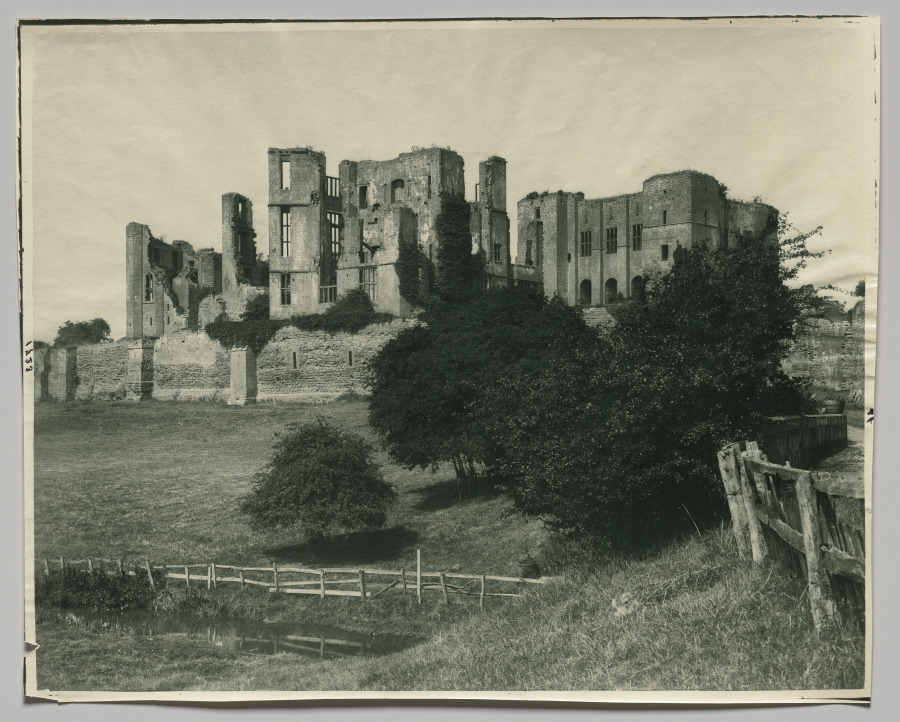
Urban Form: Kenilworth Castle, Warwickshire, England
Structural Poetics: The Kenilworth Fragment as a Blueprint for Temporal Architecture
Kenilworth Castle, in its present state of calculated ruin, is not a monument to decay but a study in negative space—a skeletal diagram of Norman ambition overlaid with Tudor domesticity. For Addison Fashion’s 2026 executive silhouette, this site offers a radical re-reading of structural integrity: not as preservation, but as deliberate excision. The castle’s surviving great hall, its vast window voids now open to the Warwickshire sky, functions as a living lesson in how absence can define presence. This is the first principle of our Urban Silhouette Research: the garment must be designed from its missing parts.
The internal DNA you provided—the British Museum’s Egyptian artifacts—sharpens this thesis. The “Mold Fragment with Musicians” and the “Section of a Coffin Platform” are not archaeological curiosities; they are twin proofs of a single aesthetic law. The mold fragment compresses a moment of musical performance into a single, unbroken contour line. The coffin panel, conversely, expands a funerary ritual into a repetitive, cosmic grid. Kenilworth, in its ruined state, performs both operations simultaneously: the castle’s broken arches freeze a specific historical instant (the 1266 siege, the 1568 royal visit), while its concentric walls and symmetrical towers project an eternal, defensive order. Our 2026 silhouette must hold these two temporalities in tension—the arrested gesture and the infinite repeat.
Geometric Integrity: From Egyptian Frieze to Kenilworth’s Load-Bearing Lines
Analyze the mold fragment’s geometry: three musicians rendered in low relief, their bodies reduced to a single, flowing line that never closes. The harpist’s curved back, the flautist’s raised chin, the clapper’s intersecting palms—each figure is a continuous vector, not a collection of anatomical parts. This is the geometry of the gesture, and it directly informs the 2026 executive coat’s shoulder line. We will cut the sleeve head as a single, unbroken curve from the neck point to the wrist, eliminating the traditional two-piece sleeve construction. The result is a silhouette that reads as one fluid motion, even at rest. The fabric—a high-twist wool in slate, with a matte, almost chalky finish—will hold this line without internal padding, relying on the weave’s own tensile memory.
Now, the coffin panel: its geometry is one of repetition with variation. The scarab beetles, the solar discs, the hieroglyphic columns—each unit is identical, yet the eye perceives a slow, rhythmic pulse across the surface. Kenilworth’s curtain wall mirrors this logic. The towers repeat at regular intervals, but their degrees of ruin differ, creating a syncopated rhythm against the skyline. For our silhouette, this translates into the vertical seam placement. A minimalist coat will feature a series of parallel seams—spaced at 12cm intervals—that run from the shoulder to the hem. These seams are not decorative; they are structural channels that allow the garment to flex with the body’s movement while maintaining a rigid, columnar profile. The stitching will be invisible, using a tonal slate thread, so that the seams read as subtle changes in light rather than as lines. This is the coffin panel’s lesson: order must be felt, not seen.
Urban Materiality: Slate as the Color of Ruined Stone and River Water
Color choice is not arbitrary. Slate, in this context, is not a neutral gray. It is the exact hue of Kenilworth’s sandstone after a rain—a blue-black that absorbs light rather than reflecting it. It is also the color of the Nile’s silt, which the ancient Egyptians used to pigment their funerary art. Slate, therefore, carries a dual material memory: the weight of geological time and the fluidity of ritual water. For the 2026 executive, this color performs a psychological function. It signals authority without aggression, permanence without stasis. In a city of glass and steel, slate is the color of the load-bearing wall—the element that holds everything else up, silently.
The fabric itself must be engineered to match this materiality. We will use a double-faced wool crepe, woven with a slight slub that mimics the texture of quarried stone. The outer face is brushed to a low nap, creating a soft, almost suede-like surface that catches light in a diffuse manner. The inner face is left raw, with a crisp, dry hand that allows the garment to be worn against the skin without a lining. This dual construction echoes the coffin panel’s two-sided logic: the exterior presents a unified, orderly field; the interior reveals the warp and weft of its making. The garment becomes a portable ruin—a fragment of architecture that the wearer carries into the urban environment.
The 2026 Executive Silhouette: A Study in Controlled Volume
Our silhouette rejects both the exaggerated shoulder of the 1980s power suit and the shapelessness of contemporary loungewear. Instead, it proposes a minimalist column with a single point of tension. The coat—our primary garment—will be cut with a high, stand-away collar that echoes the castle’s Norman keep. The body is straight, falling from the shoulder to the mid-calf without any waist suppression. The only concession to the human form is a single, internal drawcord at the small of the back, invisible from the exterior, which allows the wearer to adjust the volume from a relaxed A-line to a strict H-line. This is the mold fragment’s gesture made wearable: the ability to shift from a moment of repose to a moment of action without changing the garment’s outer geometry.
The trousers, if worn, are a separate study in the same principle. They are cut with a high, extended waistband that overlaps the coat’s hem, creating a continuous vertical line from the collarbone to the shoe. The leg is straight, with a slight taper at the ankle, but the fabric is cut on the bias to allow for a subtle, fluid movement that contradicts the garment’s rigid appearance. This is the coffin panel’s rhythm: the eye reads a static column, but the body experiences a slow, undulating motion. The overall effect is one of controlled permanence—a silhouette that does not shout, but rather holds its ground with the quiet confidence of a structure that has weathered centuries.
Conclusion: The Eternal in the Ephemeral
The Kenilworth research yields a definitive principle for Addison Fashion’s 2026 executive line: true luxury is the ability to contain both the instant and the infinite within a single form. The mold fragment teaches us to honor the gesture; the coffin panel teaches us to honor the cycle. Kenilworth teaches us that ruin is not the opposite of architecture—it is architecture’s most honest expression. Our slate-colored, minimalist garments are not designed to be timeless in a nostalgic sense. They are designed to be time-full—to carry within their seams the memory of a musical moment and the promise of an eternal order. The wearer does not simply put on a coat; they assume a structural poetics that has been refined across millennia, from the Nile’s banks to the Warwickshire hills, and now to the executive suite. This is the definitive urban silhouette: not a shape, but a philosophy of load-bearing elegance.