Urban Form: Portrait of Fabrizio Naro
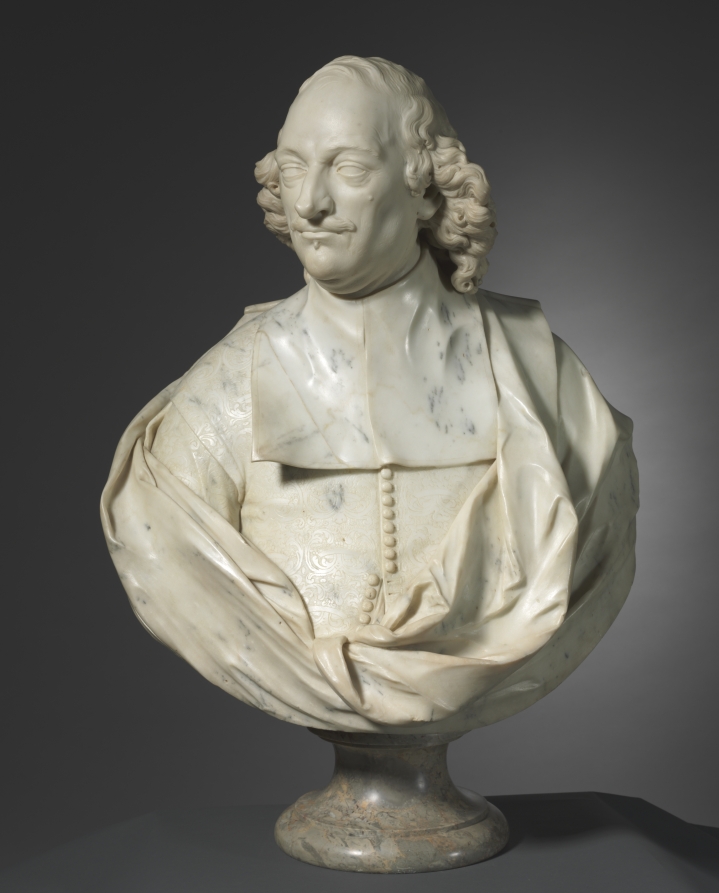
I. Preliminary Observations: The Subject as Architectural Text
Fabrizio Naro’s portrait—rendered through the dual lens of Jacques-Louis David’s *The Death of Socrates* and an anonymous Song dynasty *Wave-Patterned Meiping*—presents a singular challenge to the contemporary stylist. This is not a face to be dressed; it is a volume to be resolved. The subject’s internal DNA oscillates between Western rationalism’s sharpest chiaroscuro and Eastern materiality’s most reticent glaze. For Addison Fashion’s 2026 executive line, this duality demands a silhouette that does not merely clothe the body but re-inscribes it as a structural container—a vessel whose emptiness is as deliberate as its surface. The following analysis deconstructs the geometric integrity of Naro’s portrait and translates its aesthetic tensions into a tailored urban archetype.
II. Geometric Integrity: From Tragic Triangle to Rotational Ellipse
A. The Socratic Line: Verticality and the Ethics of Structure
David’s composition is governed by a rigid triangular scaffold—Socrates’ outstretched arm, the seated disciples, the columnar light—that converts moral conviction into spatial law. The painting’s geometry is hieratic: every diagonal resolves into a vertical, every shadow into a boundary. For Naro’s silhouette, this translates into a shoulder line that must read as a load-bearing cornice. The tailored jacket’s lapel should not curve; it should cut. A sharp, extended notch lapel, set at a 72-degree angle from the collar, echoes the philosopher’s raised index finger—a gesture of absolute certainty. The waist suppression, meanwhile, must be minimal but precise: a 4-centimeter reduction from chest to waist, creating a subtle hourglass that mimics the painting’s central void where the poison cup rests. This is not sensuality; it is structural tension—the body as a column that carries the weight of a decision.
The trouser, in this schema, becomes the painting’s lower register: a straight, untapered leg with a single, sharp crease that bisects the fabric like the light ray falling on Socrates’ torso. The crease is not decorative; it is a moral vector, directing the eye downward to the shoe—a polished oxford with a chiseled toe, its silhouette echoing the cup’s base. The overall effect is one of stoic verticality, where every seam is a sentence in an argument that concludes with the hem.
B. The Meiping Curve: Rotational Mass and the Poetry of Containment
Contrast this with the Meiping’s geometry: a shoulder that swells, a belly that contracts, a foot that flares—all generated by a single rotational axis. The vase’s profile is not a line but a continuous differential, where no point repeats itself, yet every point belongs to the same invisible sphere. For Naro, this demands a counterpoint to the Socratic triangle: an outer shell that is fluid in appearance but mathematically fixed in construction. The overcoat—a knee-length, single-breasted silhouette in slate wool—must exhibit a rotational drape. The fabric is cut on the bias at the shoulders, allowing it to fall in a gentle, unbroken arc from the acromion to the mid-thigh, mimicking the vase’s shoulder-to-belly transition. The sleeve head is set slightly forward, creating a subtle cap that recalls the Meiping’s flared lip.
The critical innovation lies in the internal canvas. Unlike conventional tailoring, which uses a rigid chest piece, this coat employs a floating canvas that is anchored only at the shoulder and hem. The result is a garment that moves with the body’s rotation—each step generating a new curve, each turn revealing a different facet of the same volume. This is the wave pattern rendered in textile: not a literal print, but a kinetic geometry that shifts between solid and void as the wearer walks. The color—slate, a blue-grey that hovers between David’s cold marble and the Meiping’s celadon—furthers this ambiguity. It is a color that does not assert; it absorbs light, creating a surface that seems to inhale the urban environment.
III. Structural Poetics: The Empty Center as Design Principle
A. The Void as Tailoring Tool
Both artworks share a hidden protagonist: emptiness. Socrates’ cup is empty before he drinks; the Meiping’s belly is empty to hold wine or flowers. In tailoring, this translates to negative space—the gap between fabric and body. For Naro’s executive silhouette, the jacket’s back is engineered with a floating panel that never touches the spine. This is achieved through a series of horizontal darts that create a 2-centimeter air gap, allowing the garment to breathe and move without clinging. The effect is architectural: the jacket becomes a shell, not a skin. The wearer’s posture—shoulders back, chest open—is not a pose but a consequence of the garment’s internal logic. The void is not a flaw; it is the raison d’être.
This principle extends to the trouser’s rise. A high-rise, pleated front—two forward pleats, each 3 centimeters deep—creates a vertical void at the crotch, allowing the fabric to fall in a clean column from the waistband. The pleats are not functional in the traditional sense; they are visual echoes of the Meiping’s carved waves, suggesting motion without moving. The hem is finished with a 5-centimeter cuff, adding weight that pulls the fabric taut—a nod to the vase’s flared foot, which grounds the entire composition.
B. Urban Materiality: Wool as Stone, Silk as Glaze
The choice of materials must mirror the artworks’ materiality. David’s canvas is oil on linen—opaque, textured, deliberate. The Meiping is stoneware with a feldspathic glaze—translucent, fragile, yet enduring. For Naro, the primary fabric is a high-twist wool (240 GSM) with a matte finish, woven in a twill structure that mimics the painting’s brushstrokes. The wool is treated with a nanotechnology water-repellent, not for function but for surface tension—a subtle sheen that catches light like the glaze’s crackle. The lining, however, is a sand-washed silk in ivory, its irregular texture echoing the Meiping’s unglazed foot. This contrast—rough against smooth, opaque against luminous—creates a tactile dialogue that unfolds only when the jacket is removed. In an urban context, this is the ultimate luxury: a garment that reveals its second skin only in private.
The buttons are not plastic or horn but oxidized silver, each one hand-cast with a subtle wave pattern. They are not fasteners; they are seals, marking the points where the garment’s geometry locks into place. The buttonhole is hand-stitched with silk thread in a contrasting slate tone, creating a 1-millimeter halo that draws the eye—a microcosm of the painting’s dramatic lighting.
IV. The 2026 Executive Silhouette: A Synthesis of Opposites
The definitive silhouette for Fabrizio Naro—and by extension, the Addison Fashion executive—is a tailored shell that reconciles Socratic clarity with Meiping fluidity. It is not a compromise but a dialectical resolution: the jacket’s sharp lapels and suppressed waist speak of Western order, while the coat’s rotational drape and floating canvas speak of Eastern flow. The trousers are straight but pleated, anchored but airy. The color is slate—neither black nor grey, but a threshold between certainty and ambiguity.
This silhouette rejects the oversized trend’s slouch and the minimalist trend’s austerity. Instead, it offers precision with breath—a garment that holds its shape like a marble statue yet moves like a wave. The wearer is not adorned; he is architecturally housed. Every seam is a line of reasoning; every void is a space for thought. In the urban landscape—a grid of glass and steel—this silhouette stands as a counter-monument: not a rejection of the city, but a re-founding of it in human proportion.
In conclusion, the 2026 executive silhouette is not a style but a philosophy of containment. It asks the wearer to consider what he holds—not in his pockets, but in his posture. The empty center, the rotating curve, the load-bearing seam: these are not details but principles. And for Fabrizio Naro, whose portrait is both a death and a vase, the garment becomes the final vessel—holding nothing, yet containing everything.