Urban Form: Roman Ruins, Villa Pamfili
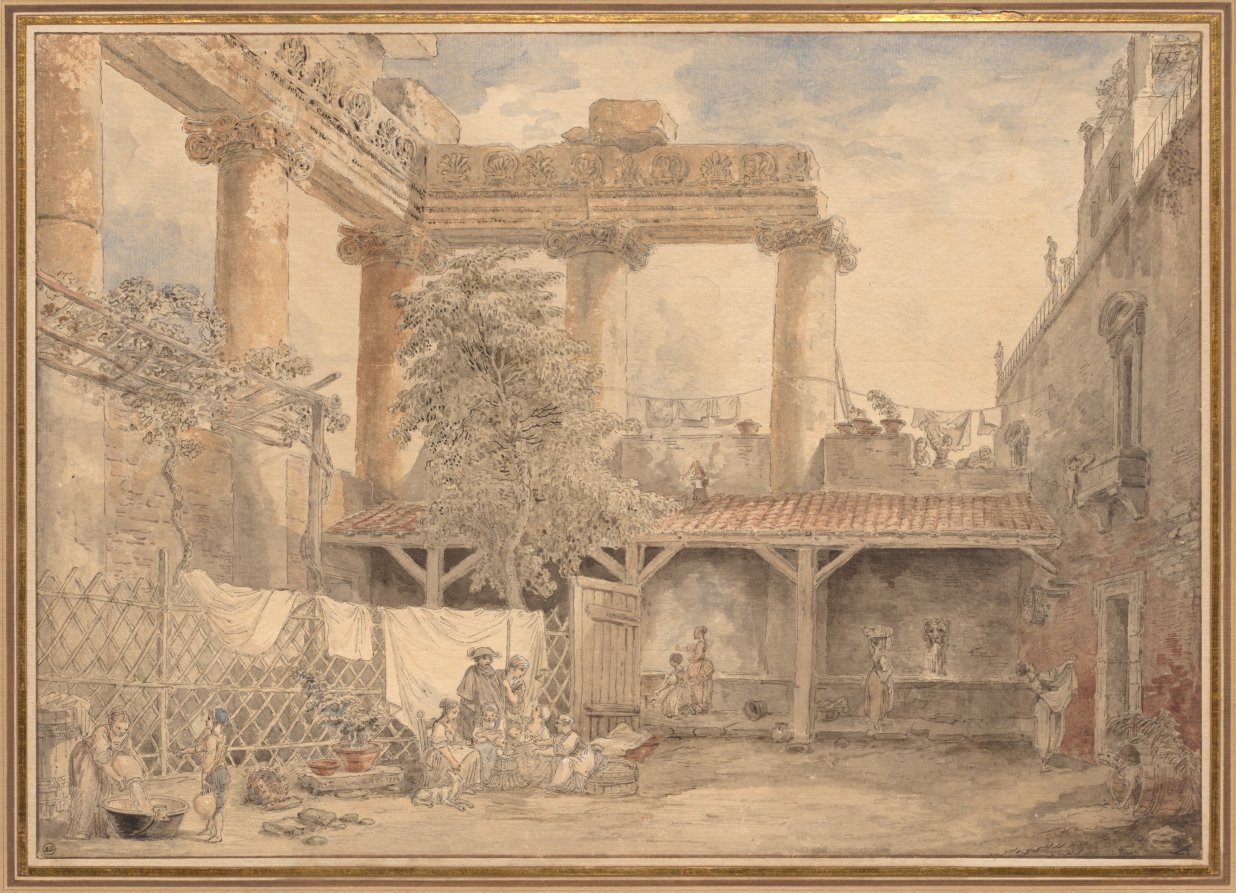
Technical Analysis: Architectural Silhouettes Derived from Villa Pamphilj and Cross-Cultural Artifacts
The proposed internal DNA, juxtaposing the Portrait of Saint Philip Neri with a Shang-Zhou ritual wine vessel, presents a profound conceptual framework for Addison Fashion's 2026 executive silhouette. This analysis will deconstruct the geometric and philosophical principles embedded within these artifacts and the Roman ruins of Villa Pamphilj, translating them into a coherent doctrine of urban materiality and structural poetics. The resultant silhouette is not a nostalgic revival but a rigorous, contemporary exoskeleton—a tailored architecture for the modern executive body.
I. Geometric Integrity: The Primacy of the Contained Volume
The core geometric proposition from the artifacts is the definitive container. The bronze vessel establishes an absolute, external geometry: a饱满而庄重 (full and solemn) form defined by its precise, unforgiving perimeter. This is not fluidity but demarcated space. Similarly, the portrait of Saint Philip Neri utilizes chiaroscuro not merely for modeling, but to carve a sacred volume from the void—the subject becomes a geometric solid of light. Villa Pamphilj’s ruins contribute the language of fragment and integrity: collapsed arches imply their original, perfect curvature; fractured walls reveal their planar truth.
For the 2026 silhouette, this translates to a tailored paradigm of severe geometric clarity. We propose garments constructed as self-evident volumes. Jackets and coats are conceived as clean, truncated cylinders or rectangular prisms, with seams acting as structural buttresses rather than mere closures. Darts are eliminated or internalized; shape is achieved through the strategic intersection of architectural panels. The shoulder line, critical to the executive stance, is rendered with the sharp, foundational certainty of a lintel—a direct homage to the ruined classical order. The silhouette, in essence, becomes a wearable ruin, where the body inhabits a structure of clear, intelligent boundaries.
II. Structural Poetics: The Dialectic of Surface and Inscription
Structural poetics emerge from the tension between surface and the inscribed narrative. The bronze vessel’s surface is a coded plane, rigidly segmented to host the taotie (饕餮) and thunder (雷纹) patterns. This is not decoration but a textural law, an external order imposed upon the form. Conversely, Saint Philip’s visage presents an internal topography, where wrinkles are described as "圣德的地形图" (a topographic map of saintly virtue)—a landscape formed from within, revealed by light.
Our material response is a philosophy of explicit construction and latent revelation. Externally, the garment celebrates its own assembly. Seams are raised, topstitched with a deliberate, graphic weight, mirroring the segmented fields of the bronze. Fastenings—substantial zippers, magnetic closures, sculpted hooks—are treated as functional ornament, akin to architectural hardware. Internally, the poetry resides. Lining will be engineered with subtle, laser-etched textural patterns or micro-pleating, invisible to the observer but perceptible to the wearer as a whisper against the skin—the modern equivalent of the internal "灵光" (inner radiance). Fabric itself becomes a site for this dialectic: a Slate-colored wool-cashmere blend, for instance, possesses a matte, monolithic exterior that, upon movement, reveals a hidden depth through micron-scale fiber refraction, capturing the play of light as chiaroscuro on a urban scale.
III. Urban Materiality: The Patina of Authority
Materiality must communicate temporal intelligence and resilient elegance. The bronze vessel’s "铜绿与锈迹" (verdigris and rust) are not flaws but authenticating patinas, records of ritual use and temporal passage. The ruined stone of Villa Pamphilj exhibits a similar, earned texture. The portrait’s depth is achieved through layers of glaze and shadow—a stratified surface.
Executive urban materiality for 2026 must reject sterile perfection. We will pioneer finishes that embody anticipatory weathering. Slate, as a core color, is chosen for its mineral, non- chromatic seriousness and its innate capacity to show depth and shadow. Fabrics will be engineered for a memory of form: densely woven, high-twist wools that develop a subtle, personal drape over time; technical felts that hold sharp edges yet soften at precise stress points. Leathers and technical composites will be treated with catalytic processes to accelerate the development of a unique, wearer-specific luster—a personal patina. This approach transforms the garment from a product into a document, accruing the quiet authority of the artifact.
IV. The 2026 Executive Silhouette: A Definitive Architecture
The synthesized 2026 silhouette is a study in contained potency. It is tailored, but not restrictive; architectural, but not inert. It operates on the principle of the inhabited volume, where the executive body is the sacred content—the modern analogue to Saint Philip’s grace or the ritual wine. The silhouette’s clean, external geometry (the vessel) houses the complex, dynamic reality of the individual (the portrait’s interiority).
Key manifestations include: a double-breasted overcoat with a parabolic back vent, suggesting the curve of a ruined apse; a tailored jacket with a seamless, molded front and a complex, seamed architectural back, representing the dichotomy of public facade and private structure; trousers with a precise, unwavering leg line, terminating in a weighted hem for gravitational poise. Every element serves to frame and project the executive form with the geometric integrity of a stele and the layered poetics of a palimpsest.
This is minimalist luxury redefined: not as the absence of detail, but as the absolute clarity of structural intent. It is urban armor forged from history and philosophy, designed for the individual who is both a vessel of action and a portrait of authority. The silhouette does not follow trends; it asserts a permanent, intelligent form against the ephemeral chaos of the city. It is, in its final essence, a container for will.