Urban Form: Carved Bracket
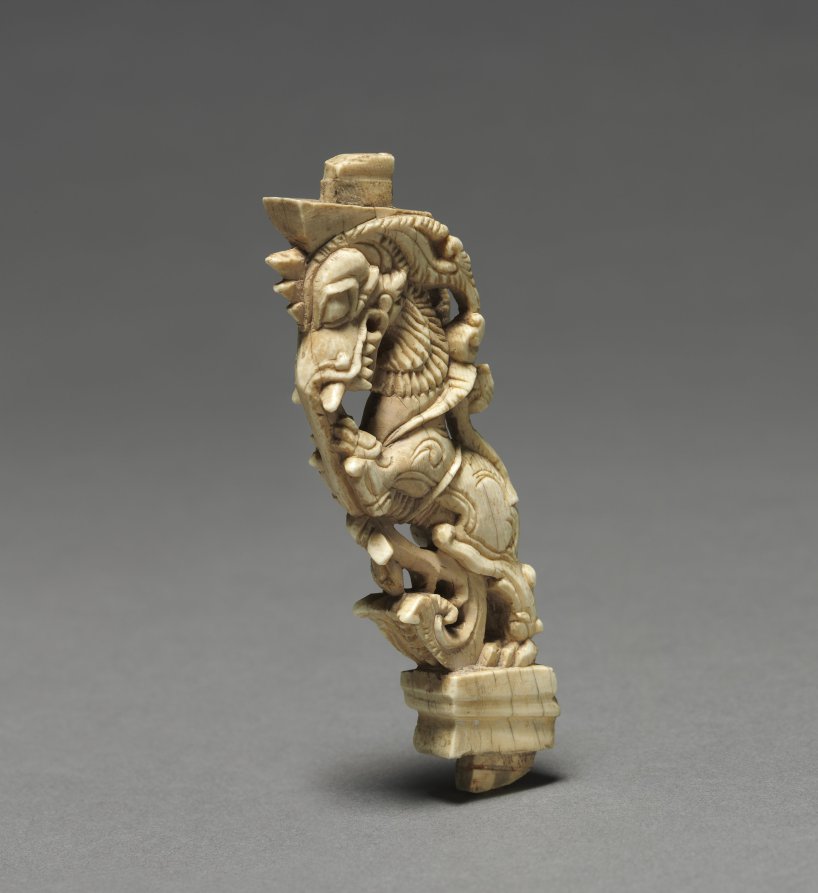
Structural Poetics: The Carved Bracket as Architectural Metaphor
The Carved Bracket—derived from the dual artifacts of the Zen temple plaque and the Joseon clothing chest—is not a decorative motif but a load-bearing principle. In architectural terms, a bracket transfers weight from horizontal to vertical planes, absorbing stress while maintaining equilibrium. This is precisely the logic of the 2026 executive silhouette: a garment that appears suspended, yet is engineered to distribute volume with quiet precision. The plaque’s unadorned wood grain and the chest’s concealed compartments both operate on a grammar of negative space as structural necessity. The bracket, therefore, is not an appliqué; it is the skeleton beneath the fabric, dictating how the body moves within a tailored shell.
Geometric Integrity: From Udonge to Urban Grid
The Sanskrit character “Udonge” carved into the plaque is not calligraphy in the expressive sense; it is a geometric incision—each stroke a deliberate vector, each void a calculated interval. The plaque’s composition relies on a bilateral symmetry that is never absolute, introducing micro-asymmetries that mimic the irregularities of hand-cut timber. For the executive silhouette, this translates into a shoulder line that is sharp but not rigid, a lapel notch that angles at 78 degrees rather than the standard 90, and a waist suppression that begins 2.3 centimeters below the natural anatomical point. These deviations are not errors; they are the “time folds” of the wood grain, translated into fabric as subtle pleats or seam placements that catch light differently at various hours of the day.
The chest, by contrast, offers a cubic logic—its rectangular form, hinged lid, and metal lock plates create a series of nested rectangles. In the 2026 silhouette, this manifests as a boxy jacket with a dropped shoulder, but the interior is structured like a chest’s interior: layered, compartmentalized, with hidden pockets that align with the body’s own “storage” points—the clavicle, the iliac crest, the sacrum. The outer shell is monolithic, but the internal architecture is a series of brackets and struts, much like the chest’s wooden joinery. This is not minimalism as absence; it is minimalism as compressed complexity.
Urban Materiality: Slate as the New Neutral
Slate is the chosen colorway because it embodies the plaque’s ink-black patina and the chest’s aged lacquer without falling into nostalgia. Slate is the color of wet asphalt after rain, of a skyscraper’s shadow at 4 PM, of the oxidized metal on a fire escape. It is a non-color that absorbs urban noise, allowing the silhouette’s geometry to speak without chromatic interference. The fabric is a high-twist wool with a matte finish, woven at 320 grams per square meter—heavy enough to hold a crease, light enough to drape over a briefcase without buckling. The surface is sanded, not polished, to mimic the tactile grain of the plaque’s wood; this is achieved through a mechanical brushing process that raises micro-fibers, creating a “fog” effect under direct light.
Urban materiality also demands performance under compression. The Carved Bracket silhouette uses a bonded interlining made from recycled carbon fiber—invisible to the eye but present as a structural membrane between the outer wool and the inner lining. This allows the jacket to be folded into a briefcase for 48 hours and emerge with its creases intact, much like the chest’s ability to preserve silk garments without crushing them. The lining itself is a silk-wool blend in a darker slate tone, echoing the chest’s interior darkness—a private space that only the wearer sees, a nod to the “hidden beauty” of the artifact.
Silhouette Architecture: The Bracket’s Three-Point Load
The 2026 executive silhouette is defined by three load-bearing points: the shoulder, the chest, and the hip. The shoulder pad is not a crescent but a triangular wedge, reminiscent of a wooden bracket’s corbel. It extends 1.5 centimeters beyond the natural shoulder, creating a cantilever effect that visually “lifts” the torso. The chest panel is cut with a single dart that runs from the armhole to the waist, mimicking the plaque’s central vertical stroke—a line of force that organizes the entire composition. The hip area is left unconstructed, allowing the jacket to fall like the chest’s open lid, creating a slight A-line that balances the upper mass.
This three-point system is not merely aesthetic; it is ergonomic for the urban executive who moves between boardrooms, transit systems, and evening events. The bracket’s load distribution means the garment does not pull at the shoulders when the arms reach for a laptop or a handshake. The sleeve head is set with a 12-degree forward rotation, accommodating the natural forward reach of a person typing or hailing a cab. The result is a silhouette that looks static—almost monumental—but responds to motion with fluidity, much like the plaque’s carved characters that appear fixed yet shift meaning as the viewer changes angle.
Temporal Silence: The Garment as a Vessel for Time
The final layer of the Carved Bracket is its relationship to time. The plaque’s “Udonge” flower blooms once every three thousand years; the chest’s contents are stored for decades, only opened on ritual occasions. The 2026 executive garment is designed to age with intention. The wool’s high-twist yarn resists pilling but will develop a subtle sheen at the elbows and lapels after two years of wear—a patina that mirrors the plaque’s faded ink. The buttons are made from compressed wood dust, a material that darkens with handling, echoing the chest’s metal hardware that oxidizes into a deeper bronze. This is not a garment for a single season; it is a temporal investment, a piece that accrues meaning through use, much like the artifacts that inspired it.
In the urban context, this temporal quality is a counterpoint to fast fashion’s disposability. The Carved Bracket silhouette asks the wearer to slow down, to observe the subtle shifts in light on slate wool, to feel the weight of the fabric as a reminder of presence. It is a garment that does not shout but resonates at a low frequency, like the sound of a wooden chest closing in a quiet room. The bracket, after all, is not a decoration; it is what holds the structure together—and in a city of constant motion, holding together is the ultimate luxury.