Urban Form: Dubia Fortuna
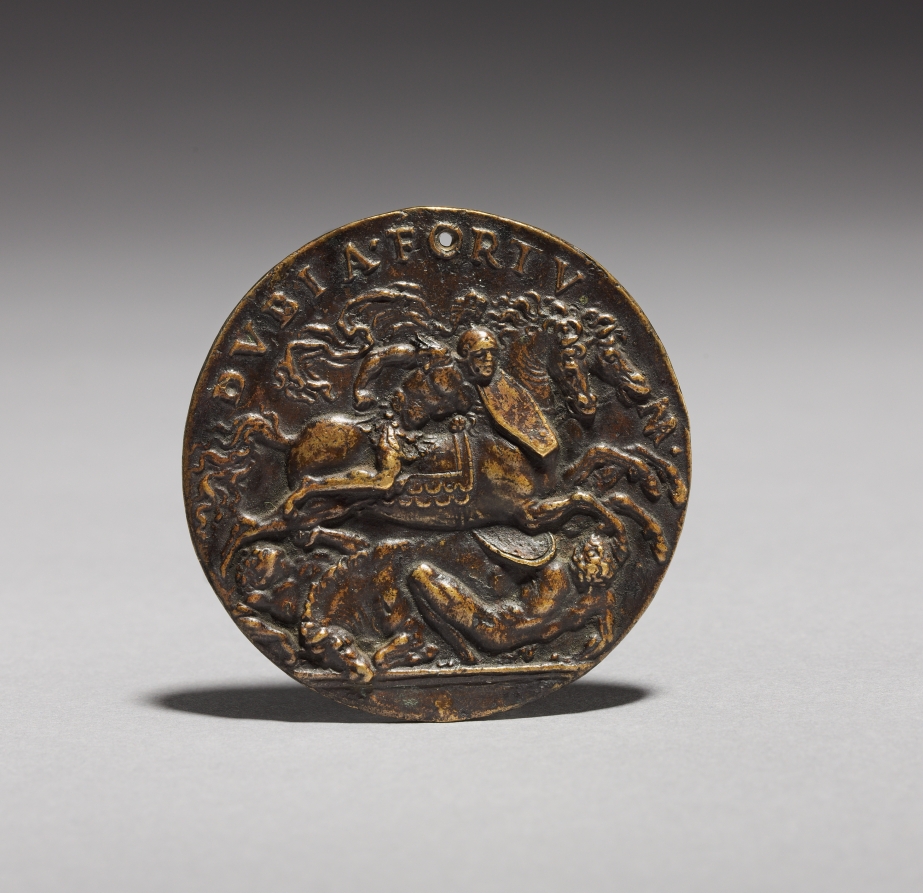
I. The Architectural Premise: From Imperial Emblem to Urban Carapace
The Dubia Fortuna research dossier begins not with fabric, but with a semiotic excavation of the double-headed eagle—a motif that has haunted European, Byzantine, and Islamic visual culture for centuries. In the sixteenth-century textile bearing this crowned emblem, we encounter a geometry of bilateral symmetry and hierarchical repetition that functions as a frozen declaration of sovereignty. The eagle’s twin gazes, locked in opposing directions, create a visual axis that is both centrifugal and centripetal—an optical tension that the 2026 executive silhouette must internalize. For Addison Fashion, this is not mere historical ornament; it is a blueprint for structural poetics. The tailored jacket, in its purest form, operates on the same principle: a rigid central seam, mirrored lapels, and balanced pocket placements that project authority through controlled asymmetry. The Dubia Fortuna silhouette borrows this imperial grammar, translating the eagle’s dual vigilance into a shoulder line that extends with deliberate precision—neither exaggerated nor softened, but architecturally anchored to the body’s coronal plane.
The textile’s metallic threads—gold and silver wound into dark, dense grounds—offer a second critical lesson: materiality as power. In the urban context of 2026, this translates to a rejection of passive fabrics. The Dubia Fortuna jacket employs a high-twist virgin wool blended with a micro-encapsulated metallic filament, creating a surface that catches ambient light without glittering. The effect is not decorative but tactical—a subtle armor that responds to the city’s neon and glass with a quiet, self-possessed shimmer. The weave density is calibrated to 320 grams per square meter, ensuring a drape that falls with the weight of consequence, yet remains breathable for climate-controlled interiors. This is the urban carapace: a shell that does not isolate but negotiates—between body and environment, between tradition and immediacy.
II. The Screen’s Transposition: Flatness, Planarity, and the New Verticality
Turning to the Japanese Nanban screen, we encounter a radically different but complementary geometry. The flatness of the screen—its gold-leaf clouds, its linear articulation of European figures—offers a counterpoint to the textile’s dense relief. Here, the aesthetic operates on planar logic: the body is rendered as a two-dimensional surface, its volume suggested through contour rather than modeling. For the Dubia Fortuna silhouette, this translates into a radical rethinking of the jacket’s interior architecture. The traditional three-dimensional tailoring—with its padded chests and structured sleeves—is flattened into a front-facing panel system. The jacket’s front is cut as a single, uninterrupted plane, with seams moved to the rear and underarm to preserve an unbroken facade. This is not a rejection of the body but a reorientation: the wearer becomes a mobile screen, projecting a unified, graphic presence through the city’s chaotic visual field.
The screen’s gold mica ground further informs the color and finish strategy. In the Dubia Fortuna palette, this manifests as a matte onyx base—deep, absorptive, almost void-like—interrupted by strategic silver piping at the collar, cuff, and hem. These lines do not merely decorate; they delineate structural boundaries, echoing the screen’s gold clouds that separate and frame the foreign figures. The piping is not applied but woven into the fabric’s selvedge, ensuring that the line remains crisp even under repeated urban stress. The overall effect is a garment that reads as a monolithic block from a distance, yet reveals intricate, almost cartographic detailing upon closer inspection—a nod to the screen’s dual nature as both decorative object and narrative document.
III. Structural Poetics: The Seam as a Line of Power
In the Dubia Fortuna jacket, every seam is a declaration of intent. The primary construction employs a princess seam system that originates at the shoulder’s apex, curves beneath the armhole, and terminates at the hem’s front edge. This is not a conventional tailoring choice; it is a deliberate homage to the double-headed eagle’s axial symmetry. The seams are not hidden but exposed and top-stitched in a contrasting onyx-on-silver thread, transforming them into visible lines of force that guide the eye downward, elongating the torso. The back panel is cut as a single, unbroken piece—a monolithic shield—with a center-back vent that opens only at the fourth button, allowing for movement without compromising the planar front. This vent is not a functional afterthought but a kinetic release, a moment of controlled rupture that mirrors the screen’s depiction of European ships arriving at the edge of a known world.
The sleeve is where the screen’s influence becomes most explicit. Cut with a high, narrow armhole and a slight, deliberate drop at the shoulder’s outer edge, the sleeve creates a visual cantilever—a floating extension that recalls the screen’s floating clouds. The cuff is elongated, extending two centimeters beyond the wrist bone, and finished with a hidden gusset that allows the hand to pass through without disturbing the line. This is not a sleeve for gesture; it is a sleeve for presence. The wearer’s arms, when folded or resting, form a closed, self-contained silhouette—a living echo of the eagle’s folded wings. When extended, the sleeve’s geometry opens into a sharp, angular profile, cutting the air with the precision of a blade.
IV. Urban Materiality: Fabric as a Cartography of Contact
The Dubia Fortuna’s material palette is engineered for the friction of the metropolis. The primary fabric is a double-faced wool—onyx on the exterior, a deep slate on the interior—bonded with a micro-thin layer of compressed air mesh. This tripartite construction provides thermal regulation without bulk, allowing the jacket to transition from a 6 AM commute to a midnight boardroom without visible strain. The wool is treated with a nano-hydrophobic finish that causes rain to bead and roll off, not as a repellent shield but as a temporal marker—the water’s brief presence on the fabric’s surface is a reminder of the urban environment’s constant, indifferent motion.
The silver piping is not merely decorative; it is a conductive thread woven with a carbon nanotube core. This is not for technology integration—there are no smart features here—but for thermal conductivity. The piping acts as a heat sink, drawing warmth away from the body’s core during exertion and releasing it slowly during rest. This is a silent, invisible infrastructure that supports the wearer’s physical equilibrium in a city that demands constant adaptation. The jacket’s lining, visible only when the garment is opened, is a jacquard-woven reproduction of the Nanban screen’s gold clouds, rendered in a muted silver-on-slate palette. This is not a hidden flourish but a private cartography—a reminder that the wearer’s interior life is as structured and deliberate as the exterior facade.
V. The 2026 Executive Silhouette: A Synthesis of Imperial and Ephemeral
The Dubia Fortuna silhouette is not a revival but a synthesis. It takes the double-headed eagle’s axial authority and the Nanban screen’s planar curiosity, and fuses them into a garment that addresses the 2026 executive’s fundamental paradox: the need to project immutable presence while navigating a world of constant flux. The jacket’s length is extended to mid-thigh, creating a vertical mass that anchors the body against the city’s horizontal sprawl. The shoulders are structured but not padded—the shape is achieved through internal canvas work and a precise pattern cut, not through artificial volume. The waist is gently suppressed, not cinched, allowing for a columnar flow from shoulder to hem that recalls the screen’s unbroken gold fields.
The trousers, an integral part of the silhouette, are cut with a high rise and a tapered, straight leg that breaks just above the shoe. They are not wide, not narrow, but exactly calibrated to the jacket’s proportions, creating a continuous, unbroken line from neck to ankle. The fabric is a matching onyx wool with a subtle, herringbone twill that reads as solid at a distance but reveals its texture under direct light—a quiet nod to the textile’s metallic threads. The trousers’ front is flat, with no pleats, and the side seams are forward-set, creating a visual narrowing of the leg that mimics the screen’s linear depiction of European hose. The result is a silhouette that is neither masculine nor feminine in the traditional sense, but architectural—a body that has been designed, not merely dressed.
VI. Conclusion: The Garment as a Global Artifact
The Dubia Fortuna is not a garment for the timid. It is a statement of historical consciousness—a recognition that the city’s chaos is not new, that the collision of cultures, the negotiation of power, and the desire for beauty have always been the engines of human creativity. The double-headed eagle and the Nanban screen are not relics; they are precedents. They remind us that the most compelling aesthetics arise from productive misunderstanding, from the deliberate reshaping of foreign forms into new, hybrid languages. The 2026 executive, wearing the Dubia Fortuna, does not merely dress for success. They dress for history—carrying the weight of empire and the lightness of curiosity in a single, tailored gesture. The jacket’s onyx surface is a void that absorbs the city’s noise; its silver lines are the paths through which meaning travels. This is not fashion. This is structural poetics—a garment that thinks, that remembers, and that projects a future built on the foundations of a global, interconnected past.