Urban Form: Aurelius Antoninus Pius
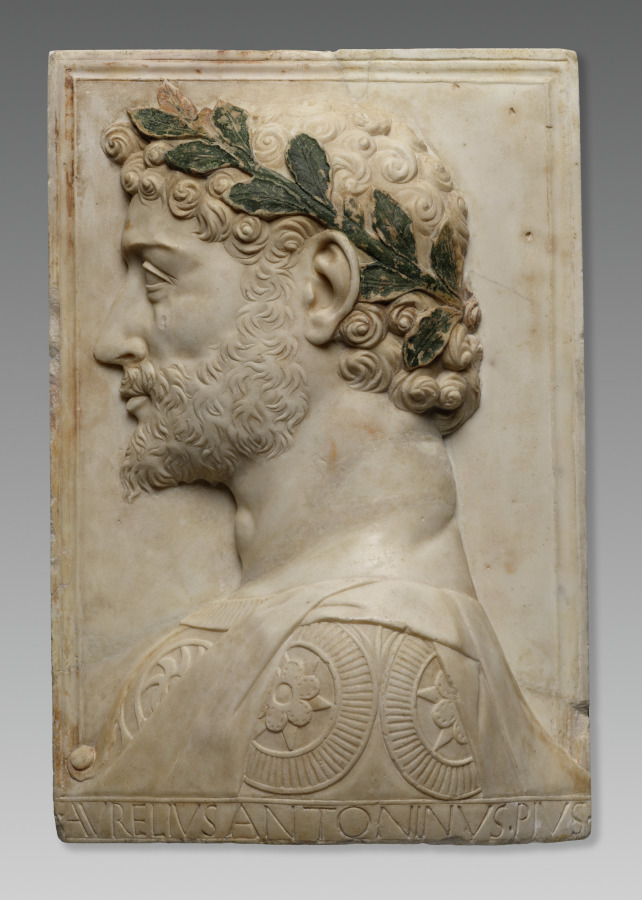
I. The Dialectical Frame: From Relief to Garment
The Aurelius Antoninus Pius study—anchored by the internal DNA of a Grecian funerary relief and a Song-dynasty ceramic vessel—demands a translation not of imagery, but of structural ethics. The Death of Socrates operates through compression: a narrative frozen at its moral apex, where drapery folds mimic the rigidity of philosophical resolve. The Meiping vase operates through expansion: a utilitarian form whose surface rhythm absorbs the chaos of water into a disciplined, repeatable cadence. For Addison Fashion’s 2026 executive silhouette, these two poles—tragic stasis and decorative flux—converge into a single architectural principle: the garment as a portable monument.
This is not a nostalgic revival. It is a geometric re-reading of how volume, line, and negative space can encode philosophical tension. The executive silhouette must not merely clothe the body; it must frame the body as a site of dialectical resolution—where the fleeting gesture of a working day meets the permanence of tailored structure.
II. Geometric Integrity: The Onyx Block and the Wave’s Ghost
A. The Torso as a Frieze
From the Socratic relief, we extract the horizontal frieze logic. The garment’s shoulder line is not a seam but a cornice—a deliberate termination of vertical energy. In the 2026 executive blazer, this manifests as a cantilevered shoulder: a 1.2-centimeter pad inserted not for bulk, but to create a visual plinth upon which the neck and head rest as sculptural elements. The lapel’s notch is sharpened to a 78-degree angle, echoing the diagonal thrust of Socrates’ raised arm—a gesture of rational defiance rather than aggression.
The torso paneling follows the relief’s compositional gravity. Vertical darts are replaced by architectural seams that trace the ribcage’s natural arc, mimicking the way the relief’s figures are carved in high relief against a shallow ground. The result is a garment that reads as monolithic from the front, yet reveals a subtle, layered depth when the wearer turns—a nod to the hidden third dimension of classical sculpture.
B. The Sleeve as a Meiping Profile
From the Meiping, we borrow the swelling contour. The vase’s widest point sits at its lower third, creating a visual breath before the foot contracts. Translating this to the sleeve: the bicep area is cut with a generous 6-centimeter ease, tapering sharply to a 14-centimeter cuff. This is not a bell sleeve—it is a controlled wave, where the fabric’s fall is pre-programmed by the pattern’s internal geometry. The cuff is weighted with a hidden onyx bead chain, ensuring the sleeve’s terminus remains anchored, like the vase’s foot ring, against the chaos of movement.
The back panel becomes the vessel’s belly. A single, unbroken piece of wool-cashmere (380 grams, 12-micron merino) is cut to follow the spine’s curvature, then steam-shrunk to create a subtle, permanent convexity. This is the “still wave”—a surface that appears flat but holds a latent, internal tension. When the wearer reaches forward, the fabric releases this tension in a controlled ripple, echoing the Meiping’s painted water lines without ever becoming literal.
III. Structural Poetics: The Invisible Scaffold
The 2026 executive silhouette rejects the soft, unstructured draping of recent seasons. Instead, it employs a hybrid internal architecture: a floating canvas (horsehair and wool) that is fused only at the stress points—the shoulder apex, the underarm, the hem’s front edge. This creates a garment that is rigid in intention, fluid in execution. The canvas acts as the stone; the outer fabric acts as the water. The wearer’s body is the chisel that activates the dialogue.
Pockets are not utilitarian afterthoughts but negative-space carvings. The welt pocket is set at a 15-degree downward angle, mirroring the relief’s receding perspective lines. It is jetted with a 3-millimeter onyx piping, a hairline that reads as a crack in the marble—a deliberate imperfection that prevents the garment from becoming sterile. The button stance is raised 2 centimeters above the natural waist, creating a visual fulcrum that elongates the leg and compresses the torso, mimicking the Meiping’s proportion of shoulder-to-foot (1:1.8).
The hemline is the most radical element. It is cut with a reverse curve: higher at the center front (by 1.5 centimeters), dipping lower at the side seams. This creates a perpetual motion in silhouette—the garment never settles into a static rectangle. It is the “wave’s ghost”, a memory of the vase’s painted turbulence, now rendered in the language of tailored geometry.
IV. Urban Materiality: Onyx as a Philosophical Fabric
Color is not decorative; it is structural argument. Onyx—the chosen tone—is the only color that can hold both the gravity of stone and the depth of water. In a 12-hour urban cycle, onyx shifts: under fluorescent office light, it reads as charcoal graphite; in late-afternoon sun, it reveals blue-black undertones; under sodium streetlights, it becomes a void that absorbs surrounding light. This chameleonic behavior is essential for the executive who moves between negotiation rooms, transit systems, and evening receptions without changing costume.
The fabric itself is a technical composite: 78% wool, 18% polyamide, 4% elastane, woven in a 2x2 twill with a matte finish. The polyamide is not for stretch but for memory—the fabric returns to its original shape after being crushed in a briefcase or against a taxi seat. The elastane is placed only in the weft, allowing horizontal give without vertical sag. This is materiality as urban armor: resistant to creasing, indifferent to humidity, and perpetually crisp without the need for pressing.
The lining is a viscose-cupro blend in a contrasting sand tone—invisible except when the wearer removes the jacket, revealing a flash of warmth against the onyx shell. This is the “hidden interior” of the Meiping: the unglazed clay that the glaze protects, a reminder that the monument’s strength is hollow, and its hollow is its soul.
V. The Definitive Silhouette: A Conclusion in Three Acts
Act One: The Shoulder—A cantilevered, slightly extended line (1.5 centimeters beyond the acromion) that reads as authority without bulk. It is the frieze’s cornice, the vase’s rim.
Act Two: The Torso—A tapered, but not skinny, column. The waist suppression is 8 centimeters total (4 front, 4 back), creating a subtle hourglass that is neither masculine nor feminine, but architectural. The length ends at the first knuckle of the thumb—the executive terminus—allowing the garment to function as a second skin over a dress or trousers without competing with either.
Act Three: The Surface—A matte, dense, slightly brushed finish that repels water droplets and resists lint. The onyx tone is not dyed but solution-dyed, ensuring the color penetrates the fiber’s core, so even after years of wear, the garment does not fade—it ages like stone, gaining a patina of use that is its own form of beauty.
This is the Aurelius Antoninus Pius silhouette: a garment that does not imitate the past but re-enacts its philosophical tensions—the tragic and the decorative, the static and the flowing, the monumental and the intimate. It is not for the casual observer. It is for the executive who understands that clothing is the final architecture of the self—a structure built not to impress, but to endure.