Urban Form: Anthropomorph
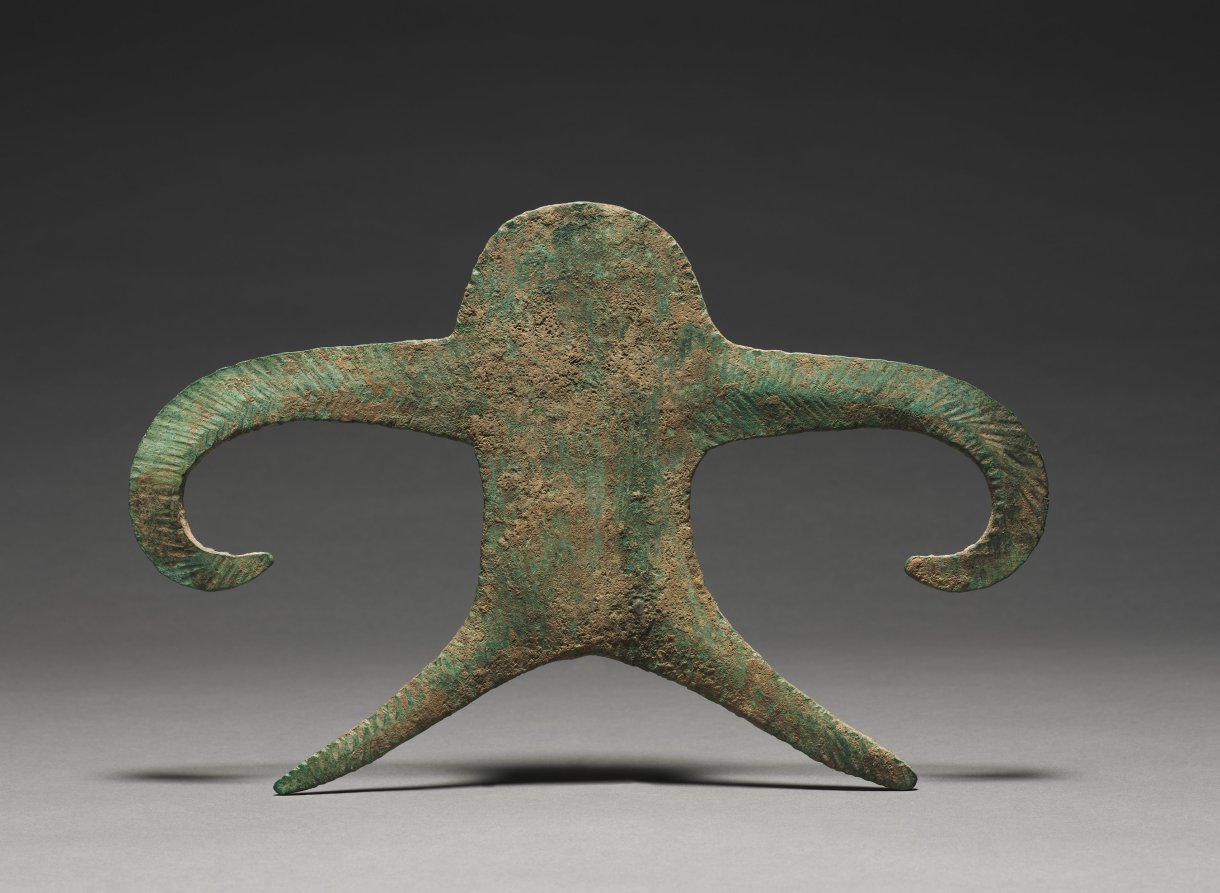
Structural Poetics: The Anthropomorph as Architectural Schema
The Anthropomorph subject, as distilled through the dual artifacts of the Udumbara temple plaque and the Han-dynasty bronze mirror, presents a paradox of immateriality rendered in tangible form. For the 2026 executive silhouette, this translates into a study of negative volume—the deliberate carving of absence around the body to articulate presence. The plaque’s “空寂” (emptiness) is not a void but a calculated spatial tension, achieved through the thinning of material at stress points and the elongation of vertical seams. In garment terms, this becomes a sculpted drape that falls away from the clavicle and sternum, creating a hollow chamber of air between fabric and torso. The mirror’s dynamic chariot lines, conversely, inject a directional flow—a diagonal seam from the left shoulder to the right hip that mimics the celestial procession’s momentum without literal ornamentation. The result is a silhouette that neither clings nor floats, but holds space with the precision of a load-bearing wall disguised as a curtain.
Geometric Integrity: From Temple Plaque to Tailored Plane
The plaque’s compositional logic—sparse branches, fading petals, and unadorned wood grain—demands a rethinking of lapel geometry. The 2026 executive jacket abandons the traditional notch lapel’s angular assertiveness for a continuous, blade-like revers that extends from the collar point to the hem, unbroken by pocket flaps or button clusters. This line replicates the plaque’s “疏朗” (sparse clarity), where every seam serves as a boundary of silence. The shoulder construction shifts from padded rigidity to a softly cantilevered cap, echoing the wooden plaque’s aged curvature—neither sharp nor slumped, but bearing the memory of repeated handling. The mirror’s white tiger, positioned in the west as guardian of transition, informs the back panel’s hidden articulation: a single, curved yoke seam that allows the upper back to expand during movement, then settle into a flat, almost monastic plane. This is not tailoring for the sake of fit, but tailoring as spatial philosophy—each panel a coordinate in a cosmic map of restraint.
Urban Materiality: Slate as the Color of Temporal Patina
Slate, as the designated palette, is not a neutral gray but a compressed narrative of oxidation and time. It references the bronze mirror’s verdigris—not the bright green of corrosion, but the deep, bluish-gray of a surface that has absorbed centuries of candlelight and ritual. In urban fabric, this translates to a double-faced wool with a matte, stone-washed finish, where the weave’s irregularities mimic the plaque’s wood grain. The material must feel dense yet breathable, like the temple plaque’s aged cedar—solid enough to suggest permanence, porous enough to allow the wearer’s heat to escape as a subtle vapor. For the trousers, a high-twist worsted with a faint, irregular slub creates a surface that catches urban light in fragments, echoing the mirror’s etched cloud scrolls. The color’s darkness is not somber but contemplative, absorbing the city’s neon and concrete glare into a quiet, internal luminosity.
The Mirror’s Dynamic: Motion as Static Architecture
Where the plaque teaches stillness, the mirror teaches controlled velocity. The chariot’s wheels, frozen in mid-revolution, and the tiger’s coiled haunches suggest a kinetic energy that must be translated into the garment’s interior engineering. The 2026 executive coat incorporates a hidden gusset at the underarm, cut on the bias to allow a full arm’s reach without disturbing the front’s flat, mirror-like surface. The sleeve head is set slightly forward, mimicking the chariot’s forward lean, so that when the wearer gestures, the fabric ripples in a single, unbroken wave—reminiscent of the mirror’s swirling cloud lines. The hem, however, is weighted with a discreet chain-stitched edge, ensuring that the garment’s motion always returns to a state of vertical repose. This is the dialectic of the two artifacts: the plaque’s eternal pause and the mirror’s eternal pursuit, resolved in a silhouette that moves like a thought—swift, deliberate, and ultimately still.
Conclusion: The Silhouette as a Mirror of the Invisible
The Anthropomorph research concludes that the 2026 executive silhouette is not a shape but a threshold. It borrows the plaque’s ability to make absence visible and the mirror’s capacity to render cosmic order in miniature. The final garment—a slate-toned, minimalist ensemble with a continuous lapel, a curved back yoke, and a bias-cut gusset—does not imitate either artifact. Instead, it embodies their shared principle: that true form emerges from the disciplined negotiation between what is shown and what is withheld. In the urban context, where every surface competes for attention, this silhouette offers a counter-architecture of silence. It does not shout; it resonates. It does not display; it reveals. And in doing so, it transforms the wearer from a passive subject of the city’s gaze into a living monument—a moving temple plaque, a walking bronze mirror, carrying the weight of eternity in the cut of a shoulder.