Minimalist
Slate
Urban Form: A Philosopher
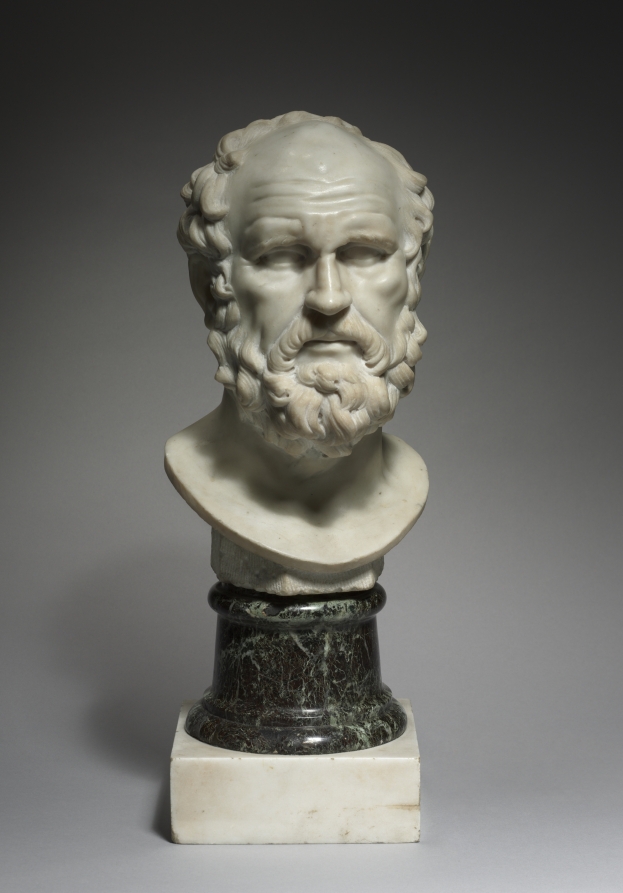
I. The Architectonics of Silence: A Preliminary Reading
The philosopher’s silhouette is not a garment; it is a thesis. Within the Addison Fashion research framework, we approach the subject as a living artifact—a body that carries the weight of contemplation, the discipline of stillness, and the refusal of ornamentation. The two Egyptian fragments—the *Mold Fragment with Musicians* and the *Section of a Coffin Platform*—offer a dialectical foundation for this analysis. The former is a study in arrested motion; the latter, a meditation on cyclical order. Together, they define the 2026 executive silhouette as a negotiation between the ephemeral and the eternal, between the tremor of thought and the immobility of conviction. For the philosopher, the urban environment is not a backdrop but a text. The silhouette must therefore respond to the city’s vertical pressures, its grid-like repetitions, and its moments of abrupt, poetic rupture. The minimalist approach is not a reduction but a distillation—a removal of the superfluous to expose the structural grammar beneath.II. Geometric Integrity: The Mold Fragment as Structural Poetics
The *Mold Fragment*—three musicians incised into clay—is a masterclass in negative space. The harpist’s curved back, the double-flute player’s tilted skull, the clapper’s intersecting palms: each line is a vector of energy, yet the composition remains resolutely flat, frontal, and economical. This is not realism; it is *rhythmic abstraction*. The fragment’s broken edges are not a loss but a provocation—they force the viewer to complete the gesture, to imagine the missing measures. In the 2026 executive silhouette, this translates into a shoulder line that is *implied* rather than asserted. We reject the padded, aggressive shoulder of the previous decade. Instead, the seam is set slightly inward, creating a subtle slope that suggests intellectual weight rather than physical dominance. The jacket’s lapel—cut in a narrow, almost clerical notch—functions as the incised line: it does not decorate but *directs* the eye downward, toward the hands, which are the philosopher’s primary instruments. The fabric must carry this tension. A slate-toned wool-cashmere blend, woven with a tight, high-twist yarn, offers a surface that is matte, dense, and slightly tactile—like fired clay. The weave’s subtle herringbone pattern is not decorative; it is a microscopic echo of the fragment’s incised lines, a textural rhythm that only reveals itself at close range. This is urban materiality at its most refined: the garment does not shout; it *insists*.III. The Coffin Platform: Repetition as Eternal Structure
The *Coffin Platform* presents the opposite strategy: symmetrical scarabs, repeated sun disks, and hieroglyphic sequences arranged in strict horizontal bands. Its power lies not in individual motifs but in the *interval* between them—the measured pause that creates a sense of cosmic breath. This is not stasis; it is *sustained vibration*. For the philosopher’s silhouette, this principle governs the garment’s vertical proportions. The jacket’s length is calibrated to the golden ratio of the torso, but the *internal* structure—the darts, the seams, the pocket placements—follows a system of repeated intervals. A 2.5-centimeter spacing between buttonholes, a 4-centimeter drop from collar to first seam, a 6-centimeter hem allowance: these are not arbitrary numbers but a modular grid that echoes the coffin platform’s ordered bands. The result is a garment that feels *inevitable*—as if it could not be otherwise. The trousers continue this logic. A straight, slightly tapered leg with a single, sharp crease—not pressed but *constructed* into the fabric—creates a vertical line that mimics the hieroglyphic column. The waistband is hidden, eliminating any visual interruption. The philosopher’s lower body becomes a plinth, stable and unadorned, allowing the upper torso’s subtle asymmetries (a slightly longer left sleeve, a marginally higher right shoulder) to read as deliberate deviations—the human tremor within the cosmic order.IV. Urban Materiality: Slate as the Color of Thought
Slate is not a neutral; it is a *condition*. It is the color of wet pavement after rain, of the philosopher’s notebook cover, of the museum’s shadowed alcove where the fragments rest. In the 2026 palette, slate functions as a chromatic anchor—a refusal of the warm, the expressive, the merely fashionable. It absorbs light rather than reflecting it, creating a surface that is both present and withdrawn. The fabric’s finish is critical. We specify a *sanded* finish—not brushed, not polished—which produces a micro-texture that catches ambient city light in a diffuse, non-directional manner. This is the urban equivalent of the coffin platform’s painted surface: it does not glitter, but it *glows* with an internal, mineral luminosity. The garment’s lining, in a contrasting silver-grey silk, is a private revelation—visible only when the jacket is opened, like the interior of a sarcophagus revealing its painted narratives.V. Structural Poetics: The Garment as a Philosophical Proposition
The philosopher’s silhouette must perform three functions simultaneously: it must *contain* the body without constraining it; it must *order* the visual field without dominating it; and it must *endure*—both in terms of material longevity and aesthetic timelessness. This is achieved through a series of deliberate structural choices: - **The Collar**: A low, rolled collar that stands slightly away from the neck, creating a shadow gap—a breathing space between skin and cloth. This echoes the harpist’s bowed head, suggesting introspection rather than confrontation. - **The Sleeve**: A two-piece sleeve with a forward-pitched set, allowing the arm to move freely while maintaining a clean, unbroken line from shoulder to wrist. The cuff is left unbuttoned, a deliberate incompleteness that invites the wearer to adjust it—a gesture of agency. - **The Closure**: A single, hidden button at the waist, allowing the jacket to fall open naturally when seated. This is the *clapper’s pause*—a moment of arrested motion that resolves into stillness.VI. Conclusion: The Eternal in the Ephemeral
The two Egyptian artifacts, separated by function and material, converge in a single aesthetic truth: that rhythm is the bridge between the momentary and the eternal. The 2026 executive silhouette for the philosopher does not attempt to replicate these artifacts but to *embody* their logic. It is a garment of intervals, of measured pauses, of incised lines that carry the weight of thought. In the city’s relentless flow, the philosopher in slate stands as a fixed point—not static, but *sustained*. The silhouette is a fragment of a larger, unfinished composition; it is also a complete, self-contained order. This is the paradox of minimalist luxury: the more it removes, the more it contains. The garment is not a shell but a scaffold—a structure upon which the wearer’s own rhythm, their own eternal, may be inscribed.
Technical Insight
Technical Insight: Translating Slate palettes into Minimalist silhouettes for the modern metropolis.