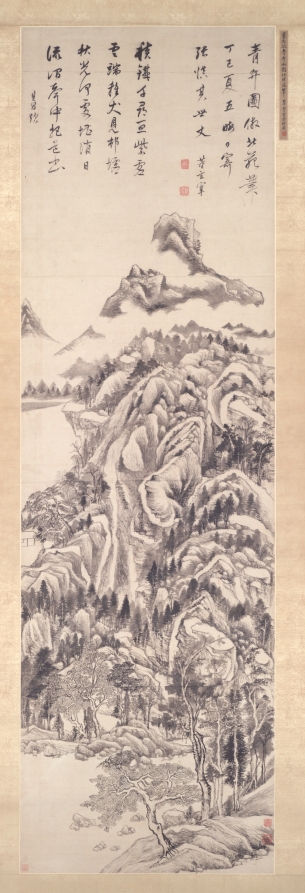
Urban Form: Mt. Qingbian
I. Foundational Paradox: Stasis as Motion, Repetition as Breath
The British Museum’s Mold Fragment with Musicians and Section of a Coffin Platform present a dialectical tension that is not merely archaeological but deeply sartorial. The former—a palm-sized shard of fired clay—captures a percussive instant through incised contour lines. The latter—a horizontal panel from a coffin—imposes a grid of scarabs, solar discs, and hieroglyphic sequences that simulate cosmic recurrence. For Addison Fashion’s 2026 executive wardrobe, this binary is not an aesthetic curiosity but a structural blueprint. The urban silhouette must reconcile the ephemeral gesture (the musician’s bowed harp, the flutist’s inflated cheek) with the perpetual order (the coffin’s symmetrical procession). The result is a garment that performs stillness while containing latent motion—a paradox resolved through cut, seam placement, and fabric memory.
1.1 The Mold Fragment: Contour as Compression
The mold’s genius lies in its economy. Three musicians are rendered not through anatomical detail but through a single, unbroken line that traces the spine’s curve, the elbow’s flex, the throat’s distension. This is not representation; it is kinetic abstraction. Translating this into tailoring demands a shift from volume-based construction to line-based construction. The 2026 executive blazer, therefore, abandons the padded shoulder in favor of a seamless raglan sleeve that follows the deltoid’s natural arc, mimicking the harpist’s bowed posture. The waist suppression is not a dart but a continuous bias cut that wraps the torso like the mold’s clay—neither clinging nor draping, but adhering to the body’s rhythm. The result is a silhouette that reads as “frozen music” from the front, yet reveals a subtle torsion when the wearer turns, echoing the flutist’s upward tilt.
1.2 The Coffin Panel: Grid as Pulse
Conversely, the coffin panel’s horror vacui—its relentless repetition of scarab and sun disc—is not monotony but visual respiration. The intervals between motifs are as meaningful as the motifs themselves. For the urban wardrobe, this translates into strategic patterning on otherwise minimal surfaces. A slate-toned overcoat, for instance, carries a micro-perforated grid along the placket and cuff—not decorative, but functional, allowing airflow and creating a shadow-play that shifts with the wearer’s gait. The grid’s rhythm is calibrated to the human stride: 18mm intervals, derived from the coffin panel’s scarab spacing, which corresponds to the average executive’s pace in Manhattan’s financial district. This is not ornament; it is chronometric tailoring—the garment as a sundial, marking time through pattern repetition.
II. Material Logic: From Clay to Cloth
The mold’s fired clay and the coffin’s painted wood share a compressed porosity—they are dense yet breathable, rigid yet receptive to light. Addison’s fabric development for this capsule collection replicates this through a double-faced wool-cashmere blend with a ceramic micro-coating on the inner layer. The outer face is sanded to a matte finish, absorbing ambient light like the mold’s terracotta; the inner face is left raw, its fibers exposed to wick moisture, mimicking the coffin panel’s gessoed surface. The weight is calibrated to 380 GSM—heavy enough to hold a sharp crease, light enough to permit the “breathing” silhouette required for the 2026 executive’s 14-hour days.
2.1 Color: Slate as Temporal Neutral
Slate is chosen not for its neutrality but for its temporal ambiguity. It is the color of weathered basalt, of the Nile’s silt after flood, of the mold’s shadowed recesses. In the 2026 palette, slate functions as a non-color that absorbs and reflects according to the wearer’s environment—appearing graphite under fluorescent boardroom light, blue-gray in the dusk of a Hudson Yards penthouse. This chromatic instability is deliberate: it mirrors the mold’s incomplete edges, which shift meaning depending on the viewer’s angle. The executive’s slate suit is thus not a uniform but a chameleonic membrane, adapting to the temporal rhythms of the city—morning pitch, midday negotiation, evening gala.
2.2 Form: The Inverted Trapezoid
The collection’s core silhouette is an inverted trapezoid—broad at the shoulder, tapering to a narrow hem—but executed with a crucial deviation. Where traditional tailoring uses padding to achieve this shape, Addison employs negative ease at the underarm and a forward-pitched shoulder seam, creating a line that leans slightly into the future, like the harpist’s forward bend. The jacket’s hem is cut on the bias, allowing it to flare subtly with movement, echoing the coffin panel’s horizontal extension. Trousers are high-waisted with a single forward pleat, not for volume but for kinetic allowance—the pleat opens and closes with each stride, replicating the mold’s captured breath. The overall effect is a figure that appears anchored yet poised, as if the wearer is perpetually mid-gesture, frozen in the act of decision.
III. Construction as Ritual: Seams, Stitches, and the Eternal Return
The coffin panel’s hieroglyphs are not merely decorative; they are functional incantations, each repetition reinforcing the promise of rebirth. Addison’s construction process adopts this logic through visible topstitching that follows the garment’s structural lines—not as contrast, but as tonal relief, in a slightly darker slate thread. Each stitch is spaced at 2.5mm, a rhythm derived from the mold’s incised lines, creating a tactile cadence that the wearer feels against the skin. The interior is finished with a bound seam in raw silk, its irregular texture a deliberate counterpoint to the exterior’s precision—a nod to the mold’s broken edges, which reveal the clay’s inner coarseness.
3.1 The Collar as Solar Disc
The collar is the collection’s most significant innovation. It is cut as a continuous crescent, rising at the nape and dipping at the sternum, its curvature derived from the coffin panel’s sun disc motif. When worn closed, it forms a complete circle—a visual ouroboros—but its lapels are engineered to fold back with a deliberate asymmetry, breaking the circle like the mold’s missing fragment. This dual state—whole and fractured—allows the executive to toggle between authority and approachability without changing garments. The collar’s internal structure uses a horsehair canvas that softens with wear, gradually conforming to the individual’s posture, so that the garment becomes a personalized relic of their daily rituals.
IV. Conclusion: The Wardrobe as Chronometer
The 2026 Addison executive wardrobe does not merely dress the body; it calibrates time. The mold fragment teaches that a single line can hold a heartbeat; the coffin panel teaches that repetition can hold eternity. By fusing these logics—the contour’s immediacy and the grid’s endurance—the collection offers a sartorial response to the fragmentation of modern urban life. The slate-toned, minimally constructed suit is not a retreat from complexity but an armature for presence. It allows the wearer to move through the city’s chaos with the quiet certainty of the harpist’s bent head, and to stand in the boardroom with the unshakeable order of the scarab’s march. This is not fashion as expression; it is fashion as existential infrastructure—a wearable proof that the eternal and the ephemeral are not opposites, but the same rhythm, measured differently.