Urban Form: Satyress
I. The Architectural Premise: Stasis as Structural Language
The 2026 executive silhouette, as derived from the dual aesthetic propositions of Johannes Vermeer’s A Maid Asleep and George Caleb Bingham’s A Vignette of Life on the Frontier, is not a garment. It is a constructed pause—a wearable manifestation of the interval between action and inertia. Both paintings operate within the liminal: the maid’s suspended consciousness between labor and leisure; the riverfront’s transient population between arrival and departure. For Addison Fashion, this translates into a tailored system that prioritizes geometric containment over expressive drape, horizontal tension over vertical flow, and internal structure over external ornament.
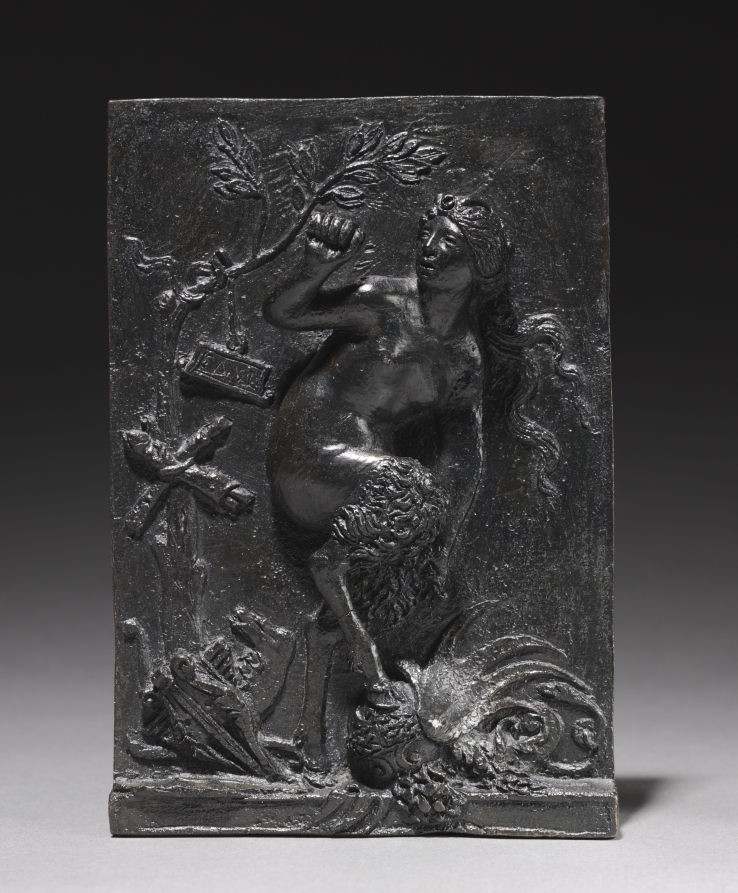
The critical insight from Vermeer is the grid of restraint. The doorframe, table edge, and picture frame form an invisible Cartesian lattice that holds the sleeping figure’s soft, disordered surroundings in check. In tailoring, this becomes the internal canvas: a fused chest piece, a reinforced shoulder seam, a precisely placed dart that mimics the painting’s orthogonal lines. The garment does not follow the body; it frames the body as a subject within a controlled architectural field. The satyress—half woman, half goat, a creature of both domestic threshold and wild edge—demands this duality. Her upper form requires the disciplined, almost severe tailoring of a Vermeer interior; her lower nature, the untamed but rhythmically ordered energy of Bingham’s frontier.
II. The Vermeer Principle: Controlled Light and the Compressed Torso
Structural Poetics of the Jacket
The executive silhouette’s jacket is a study in compressed volume. Vermeer’s light enters from a single source, carving the maid’s face and hands into relief while leaving her torso in a muted, contemplative shadow. The 2026 satyress jacket replicates this via asymmetric paneling: a single, unbroken seam running from the left shoulder to the right hip, echoing the window’s diagonal light path. The fabric—a dense, matte wool-silk blend in slate—absorbs rather than reflects, creating a matte surface that mimics the painting’s subdued luminosity. The shoulder is not padded but sculpted, using a technique of layered horsehair canvas that builds a subtle, sloping architecture—reminiscent of the maid’s relaxed but structurally supported posture.
The lapel is the doorframe. It is cut narrow, almost severe, with a sharp notch that terminates precisely at the sternum. This is not a lapel for gesture; it is a lapel for containment. It draws the eye downward, toward the waist, where a hidden waistband—an internal belt of rigid cotton twill—cinches the silhouette without external evidence. This is the painting’s “controlled stillness”: the garment appears effortless, but every millimeter is engineered. The sleeves are cut with a forward pitch, allowing the arms to rest in a natural, slightly folded position, as if the wearer is about to pause mid-thought—the exact moment of the maid’s drowsy suspension.
Materiality of the Trousers
The trousers are where Bingham’s influence emerges, but through Vermeer’s restraint. They are a high-rise, straight-leg cut, with a deliberate crease that functions as a plumb line—a vertical counterpoint to the jacket’s horizontal seams. The fabric is a worsted wool with a slight, almost imperceptible twill texture, evoking the river’s surface in Bingham’s painting: calm on top, but with a latent, directional current. The hem is finished with a 3.5-centimeter cuff, not for casualness, but to anchor the silhouette against the ground, mimicking the boatmen’s grounded stance on the dock. The rise is long, extending the torso’s line, creating a continuous column from shoulder to ankle—a direct translation of Vermeer’s vertical doorframe that holds the maid’s figure.
III. The Bingham Dialectic: Dynamic Balance in the Outer Layer
The Overcoat as Frontier Horizon
Bingham’s genius lies in orchestrated multiplicity—the way disparate figures coalesce into a single, harmonious mass. The 2026 satyress outerwear applies this through a duster-length overcoat in a slightly heavier slate wool, cut with a trapezoidal silhouette that flares subtly from the shoulders. This is not a coat for warmth; it is a coat for territorial definition. The shoulders are extended by 1.5 centimeters, creating a visual platform—the same way Bingham elevates his central figures against the river’s broad expanse. The coat’s back is a single, unbroken panel, falling from a yoke seam that sits precisely at the scapula’s apex. This seam is the painting’s horizon line: it divides the garment into an upper zone of order (the structured chest) and a lower zone of flow (the flaring skirt of the coat).
Pockets are hidden, welted, and angled at 15 degrees—a subtle nod to the boatmen’s relaxed, utilitarian stances. They are not for use; they are for visual rhythm, breaking the coat’s surface into a sequence of light and shadow, much like Bingham’s grouping of figures creates alternating patches of illumination and shade. The coat’s closure is a double-breasted front with a concealed placket, so that when fastened, the garment presents a seamless, almost monastic front—a direct reference to the maid’s enclosed, private space. When open, it reveals the tailored jacket beneath, creating a layered narrative of interiority and exteriority, of the private self and the public frontier.
The Vest as Transitional Membrane
No executive silhouette is complete without a vest, and here it becomes the most conceptually dense element. The vest is cut from a silk-wool faille in a slightly lighter slate, with a V-neckline that mirrors the maid’s half-open door. It is not a traditional waistcoat; it is a structural under-layer with a single, off-center button at the sternum. The back is made of a stretch mesh, allowing movement while maintaining the front’s rigid form. This vest is the painting’s “transitional space”—the threshold between the maid’s sleeping interior and Bingham’s active exterior. It is the garment that allows the wearer to move between boardroom and street, between contemplation and action, without altering the silhouette’s fundamental geometry.
IV. Color and Material: Slate as the Color of Suspended Time
Slate is not a neutral; it is a temporal pigment. It holds the gray of Vermeer’s shadowed walls and the muted blue-gray of Bingham’s river water. In the 2026 palette, slate is used exclusively for the primary shell, with ivory only as an interior lining—a hidden flash of the maid’s white cap, a secret nod to the frontier’s distant clouds. The materiality is paramount: high-twist wools that resist creasing, compact silks that catch light without glare, and a micro-ribbed cotton for the vest’s back, which provides a tactile contrast to the smooth outer layers. Every fabric is chosen for its ability to hold a crease or a seam with architectural precision, never yielding to the body’s casual movement.
The finish is matte, almost chalky, achieved through a process of steam-pressing and brushing that removes any sheen. This is the painting’s “absorbed light”—the way Vermeer’s surfaces seem to drink in illumination rather than reflect it. The result is a garment that appears to have been carved from a single block of stone, yet moves with the fluidity of a river current. It is the paradox of the satyress: the upper body is a monument, the lower body a stream.
V. Conclusion: The Silhouette as a Mirror of the In-Between
The 2026 executive silhouette is not a trend; it is a philosophical position. It rejects the bombast of oversized tailoring and the negligence of unstructured fluidity. Instead, it occupies the precise interval that Vermeer and Bingham both captured: the moment when order and entropy coexist, when the private and public merge, when the body is both a vessel and a structure. The satyress, with her dual nature, is the perfect archetype—she is the maid who dreams of the frontier, the pioneer who pauses at the threshold. Her garment must hold both realities in a single, seamless tension.
This is the definitive urban silhouette: a tailored system that uses geometry not to constrain but to elevate the ordinary. It is for the executive who understands that true power lies not in movement, but in the mastery of stillness. The jacket’s internal canvas, the trousers’ plumb-line crease, the coat’s horizon seam—each element is a brushstroke in a larger composition of restraint. When worn, the silhouette does not shout; it resonates, like the quiet hum of a Vermeer interior or the distant pulse of a Bingham river. It is, in the most literal sense, a garment for the in-between—a wearable meditation on the beauty of the pause.