Minimalist
Slate
Urban Form: Wine Cask with Stamped Floral Decoration
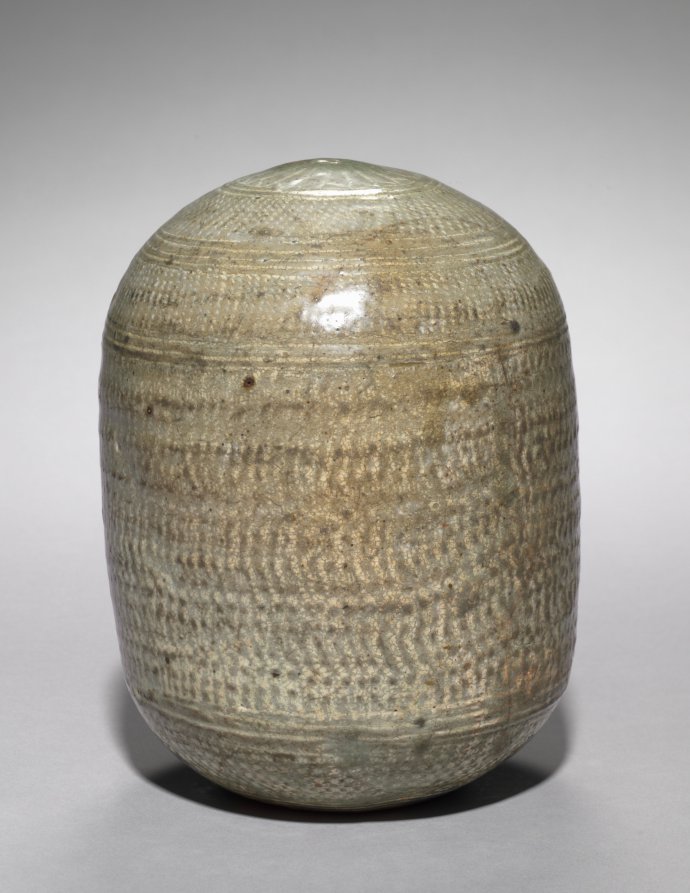
Executive Summary: The Phenomenology of the Vessel as Urban Armor
The wine cask with stamped floral decoration—an object of utilitarian origin yet philosophical weight—serves as the DNA source for this season’s Urban Silhouette Research. Its essence is not narrative but ontological: a three-dimensional presence that refuses storytelling, demanding instead a direct confrontation with materiality, volume, and surface. For the 2026 NYC executive wardrobe, this translates into a radical departure from expressive tailoring toward a minimalist architecture of restraint, where depth is achieved not through embellishment but through the precise manipulation of negative space, weight distribution, and tonal monochromy. The cask’s stamped floral motif—a repetitive, almost mechanical imprint—becomes the blueprint for a textile language of tactile repetition without ornamentation: a whisper of pattern that reads as texture, not decoration.Formal Deconstruction: Volume as Existence, Not Expression
1. The Silhouette: From Narrative Drape to Phenomenological Shell
Classical tailoring—the suit as a carrier of professional biography—operates on a principle of representational depth: lapels signal authority, padding implies structure, and darting narrates the body’s history. This season, we reject that grammar. The cask’s form is a cylinder of quiet integrity: its walls are unapologetically vertical, its shoulder nonexistent, its base stable. Translating this to the executive wardrobe yields a silhouette defined by uninterrupted verticality—a coat or jacket that falls from the shoulder without suppression, skimming the torso rather than sculpting it. The shoulder line is dropped, the armhole deepened, and the sleeve set with a slight forward pitch to accommodate movement without compromising the line’s purity. The result is a “vessel” jacket: a single-piece construction with minimal seams, where the fabric’s own weight creates the drape. No darts, no waist suppression, no lapel roll. The front closure is a concealed placket, echoing the cask’s seamless surface. The hem is cut straight, terminating just below the hip—a nod to the cask’s cylindrical base, grounding the wearer in a stance of existential stability. This is not a garment that tells a story of ambition; it is a garment that is a presence.2. The Sleeve: A Study in Negative Space
The cask’s handles—if present—are functional appendages, not decorative flourishes. Similarly, the sleeve in this silhouette is treated as a utilitarian extension, not a sculptural statement. We propose a two-piece sleeve with a pronounced ease at the bicep, tapering minimally to a straight cuff. The pitch is set to allow a 90-degree arm flexion without pulling the body fabric—a technical response to the executive’s daily gestures: reaching for a subway strap, typing, gesturing in a boardroom. The cuff is unlined, left raw-edged, and finished with a single hidden button, echoing the cask’s stamped motif—a repetitive, functional detail that never rises to the level of ornament.3. The Pant: A Column of Compression and Release
Where the jacket embodies the cask’s volume, the pant must echo its internal logic of containment. We propose a straight-leg, high-rise trouser with a single forward pleat—not for fullness, but to create a subtle vertical shadow that mimics the cask’s stamped texture. The fabric is cut on the bias at the hip to allow for seated posture, then falls into a clean, unbroken line to the hem, which is finished with a 2-inch cuff. This cuff is not a stylistic choice but a weight anchor, ensuring the pant’s drape remains static, like the cask’s base, regardless of movement. The waistband is extended to a 3-inch height, providing a structural counterpoint to the jacket’s lack of waist suppression—a dialectic of compression (pant) and release (jacket) that mirrors the cask’s interior void versus its solid exterior.Color Theory: Slate as the Chromatic Equivalent of Silence
1. The Rejection of Narrative Hues
The cask’s cobalt and indigo—colors of narrative intensity—are deliberately excluded from this palette. Instead, we select Slate: a blue-gray that hovers between the cerebral and the material. Slate is not a color that tells a story; it is a color that absorbs narrative, functioning as a neutral ground for the wearer’s presence. In NYC’s 2026 executive context—where visual noise is constant—Slate offers a phenomenological pause. It does not compete with the environment; it creates a void within it.2. Chromatic Layering: The Stamped Effect
The stamped floral decoration on the cask is not a painted image but an imprint—a depression in the surface that catches light differently at various angles. We replicate this through tonal layering: a base of deep slate (almost charcoal), overlaid with a slightly lighter slate in the form of a micro-textured jacquard. The pattern is not floral but geometric—a repeating hexagon, stamped into the fabric’s weave, visible only at close range or under raking light. This is color as texture, not color as symbol. The effect is achieved through a double-cloth construction: the outer layer in a matte slate worsted, the inner layer in a semi-lustrous slate twill. The two are bonded at specific intervals, creating a subtle puckering that mimics the cask’s stamped depressions.3. The Third Tone: Slate’s Shadow
To complete the palette, we introduce a third value: “Slate Shadow”—a near-black with a blue undertone, used for all interior linings, pocket welts, and button threads. This is not a contrast but a depth gradient, ensuring that when the jacket is opened, the interior does not disrupt the exterior’s monochromatic integrity. The lining is a cupro-silk blend, chosen for its ability to absorb light rather than reflect it, maintaining the garment’s overall chromatic silence.Material Logic: Weight as Presence, Texture as Memory
1. The Primary Shell: 380 GSM Wool-Cashmere Blend
The cask’s materiality is its truth: clay, fired, glazed, stamped. Our primary shell fabric is a 380 GSM wool-cashmere blend (85% wool, 15% cashmere), chosen for its dense, self-supporting drape. The fabric is milled in a double-twist yarn, giving it a slight technical stiffness that allows the garment to hold its cylindrical shape without internal canvassing. The surface is finished with a light calender press—not to shine, but to flatten the weave into a smooth, almost ceramic plane. This is the fabric’s “glaze”: a subtle sheen that reads as material integrity, not luxury.2. The Stamped Texture: A Jacquard Substrate
For the jacket’s body panels, we employ a jacquard-woven substrate beneath the outer shell. The pattern is a 1.5-inch repeating hexagon, woven in a contrasting slate yarn of the same tonal value but a different fiber (a high-twist polyester blend). The result is a surface that feels smooth to the touch but appears to have a micro-relief under direct light—the exact phenomenological effect of the cask’s stamped floral. This is not a print; it is a structural memory embedded in the cloth.3. The Interior Architecture: Functional Void
The cask’s interior is empty—a void that defines its utility. Our garment’s interior is similarly functional emptiness: no interior pockets on the jacket’s body, only two vertical welt pockets on the pant’s side seams, and a single hidden pocket at the jacket’s left chest, accessible through the placket. The lining is attached only at the shoulder and hem, allowing the jacket to move as a single shell, not as a layered system. This reduces visual bulk and enhances the garment’s existential weightlessness—a paradox of heavy fabric, light presence.Conclusion: The Uniform as Ontological Statement
The 2026 Addison Fashion executive wardrobe, derived from the wine cask’s stamped floral decoration, is not a collection of garments but a philosophical instrument. It rejects the narrative depth of classical tailoring—the story of success, the biography of power—in favor of an existential depth: the depth of a thing that simply is. The slate palette, the cylindrical silhouette, the stamped texture, and the functional void all converge to create a uniform that does not speak but stands. In a city of relentless visual storytelling, this wardrobe offers the executive a rare commodity: silence as authority. The wearer does not need to explain themselves; the garment’s material presence does the work. This is not minimalism as absence; it is minimalism as presence distilled to its essence—a vessel, not for meaning, but for being.
Technical Insight
NYC Perspective: Translating Slate tones into Minimalist silhouettes.