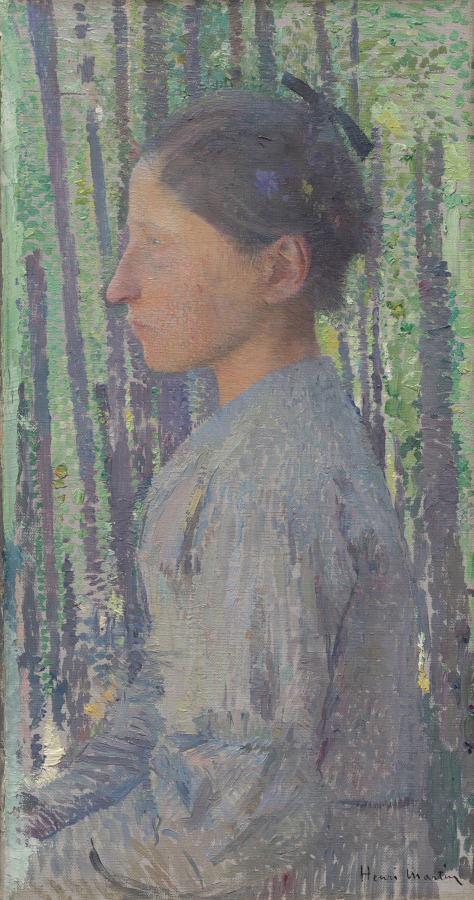
Urban Form: Woman in Profile
I. Preliminary Frame: The Dialectic of Presence and Absence
The source material—a juxtaposition of Western hunting iconography and Eastern votive emptiness—yields a paradoxical design thesis. The former celebrates kinetic violence, the latter reveres static negation. For the 2026 NYC executive wardrobe, this binary collapses into a single operative principle: controlled tension. The silhouette must carry the memory of motion without its chaos, and the gravity of void without its inertia. This is not a compromise; it is a synthesis achieved through precision cutting and tonal discipline.
1.1 From “Hunting” to Structural Intent
The medieval hunt’s defining feature is the drawn bow—a state of maximum potential energy. Translating this into garment architecture requires a shoulder line that suggests latent force: a sharp, extended scapular seam that terminates in a clean, unpadded drop. The sleeve head is set slightly forward, creating a subtle diagonal from neck to wrist, echoing the archer’s extended arm. This is not a power shoulder in the 1980s sense; it is a loaded shoulder—quiet, but with a visible vector of readiness. The fabric must be dense enough to hold this line without stiffness: a 380-gramm wool-cashmere blend, pressed with a hard edge, never softened by steam.
1.2 From “Udumbara Plaque” to Negative Space
The plaque’s beauty lies in its refusal to declare itself. Its gray-brown patina, its eroded letterforms, its centuries of near-silence—these translate into negative-space tailoring. The garment’s interior volume is the design. A single-seam construction from shoulder to hem on the outer shell, with no darts at the bust or waist, forces the fabric to fall in a continuous, unbroken column. The body is not shaped; it is housed. This requires a fabric with a fluid yet substantial drape—a double-faced crepe with a matte finish, in a tone that absorbs light rather than reflecting it. Onyx, as the chosen color, functions as the textile equivalent of the plaque’s shadowed wood: it does not announce, it withholds.
II. Form Analysis: The Three-Point Tension System
The executive silhouette is deconstructed into three zones—collar, torso, and hem—each governed by a distinct rule derived from the source’s dualities.
2.1 Collar: The Arrow’s Rest
The collar is the point where violence and void converge. A high, stand-away mandarin collar, cut with a 15-degree forward pitch, mimics the arrow’s nock against the bowstring. It does not hug the neck; it floats 1.5 centimeters off the skin, creating a shadow gap that reads as both armor and altar. The interior facing is finished in a contrasting matte silk—not for visibility, but for the tactile reminder of a secret. This collar is not a stylistic flourish; it is a functional anchor for the entire upper-body line.
2.2 Torso: The Unbroken Column
Here, the plaque’s emptiness governs. The torso is cut with zero waist suppression. Instead, the fabric is biased on the cross-grain to create a subtle, organic fall that follows the body’s movement without clinging. The side seams are moved 2 centimeters toward the back, shifting the visual weight rearward—a nod to the hunter’s stance, but rendered as stillness. The armhole is cut high and tight, allowing the sleeve to swing freely while the torso remains immobile. This creates a disconnect between upper and lower body: the arms are capable of sudden action, the torso remains contemplative. This is the garment’s core paradox—mobility without agitation.
2.3 Hem: The Unfinished Gesture
The hem is where the hunt’s “falling dust” meets the plaque’s “eroding edge.” It is cut asymmetrically—shorter at the front (just above the knee) and longer at the back (mid-calf)—but with a clean, laser-cut finish that shows no fraying. This asymmetry is not decorative; it creates a forward momentum when walking, while the longer back panel drags slightly, leaving a trace of presence. The hem’s interior is weighted with a 3-centimeter horsehair braid, invisible from the outside, ensuring the fabric falls with a deliberate, heavy grace—like the last leaf settling after a hunt’s wind.
III. Color Logic: Onyx as the Absence of Hue
Onyx is not black. Black is an absence that pretends to be a presence; onyx is a presence that pretends to be an absence. In the 2026 NYC context—where fluorescent screens and glass towers dominate—onyx offers a visual silence that functions as a power statement. It is the color of the plaque’s shadow, the color of the arrow’s flight path at dusk. It does not compete with the wearer’s skin or surroundings; it creates a void that makes the wearer’s gestures more legible.
3.1 Technical Application of Onyx
The fabric is piece-dyed in a two-stage process: first a deep charcoal base, then a top-coat of pure black pigment with a matte, almost chalky finish. This prevents the “shiny black” that reads as cheap or synthetic. The weave is a 2x2 twill with a high twist per inch, which scatters light at a microscopic level, ensuring the garment appears flat from every angle. This is critical: any sheen would introduce a temporal element (reflection, movement of light), violating the design’s commitment to stillness. The only allowed contrast is the interior silk facing, which is a deep gunmetal gray—invisible until the wearer removes the jacket, revealing a hidden layer of the hunt’s metallic tension.
3.2 Color as a Function of Time
Onyx also operates temporally. Unlike ivory or sand, which age visibly and narratively, onyx resists patina. It remains unchanged, like the plaque’s promise of a flower that never blooms. For the executive who moves between morning negotiations and evening receptions, this color eliminates the need for “transitional” dressing. It is the only color that does not require a time-of-day designation. This is its strategic advantage: permanence in a disposable market.
IV. Construction Protocol for the 2026 Executive
To realize this silhouette, the following technical specifications are non-negotiable:
1. Seam Allowances: 1.2 centimeters, pressed open with a hammer, never ironed flat. This preserves the seam’s ridge as a structural line, not a soft fold.
2. Buttoning System: A single, hidden closure at the sternum—a magnetic snap covered by a fabric placket. No visible buttons. This eliminates visual interruption, maintaining the column’s purity.
3. Lining: Half-lined, with the lining extending only to the shoulder blades. The lower torso is left unlined, allowing the outer fabric to move against the body with a friction that creates a subtle, audible rustle—the only sound the garment makes, akin to a bowstring’s whisper.
4. Pockets: Two interior welt pockets, angled at 45 degrees, positioned at the lower ribs. No exterior pockets. The wearer’s hands are never visually “inserted,” preserving the silhouette’s unbroken line.
V. Conclusion: The Wardrobe as a Philosophical Instrument
The 2026 NYC executive does not dress for comfort or trend. They dress for ontological clarity. This silhouette—minimalist in form, onyx in color—offers a daily rehearsal of the source material’s central question: how does one exist between the arrow’s flight and the flower’s absence? The answer is not in the garment’s decoration, but in its discipline. Every seam is a decision; every absence of a button is a refusal. This is not fashion. It is a wearable meditation on the aesthetics of power—where the hunt’s violence is sublimated into a sharp collar, and the plaque’s emptiness is materialized as a fabric that holds its breath. The wearer does not enter a room; they suspend it.