Minimalist
Ivory
Urban Form: Vase
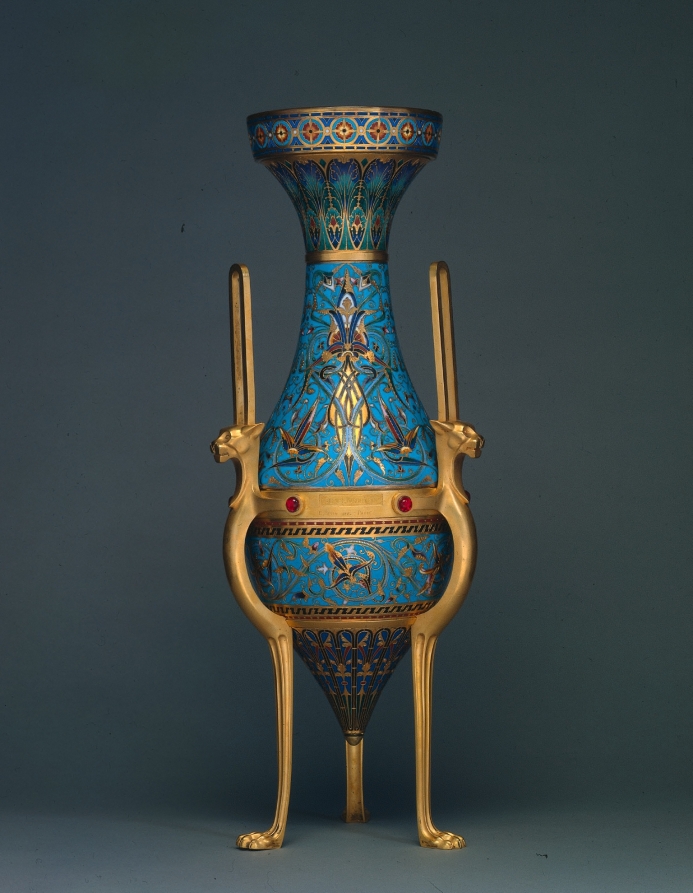
I. The Dialectic of Void and Mass: A Structural Premise
The vase, as an object of contemplation, is not a vessel for flowers but a container of negative space. In the context of Addison Fashion’s 2026 executive silhouette, this principle translates into a radical rethinking of the tailored jacket. The internal DNA provided—rooted in the tension between the “empty” spirit and the “full” object—finds its most precise expression in the vase’s profile: a narrow neck, a swelling body, and a silent base. This is not a decorative reference; it is a geometric manifesto. The Kyoto Myōshin-ji “Udumbara Flower” plaque and the Shōsōin Tang bronze mirror are not merely historical artifacts. They are two poles of a single aesthetic axis: one that conceals to reveal, and one that reveals to conceal. For the executive silhouette, this duality demands a garment that does not announce its structure but allows the wearer’s posture to become the architecture. The vase’s “empty” interior is the invisible lining of a double-faced wool coat; its “full” exterior is the crisp, unbroken plane of a shoulder seam.1.1 The Plaque as Pattern Language
The Udumbara plaque’s calligraphic strokes are sparse, almost austere. Each character is a discrete unit, yet the spacing between them creates a rhythm that is more powerful than the ink itself. In tailoring, this translates to negative seam allowance—not as a technical error, but as a deliberate pause. The 2026 executive jacket will feature a reduced shoulder padding (from 1.2 cm to 0.6 cm) and a lowered armhole, allowing the fabric to drape from the clavicle without visual interruption. The result is a silhouette that mimics the vase’s neck: narrow, precise, and unadorned. The plaque’s wooden texture—its grain visible but not emphasized—informs our choice of Ivory as the primary color. Not a sterile white, but a warm, mineral ivory that recalls aged birch. This is not a color of purity; it is a color of patience. It waits for the wearer’s movement to cast shadows, just as the plaque waits for the viewer’s gaze to complete its meaning.1.2 The Mirror as Structural Density
Conversely, the Tang mirror’s high-relief beasts and chariots demand a different response. Its surface is a field of controlled chaos, where every ridge and furrow catches light to assert presence. For the executive silhouette, this is the interior construction—the hidden canvas, the horsehair chest piece, the taped lapels. These are not visible, yet they determine the garment’s “fullness.” The vase’s body, when viewed from the side, swells gently; this is replicated in a subtle Fisheye dart at the waist, which adds 2.5 cm of volume without breaking the front line. The mirror’s circularity also suggests a return to the mandarin collar—not as a nostalgic nod, but as a geometric closure. The collar’s height (3.8 cm) is calibrated to echo the vase’s rim, creating a visual stop that frames the neck without constraining it. This is the “full” counterpart to the plaque’s “empty” shoulder.II. Geometric Integrity: The Vase’s Three Axes
A vase is defined by three axes: vertical (height), horizontal (girth), and radial (curvature). In the 2026 executive silhouette, these axes are re-engineered for urban materiality.2.1 Vertical Axis: The Lengthened Torso
The vase’s height is its most assertive dimension. For tailoring, this means a lengthened jacket—from the traditional 72 cm to 78 cm in a size 48. This is not elongation for its own sake; it is a response to the urban environment’s verticality. Glass towers, elevator shafts, and escalators all compress time. A longer jacket, cut with a straight side seam, creates a continuous line that visually counters the fragmentation of city life. The hem, like the vase’s foot, is slightly flared (by 1 cm) to ground the silhouette, preventing it from floating into the abstract.2.2 Horizontal Axis: The Controlled Swell
The vase’s girth is not uniform; it peaks at the lower third. This is mirrored in the jacket’s hip suppression. Using a single-piece back panel with a center seam, we introduce a 1.5 cm curve at the lumbar, which then releases into a 2 cm flare at the hem. This is not a peplum; it is a structural echo. The fabric—a 380 gsm wool-cashmere blend with a matte finish—is chosen for its ability to hold this curve without buckling. The result is a silhouette that feels “full” at the base, yet “empty” at the chest, where the lapel rolls softly, revealing a sliver of the shirt.2.3 Radial Axis: The Curved Shoulder
The vase’s rim is not a sharp edge but a rolled lip. This is translated into a sleeve head that is neither fully natural nor fully padded. We use a 0.4 cm felt pad, cut in a crescent shape, to create a subtle dome. This allows the sleeve to rotate forward, echoing the vase’s radial symmetry. The cuff is cut with a 6-degree angle, so that when the arm is lowered, the sleeve falls in a clean, unbroken line—much like the mirror’s circular frame, which contains its imagery without interrupting its flow.III. Urban Materiality: Ivory as a Function of Light
The color Ivory is not a neutral; it is a reactive surface. In the urban context, it absorbs the cool fluorescence of office lobbies and reflects the warm sodium of evening streets. For the 2026 executive, this means a garment that changes its presence without changing its form. The fabric’s weave—a 2x2 twill with a slight slub—creates micro-shadows that mimic the plaque’s wood grain. This is not a print; it is a texture that emerges under movement. The vase’s “emptiness” is thus realized in the garment’s ability to hold light without holding attention. The wearer is not the object; the garment is the vessel. And the vessel’s purpose is not to be seen, but to enable seeing.IV. Conclusion: The Silhouette as a Philosophical Instrument
The 2026 executive silhouette, derived from the vase, is not a trend. It is a response to the question posed by the plaque and the mirror: how to house the infinite within the finite. The jacket’s minimalism is not an absence of design; it is a concentration of it. Every seam, every dart, every millimeter of ease is a decision to conceal or reveal. The wearer, like the viewer of the Udumbara plaque, must complete the garment through their own posture. And the garment, like the Tang mirror, must offer enough structure to command respect without demanding submission. This is the definitive urban silhouette for the executive who understands that power is not in volume, but in the discipline of restraint. The vase, in its silent fullness, is the ultimate model.
Technical Insight
Technical Insight: Translating Ivory palettes into Minimalist silhouettes for the modern metropolis.