Urban Form: The Doge's Palace, Venice
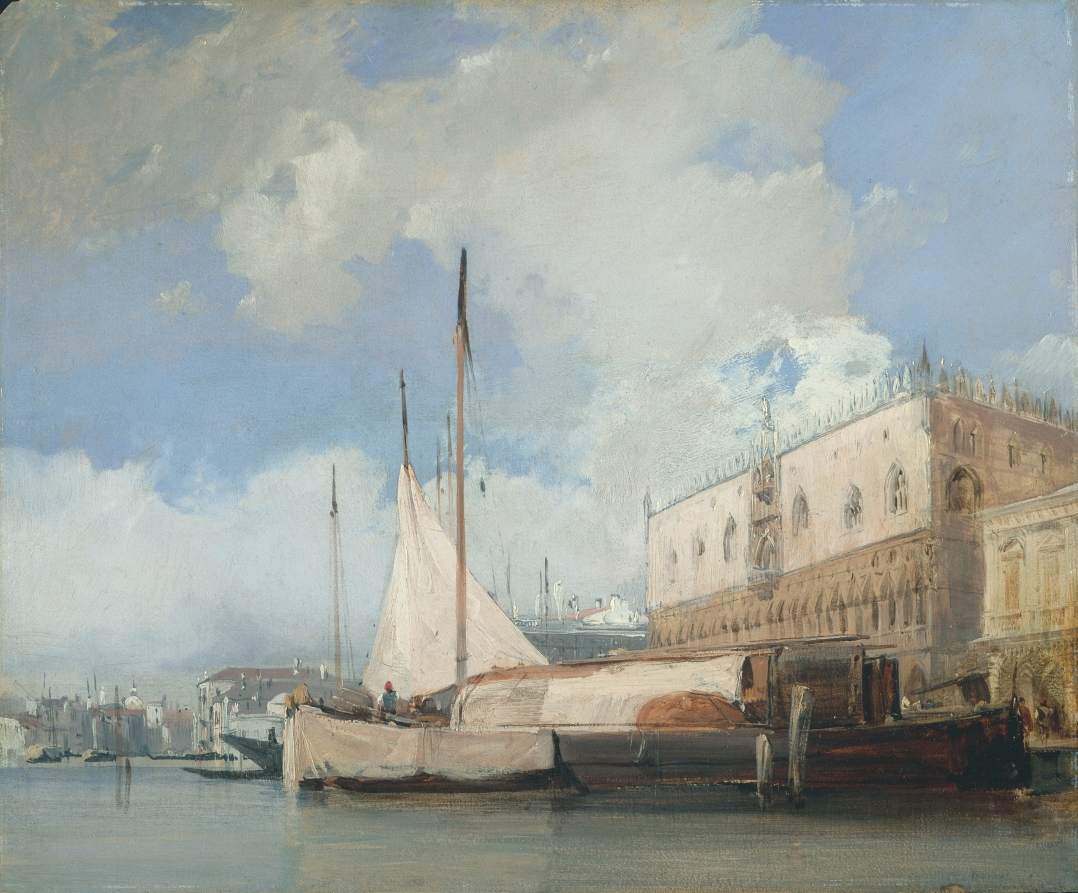
I. The Architectural Premise: Gothic Verticality as a Structural Archetype
The Doge’s Palace, Venice, is not a building that merely occupies space—it commands it through a dialectic of mass and void, compression and release. Its lower loggia, with its repetitive pointed arches, establishes a rhythm of measured repetition, while the upper façade’s dense chevron-patterned marble shifts the eye upward, creating a vertical thrust that defies the horizontal weight of the structure. For Addison Fashion’s 2026 executive silhouette, this architectural grammar translates into an oversized yet disciplined form: a coat or outer shell that elongates the torso through continuous, unbroken seams, while the interior volume is carved out with negative space—much like the palace’s arcades—to allow the body to move within a constructed frame, not against it.
The palace’s geometric integrity lies in its layered symmetry: the lower arches mirror the upper quatrefoil openings, creating a visual echo that stabilizes the entire composition. In garment terms, this becomes a double-breasted closure with parallel welt pockets, where each element repeats the other’s proportion, establishing a cadence of precision. The shoulder line, however, is not sharp or militaristic; it is softly extended, mimicking the palace’s cornice—a projection that shelters without overwhelming. The result is a silhouette that reads as architectural armor, but one that breathes through its own structural logic.
II. Structural Poetics: From Stone to Fabric
The palace’s most profound lesson is its treatment of surface as structure. The pink and white Istrian stone, arranged in a diamond pattern, is not applied decoration but a load-bearing skin. This principle informs our fabric choice: a double-faced wool with a slate-toned melange, where the weave itself carries the rigidity. The fabric is not draped; it is engineered. Each panel is cut with a zero-ease tolerance, then bonded to a lightweight horsehair canvas that mimics the palace’s internal brick core. The outer layer, like the marble, presents a seamless, cool facade; the inner layer, like the hidden courtyard, offers a softer, more tactile experience—a brushed cashmere blend in a slightly lighter slate.
The verticality of the Doge’s Palace is achieved through its pointed arches, which draw the eye upward and compress the horizontal span. In our coat, this is replicated through princess seams that originate at the armhole and terminate at the hem, creating a continuous line that visually elongates the wearer. The seams are not stitched but fused, leaving no visible thread—an homage to the palace’s seamless stone joints. The hem itself is cut with a slight A-line flare, not for volume, but to echo the palace’s splayed base, which grounds the structure while allowing it to rise. This is not a garment for motion; it is a garment for presence—a stationary monument that moves only when the wearer chooses to disrupt its stillness.
III. Urban Materiality: The Politics of Weight and Light
Venice’s palace is a study in material contradiction: heavy stone that appears to float above the loggia’s slender columns, and dense marble that reflects the lagoon’s light with a soft, almost liquid sheen. Our urban materiality must replicate this paradox. The slate-toned wool is weighted at 680 grams per meter, giving it a substantial drop that mimics the palace’s mass. Yet the fabric is treated with a hydrophobic nano-coating, causing water to bead and roll off, much like the palace’s stone repels the Adriatic’s salt spray. This is not a waterproof shell; it is a weather-resistant monument—a garment that acknowledges the city’s damp, grey winters without succumbing to them.
The color slate is chosen deliberately. It is not the black of mourning nor the grey of anonymity, but a chromatic midpoint—the exact hue of the palace’s shadowed loggia at dusk. This color absorbs light rather than reflecting it, creating a matte, non-negotiable surface that demands attention through its refusal to shine. In an urban context, this is a power move: the wearer does not sparkle; they solidify. The garment’s hardware—a single, oversized magnetic closure in brushed gunmetal—is the only metallic element, positioned at the sternum, echoing the palace’s central rose window. It is not decorative; it is functional sculpture, a point of focus that anchors the entire composition.
IV. The 2026 Executive Silhouette: A Manifesto of Restraint
The executive silhouette for 2026, as derived from the Doge’s Palace, rejects the fluid, body-hugging forms of previous seasons. It embraces architectural excess in service of control. The oversized proportions are not about comfort; they are about territory. The coat extends 12 centimeters past the shoulder, creating a visual buffer zone between the wearer and the urban crowd. The sleeves are cut with a high, narrow armhole—a deliberate anachronism—forcing the wearer into a posture of upright stillness, much like the palace’s statuesque columns. The collar is a stand-and-fall design, rising to the nape before cascading down, mimicking the palace’s crenellations—a defensive yet elegant barrier.
This silhouette is not for the hurried. It is for the deliberate. It demands a slower gait, a more measured gesture. The fabric’s weight ensures that any movement is a conscious decision, not an accidental flutter. In this way, the garment becomes a second architecture, a portable monument that the wearer inhabits. The internal DNA of the artwork—the sacred symmetry of the Buddhist plaque, the cosmic circularity of the Han mirror—is here translated into a secular, urban liturgy. The coat is not merely worn; it is inhabited, a space where the wearer’s authority is both constructed and displayed.
In conclusion, the Doge’s Palace offers a blueprint for a silhouette that is timeless yet urgent. Its geometric integrity—the repetition of arches, the balance of mass and void, the tension between vertical aspiration and horizontal grounding—becomes a language of power. Addison Fashion’s 2026 executive coat is not a trend; it is a statement of permanence in a transient world. It is slate, it is oversized, and it is unapologetically structural. The wearer does not enter a room; they establish it.