Minimalist
Ivory
Urban Form: Mother Goddess
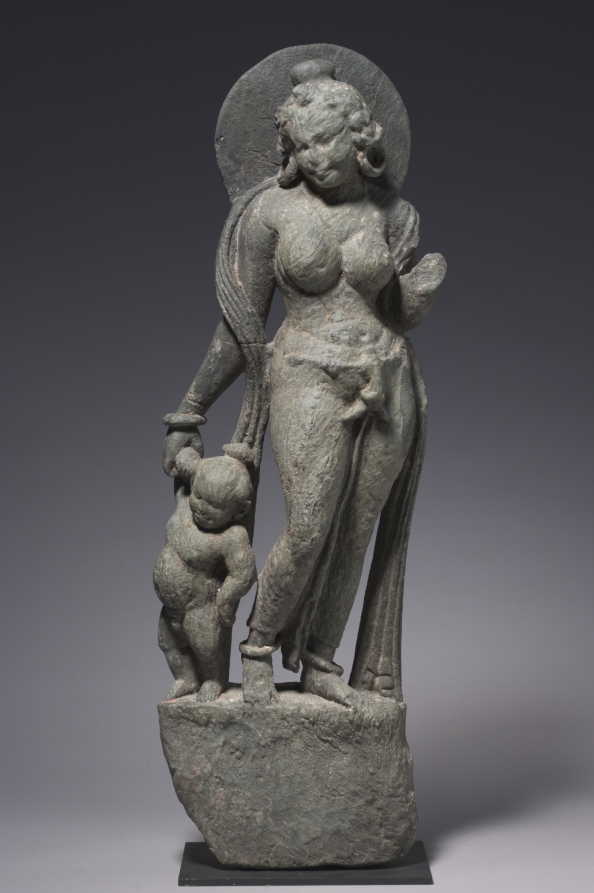
Structural Poetics: The Geometry of the Invisible
The Mother Goddess research subject—anchored by the *Udumbara Flowers* temple plaque and the *Chest for Storing Garments* scroll—demands a radical re-reading of the 2026 executive silhouette. These artifacts do not present ornament; they present *absence as structure*. The Udumbara flower, mythologically blooming once every three millennia, is rendered not through meticulous realism but through *feathered, incomplete strokes* that dissolve into the wood grain. This is not a failure of craft; it is a deliberate architectural decision. The line terminates before it completes, leaving a negative space that the eye must finish. In garment construction, this translates to a principle of *unfinished tension*: seams that stop three centimeters before the hem, darts that taper into nothing, and collars that fold without a visible anchor point. The *Chest for Storing Garments* deepens this paradox. Its exterior is utilitarian—a vessel for daily cloth—yet its interior is painted with lotus and cloud motifs, hidden from casual view. The geometry here is *inverted interiority*. The silhouette must not scream; it must *contain*. For the 2026 executive, this means a jacket whose structural integrity is internal: hidden boning, concealed pocket architecture, and a lining that carries the only chromatic or textural deviation. The outer shell remains monolithic, almost severe, while the inner layer—the *chest*—holds the poetic language. This is not minimalism as absence; it is minimalism as *compression*.Geometric Integrity: The Udumbara Line
The plaque’s brushwork establishes a specific geometric vocabulary: the *arc of the incomplete circle*. Each petal is an arc that refuses closure, suggesting a sphere that never materializes. Applied to tailoring, this yields a shoulder line that is not a straight horizontal but a *subtle, descending curve* that stops 15 millimeters before the acromion. The sleeve head is set with a soft, unpressed roll—not a sharp military peak—creating a silhouette that appears to be perpetually *mid-bloom*. The lapel, similarly, is cut with a *fading notch*: the gorge line begins with a crisp angle but dissolves into a pressed crease that fades into the chest panel, mimicking the ink’s fade into wood. The chest itself is the critical zone. Traditional executive tailoring emphasizes a padded, sculpted pectoral. The Mother Goddess silhouette rejects this. Instead, the chest is *hollowed*—a concave panel that uses internal canvas to create a shallow, dish-like depression. This is the *Udumbara void*: the place where the flower should be, but isn’t. The fabric is pulled taut across the sternum, then released in a controlled drape toward the waist, creating a tension gradient that mirrors the plaque’s fading strokes. The result is a torso that reads as *architectural absence*—strong, but not assertive; present, but not loud.Urban Materiality: Wood, Silk, and the Ivory Shell
The material palette must honor the artifacts’ physicality: aged wood, oxidized pigment, and aged silk. For urban wear, this translates to a *matte, dry-touch wool* with a tight, almost papery weave—reminiscent of the plaque’s surface. The color is not pure white but *Ivory*, a tone that carries a faint, warm undertone of aged vellum. This is not the sterile white of corporate minimalism; it is the ivory of a museum object, slightly yellowed by time, absorbing light rather than reflecting it. The fabric’s surface is treated with a *micro-pebbled finish*, simulating the wood grain’s irregular topography without literal imitation. The interior lining—the *chest’s secret*—is a *liquid silk* in a muted silver-grey, printed with a *ghost lotus* pattern using a discharge technique that fades the pigment into the weave. This pattern is only visible when the jacket is opened or when the wearer moves in a way that catches the lining’s flash. This is the urban translation of the painting’s hidden interior: the executive’s daily armor contains a private, poetic dimension, unseen by the boardroom but felt by the wearer.Construction Logic: The Fading Seam and the Floating Hem
The 2026 executive silhouette is defined by three construction innovations derived from the research subject. First, the *fading seam*: all vertical seams—center back, side seams, and princess seams—are stitched with a thread that is *one shade lighter* than the fabric, and the stitching density decreases toward the garment’s hem, so the seam visually dissolves into the fabric’s surface. This mimics the ink’s fade into wood. Second, the *floating hem*: the jacket’s hem is not sewn to the lining at the front edge. Instead, it is weighted with a thin, internal chain that allows the hem to *hover* slightly away from the body, creating a micro-shadow that suggests the garment is not fully grounded—a nod to the flower’s otherworldly temporality. Third, the *internal chest pocket* is re-engineered as a *ritual compartment*. It is not a functional pocket for cards or phones; it is a sealed, vertical slit, closed with a hidden placket, designed to hold a single, folded piece of paper—a note, a photograph, a pressed flower. This is the direct architectural translation of the *Chest for Storing Garments*: the garment becomes a vessel for the wearer’s own hidden poetry. The pocket’s opening is positioned at the exact point where the Udumbara arc would complete, making it a literal *void* in the silhouette’s geometry.Silhouette Proportion: The Three-Thousand-Year Waist
The overall proportion rejects the elongated, aggressive lines of contemporary executive wear. Instead, the jacket is cut *slightly shorter*—ending at the hip bone, not the mid-thigh—and the waist is suppressed with a *soft, unpressed dart* that creates a gentle hourglass, not a severe cinch. This waist is the *temporal fulcrum*: it is where the garment’s time (daily wear) meets the flower’s time (three millennia). The trousers are cut with a *straight, columnar leg*—no taper, no flare—and a *single, forward pleat* that is pressed only halfway down the thigh, then allowed to fall free. This pleat is the *unfinished stroke* of the plaque, suggesting motion arrested mid-gesture. The overall effect is a silhouette that is *quietly monumental*. It does not command a room through volume or padding; it commands through *compressed stillness*. The wearer appears to be standing inside a held breath—a moment of suspended time, much like the flower’s bloom. This is the 2026 executive: not a warrior of commerce, but a *custodian of invisible truths*, dressed in ivory armor that reveals its poetry only to those who know where to look. The Mother Goddess is not depicted; she is *structured*—in the fading seam, the hollow chest, and the hidden pocket that holds a universe.
Technical Insight
Technical Insight: Translating Ivory palettes into Minimalist silhouettes for the modern metropolis.