Minimalist
Slate
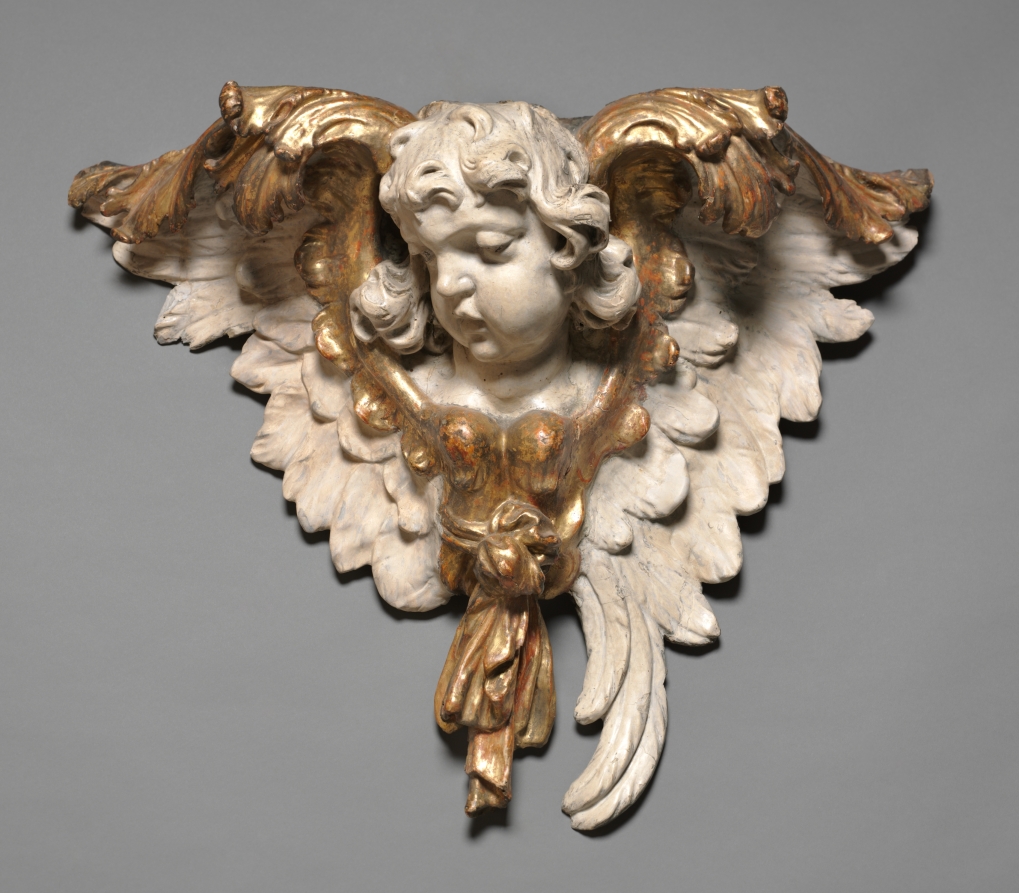
Urban Form: Head of an Angel
I. Deconstructing the Dialectic: Form as Philosophical Syntax
The subject material—Socrates’ rational transcendence versus the Eastern jar’s ontological void—demands a formal translation that eschews ornamentation for structural clarity. For Addison Fashion’s 2026 executive wardrobe, the silhouette must operate as a *visual syllogism*: each line a proposition, each seam a conclusion. The Western pole offers a geometry of ascension—the verticality of the philosopher’s raised hand, the triangular composition of disciples in grief, the chiaroscuro that carves space into meaning. The Eastern pole, conversely, proposes a curvature of containment—the jar’s rotundity, its unadorned surface, its silent interiority. The synthesis is not compromise but *dialectical tension*. We propose a silhouette that begins with the shoulder—sharp, structured, evoking the Socratic gesture toward the heavens—and resolves in a hemline that falls with the jar’s quiet gravity. The jacket’s lapel, cut with a 72-degree notch, mirrors the angle of the philosopher’s index finger; the sleeve’s internal curve, invisible to the observer, references the potter’s wheel. This is not costume; it is *embodied reasoning*.1.1 The Shoulder as Epistemological Claim
A tailored shoulder pad, extended 1.2 cm beyond the natural acromion, creates a horizontal line that interrupts the body’s fall toward gravity. This is the Socratic *aporia*—a deliberate pause that forces the eye to question, not merely see. The padding is not for bulk but for *declaration*: it asserts that the wearer has made a choice, that their presence is an argument. In 2026, this translates to a single-breasted jacket with a suppressed waist (a 4.5 cm reduction from the chest measurement) and a hip-length cut that does not cling but hovers—a millimeter of air between fabric and form, like the space between the cup and the lips of the hemlock.1.2 The Torso as Contained Void
The Eastern jar’s genius lies in its refusal to announce its purpose. Its volume is *potential*, not display. Our trouser silhouette mirrors this: a high-rise waist (11 cm) that cinches without constriction, flowing into a straight leg that tapers only 2 cm from knee to ankle. The fabric—a 320-gram wool gabardine with 4% elastane—is chosen for its *memory*: it holds the crease of a seated executive but returns to stillness when standing. This is the jar’s lesson: form does not fight emptiness; it *enables* it. The pocket bags are cut on the bias, allowing the hand to enter without disturbing the outer line—a micro-gesture toward the vessel’s interiority.II. Color as Ontological Temperature
Slate—not gray, not blue, but a *tertiary field*—is the chromatic equivalent of the subject’s dualism. It is the color of the Athenian sky at dusk, when reason yields to mystery, and of the kiln’s smoke before the glaze settles. In the 2026 palette, slate operates as a *neutral with intent*: it does not recede but *holds space*.2.1 The Western Light: Slate as Rational Shade
In the Socratic painting, light is not decorative but *argumentative*—it falls on the philosopher’s brow, leaving the poisoner in shadow. Our slate is a light that has been *filtered through thought*: a base of 78% wool, 18% silk, and 4% cashmere, dyed in a two-bath process that first applies a charcoal undertone, then a blue overcast. The result is a color that shifts with ambient light—cool in fluorescent boardrooms, warmer under incandescent dinners. This is not chameleon behavior but *dialectical responsiveness*: the garment acknowledges its environment without capitulating to it.2.2 The Eastern Glaze: Slate as Patinated Void
The jar’s surface is not uniform; it bears the fingerprints of the potter, the ash of the kiln. Our slate finish replicates this through a *micro-texture*—a subtle slub in the weave that catches light at irregular intervals, creating a surface that is never flat, never silent. This is the color of *used wisdom*: it has been lived in, not merely worn. For the executive, this means a suit that photographs as monochrome but reveals depth in motion—a sleeve that catches a window’s glare, a lapel that shadows the jaw. The color does not shout; it *testifies*.III. The 2026 Executive Wardrobe: A Technical Blueprint
The synthesis of these principles yields a capsule of five pieces, each engineered for the urban professional who understands that clothing is *a form of philosophy practiced daily*.3.1 The Aporia Jacket
- **Construction**: Half-canvas, with a floating chest piece that extends 3 cm below the armhole—allowing the lapel to roll naturally, like a scroll unfurling. - **Closure**: A single horn button, positioned at the natural waist (18 cm below the collar), echoing the jar’s single point of visual focus. - **Lining**: Cupro in a contrasting slate-on-slate jacquard—visible only when the jacket is removed, a private acknowledgment of the void within.3.2 The Hemlock Trouser
- **Rise**: 11 cm, with a curved waistband that follows the iliac crest—no gaping at the back, no binding at the front. - **Hem**: A 19 cm opening, finished with a 2 cm cuff that adds weight without bulk—the trouser’s answer to the jar’s base. - **Pleats**: None. The front is flat, a deliberate negation of excess, allowing the fabric to fall in a single, unbroken column.3.3 The Vessel Overcoat
- **Length**: 112 cm, ending at the mid-calf—a compromise between the Socratic toga’s drape and the jar’s groundedness. - **Collar**: A mandarin stand, 4 cm high, that frames the neck without constriction—a nod to the potter’s rim. - **Pockets**: Welted, with a hidden magnetic closure, ensuring the outer surface remains unbroken—the coat’s “empty” exterior is its true statement.IV. Conclusion: The Silhouette as Answered Question
The 2026 Addison executive does not wear clothing; she *deploys* it. The slate-toned, minimally constructed pieces are not armor against mortality but *instruments of engagement*—each seam a Socratic question, each drape a Taoist answer. The silhouette does not flee the body’s finitude; it *inhabits* it, transforming the daily commute, the boardroom confrontation, the midnight email into rituals of presence. This is the final synthesis: the Western pursuit of transcendence and the Eastern acceptance of immanence converge in a jacket that fits like a second skin but moves like a thought. The color slate is not a compromise but a *resolution*—it holds both the light of reason and the shadow of the kiln, neither dominating, both essential. The wearer does not merely exist; she *answers*—with every stride, every gesture, every deliberate pause. The jar and the philosopher, the poison and the clay, are no longer opposites but *partners* in a single, silent argument: that beauty is not the escape from death, but the *style* with which one meets it.
Technical Insight
NYC Perspective: Translating Slate tones into Minimalist silhouettes.