Urban Form: Christ at the Column
Executive Summary: The Dialectic of Presence and Absence
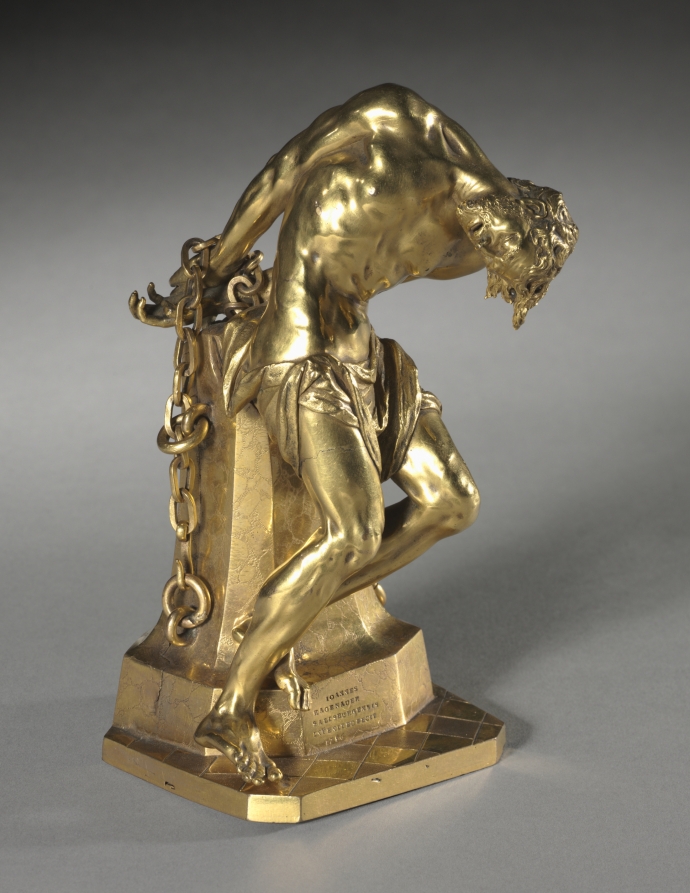
Addison Fashion’s Urban Silhouette Research for Spring/Summer 2026 interrogates the architectural tension between narrative excess and material silence. The subject—Christ at the Column, refracted through the comparative lens of Jacques-Louis David’s The Death of Socrates and a Grecian Jar—yields a formal thesis: the contemporary executive wardrobe must operate as a vessel of restraint, not a canvas for proclamation. The Davidian impulse—dramatic chiaroscuro, theatrical gesture, the heroic finality of a posed death—maps onto the modern suit’s tendency toward spectacle: peak lapels, aggressive padding, performative tailoring. The Jar, conversely, offers a counter-grammar: interiority over exteriority, utility over allegory, the quiet dignity of an object that holds without explaining. For the 2026 NYC executive, the silhouette must reject the Socratic heroism of the boardroom and embrace the ontological emptiness of the vessel. This is not minimalism as deprivation; it is minimalism as capacity.
Formal Deconstruction: From Column to Container
The Column as Structural Archetype
Christ at the Column—the flagellation scene—presents the body as a vertical axis of suffering. The column itself is a load-bearing element, unadorned, fluted or smooth, indifferent to the flesh it supports. In tailoring terms, this translates to the spine-line: the center-back seam, the placket, the trouser crease. The 2026 silhouette must treat these as non-negotiable verticals, not decorative afterthoughts. A single-breasted jacket with a suppressed waist but unbroken shoulder-to-hem line mimics the column’s stoic continuity. The lapel—narrow, notched, no more than 2.5 inches—functions as a fluting, a subtle rhythmic interruption that does not compromise the load-bearing logic. Padding is reduced to a zero-drop shoulder, allowing the natural scapular slope to read as the column’s entasis: a barely perceptible swelling that prevents optical rigidity.
Contrast this with David’s Socrates: the figure is reclining, horizontal, theatrical. The painting’s composition is a diagonal drama—the outstretched arm, the tilted head, the cascading drapery. To translate this into menswear would be to embrace asymmetry, draped shawls, or deconstructed blazers. The 2026 Addison line explicitly rejects this. The column demands axial symmetry. The jacket’s front edge, the trouser’s outseam, the shirt’s placket—all must align with a precision that borders on the architectural. This is not conservatism; it is a phenomenological commitment to the body’s verticality as a form of ethical presence.
The Jar’s Negative Space: Tailoring as Containment
The Grecian jar’s oinochoe or amphora profile—a swelling belly, a narrow neck, a stable foot—offers a radical rethinking of the trouser and jacket block. The jar’s value is its hollowness, its capacity to hold oil, wine, or ashes. The executive garment must similarly hold the body without gripping it. This means abandoning the “fitted” paradigm of the last decade. Instead, the 2026 trouser adopts a straight, columnar fall from hip to hem, with a 1.5-inch break or a clean crop at the ankle. The waistband sits at the natural waist—not the low-slung hip—creating a foot for the vessel. The seat is cut with negative ease in the front, but zero ease in the back, allowing the fabric to drape as a continuous surface rather than a series of tension lines.
The jacket’s body follows the jar’s logic: a slight A-line from chest to hem, not a cinched waist. The chest is allowed to breathe—a soft, unlined construction with a canvas that is half-fused, permitting the wool to move like clay. The sleeves are set with a high armhole but a wide sleeve width, echoing the jar’s generous belly. This is not a “relaxed” fit in the streetwear sense; it is a volumetric discipline. The garment holds air, and in holding air, it holds the body’s potential—for movement, for stillness, for the next meeting or the final silence.
Chromatic Strategy: Slate as the Color of Indifference
Beyond Black and Navy
Slate—a blue-grey with a cool undertone and a matte finish—is selected as the primary colorway for SS26. It is not the heroic black of David’s shadows, nor the warm terracotta of the fired jar. Slate is the color of unlit stone, of the column before the blood, of the jar’s unglazed exterior. In the 2026 NYC context—where fluorescent office lighting and glass towers dominate—slate absorbs rather than reflects. It does not announce; it withholds. This chromatic choice is a direct rebuke to the “power red” and “midnight navy” of the previous decade. Slate operates as a neutral that is not neutral: it carries a blue cast that reads as cerebral, a grey cast that reads as pragmatic. It is the color of process, not outcome.
Layering Slate: The Value of Monochrome
The executive wardrobe under this research deploys slate in three tonal registers: deep slate (near-charcoal) for outer layers, mid-slate for the suit, and pale slate (almost silver) for shirts and knits. This is not a gradient for its own sake; it is a hierarchical system of light absorption. The deep slate topcoat—a long, unbelted duster with a hidden placket—functions as the jar’s exterior, the fired clay. The mid-slate suit is the interior glaze, smooth and slightly lustrous. The pale slate shirt is the emptiness, the space where the body’s breath becomes visible. Monochrome is not boring; it is reductive to the point of essence. In a city of visual noise, the slate-clad executive becomes a negative figure, a silhouette that creates space around itself.
Material Logic: Wool as Clay, Linen as Memory
The jar’s surface is marked by the potter’s wheel—subtle ridges, uneven glazes, the trace of the hand. The 2026 fabrications must emulate this tactile honesty. A 320-gram wool flannel in slate, with a slightly irregular weave, is the primary suiting cloth. It is not smooth; it has a tooth, a nap that catches light unevenly. This is the unfired clay—the garment as a living surface that will patina with wear, creasing at the elbows, softening at the knees. For warmer months, a linen-wool blend (55/45) in pale slate offers a drier hand, echoing the jar’s unglazed exterior. The lining—if any—is cupro in a contrasting slate, not for visibility but for the wearer’s private awareness: a hidden interior, like the jar’s unseen capacity.
Construction details reinforce the vessel metaphor. Buttons are corozo nut, matte and unpolished, not horn or metal. Buttonholes are hand-sewn with a single thread, creating a slight irregularity—the potter’s fingerprint. The jacket’s interior pocket is welted, not patch, and the trouser’s coin pocket is eliminated to preserve the clean front. These are not cost-cutting measures; they are ritual omissions. The garment must not accumulate; it must contain.
Application: The 2026 NYC Executive Uniform
The Core Ensemble
The research yields a three-piece system for the executive: (1) a single-breasted, two-button jacket in mid-slate flannel, with a straight shoulder, no vent, and a hem that falls at the second knuckle of the thumb; (2) a flat-front trouser in the same cloth, with a 1.25-inch hem and a slight taper from knee to ankle—not a skinny taper, but a columnar reduction; (3) a pale slate shirt in a two-ply cotton poplin, with a cutaway collar that lies flat against the jacket’s lapel. No tie is worn. The neck is left bare—a vessel’s mouth, open and unadorned. Footwear is a slip-on loafer in unpolished black leather, with a low profile and a Blake-stitched sole. The shoe is not a statement; it is a base.
Occasional Variations
For formal engagements, the jacket is replaced with a long, single-breasted coat in deep slate, cut with a raglan sleeve and a hidden closure. This is the column in its purest form—no lapels, no buttons, only a vertical seam at the center back. For creative-sector executives, the trouser may be swapped for a pleated version with a single forward pleat, but the pleat must be pressed flat, not rolled—a nod to the jar’s fluting, not to David’s drapery. Accessories are limited to a thin, unmarked watch with a slate-grey dial and a matte steel case. No cufflinks, no pocket squares, no visible logos. The body is the only ornament.