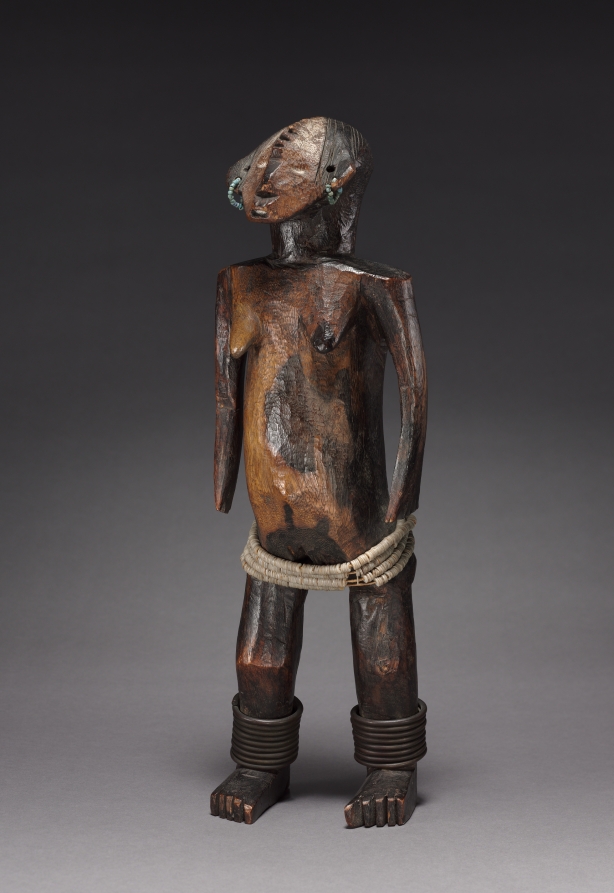
Urban Form: Female Figure of a Pair
I. The Dialectical Frame: From Lithographic Caricature to Ceramic Wave
The female figure of a pair—a term we deploy to denote the sartorial counterpart to a masculine archetype—demands a silhouette that negotiates between the corrosive wit of Honoré Daumier’s Caricaturana and the glacial serenity of a Song dynasty meiping. The 2026 executive silhouette is not a compromise; it is a structural synthesis of two opposing temporalities: the immediate, satirical present and the eternal, meditative past. Daumier’s Robert Macaire, captured in lithographic line as a swindler performing before a judge, offers a study in exaggerated posture—the hunched shoulder, the theatrical gesture, the disproportionate limb. The Song vase, by contrast, presents a taut, vertical vessel whose surface waves are not mimetic but abstracted into rhythmic spirals. For Addison Fashion, the female executive silhouette must hold both: the sharp, almost cruel cut of Daumier’s social critique, and the quiet, self-contained volume of ceramic glaze.
1.1 The Caricatural Line as Tailoring Logic
Daumier’s lithographic strokes are coarse, rapid, and unapologetically graphic. They do not soften; they incise. Translating this into tailoring means rejecting the fluid drape of soft suiting in favor of crisp, angular seams that create visible tension points at the shoulder, waist, and hip. The 2026 executive jacket for the female figure of a pair adopts a sculpted shoulder—not padded to excess, but cut with a deliberate forward pitch, echoing Macaire’s leaning, conspiratorial stance. The lapel is notched with a sharp, almost aggressive V, terminating just above the sternum, creating a visual arrow that draws the eye downward—a nod to the caricature’s focus on the gestural hand. The waist is suppressed not through darts alone but through a structural corsetry panel hidden beneath the lining, producing a silhouette that is simultaneously rigid and poised. This is not comfort; it is armor for the urban theater.
1.2 The Meiping’s Verticality as Proportion System
The Song meiping’s profile—a narrow base, swelling belly, and constricted neck—offers a counterpoint of controlled volume. For the executive silhouette, this translates into a high-waisted trouser or skirt that begins at the natural waist, flares gently over the hip, and tapers to a clean, ankle-length hem. The effect is a column of fabric that moves with the body but never loses its architectural integrity. The meiping’s wave motif, abstracted into concentric arcs, informs the pocket placement and seam curves: a single, continuous seam that sweeps from the side hip to the front placket, mimicking the ceramic’s carved water lines. This seam is not decorative; it is a load-bearing line that visually elongates the torso, echoing the vase’s ability to contain chaos within a serene exterior.
II. Structural Poetics: The Geometry of Duality
The 2026 silhouette is defined by a dual-axis geometry: the X-axis of Daumier’s horizontal, theatrical sprawl, and the Y-axis of the meiping’s vertical, contemplative rise. The executive woman is not asked to choose between satire and serenity; she wears both as layered realities. The jacket’s front panel is cut with a slight asymmetry—the left side extends 2.5 centimeters lower than the right, a subtle nod to Macaire’s off-kilter posture. The right side, however, is finished with a ceramic-smooth edge, pressed to a razor’s sharpness, evoking the meiping’s glaze. This asymmetry is not whimsy; it is a calculated disruption that prevents the silhouette from becoming static. In motion, the longer panel swings slightly, creating a shadow that mimics the lithograph’s hatching—a play of light and dark that is both graphic and volumetric.
2.1 Materiality as Social Commentary
Urban materiality for this silhouette demands fabrics that resist and reveal simultaneously. A primary cloth of virgin wool with a 12% silk blend offers the stiffness needed for the jacket’s sharp lines, while a secondary layer of matte cupro lines the interior, providing a cool, slippery contact against the skin—reminiscent of the meiping’s glazed surface. The wool’s twill weave is set at a 45-degree bias, allowing for a controlled stretch at the elbow and shoulder, preventing the caricatural rigidity from becoming paralytic. For the lower half, a high-twist crepe in slate—a color that sits between blue-gray and charcoal—offers a fluid drape that still holds a crease. The crepe’s surface is sandwiched with a fine metal thread, invisible to the eye but detectable under touch, producing a faint, irregular shimmer that echoes the meiping’s wave pattern under candlelight. This is not luxury for its own sake; it is material irony—the executive appears in solid, sober wool, yet her garment carries the ghost of ceramic light.
2.2 The Pair’s Internal Counterpoint
The “pair” in this research refers not to two separate garments, but to the dialectical relationship within a single ensemble. The jacket and trouser are cut from the same cloth, yet their construction differs radically. The jacket is fully canvassed, with a horsehair chest piece that molds to the wearer’s posture over time—a nod to Daumier’s belief in the body’s expressive truth. The trouser, however, is unstructured at the waist, held by a hidden elastic band that allows for a slight, organic give—a reference to the meiping’s hand-thrown asymmetry. This internal counterpoint means the silhouette is never monolithic: it is rigid above, yielding below, a physical manifestation of the “outer square, inner circle” ideal that the Song vase embodies. In a boardroom, the wearer stands with the jacket’s sharp shoulders, but when seated, the trouser’s gentle fall suggests a readiness to adapt—a quiet, ceramic patience.
III. Urban Materiality: The 2026 Executive in the Field
Urban environments are not neutral backdrops; they are aggressive compositions of glass, steel, and human motion. The 2026 silhouette must function as a counter-sign—a visual interruption that commands attention without shouting. The slate color is chosen for its chameleonic property: under fluorescent office light, it reads as cool gray; under incandescent evening light, it warms to a muted blue. This is not accidental. The color is achieved through a double-dye process, first with indigo, then with a mineral-based iron oxide, creating a depth that shifts with the viewer’s angle—much like the meiping’s glaze, which appears different under direct versus raking light. The jacket’s buttons are not buttons but magnetic closures, hidden beneath the placket, allowing for a seamless front that echoes the ceramic’s uninterrupted surface. Yet the closure is not silent; it produces a soft, metallic click when engaged, a subtle auditory reminder of the lithograph’s scratchy line.
3.1 The Pocket as Caricatural Gesture
Pockets in this silhouette are not utilitarian; they are gestural devices. The left chest pocket is cut with a slight downward slant, mimicking Macaire’s hand slipping into his coat to retrieve a forged document. The right hip pocket, however, is perfectly horizontal, its opening reinforced with a ceramic-like resin edge that prevents stretching. This asymmetry forces the wearer to be conscious of her gestures: placing a hand in the left pocket suggests a performative, almost theatrical stance; placing it in the right pocket signals stability and control. The executive is thus choreographed by her garment, her body becoming a living lithograph—each movement a line drawn in space, each stillness a glaze that holds.
3.2 The Hem as Philosophical Boundary
The trouser hem is finished with a 3-centimeter cuff, but the cuff is not folded; it is fused and pressed, creating a hard, unyielding edge that breaks the fabric’s fall. This cuff is lined with a strip of sanded silicone, invisible from the outside, which grips the shoe’s heel and prevents the trouser from riding up. This is a practical-poetic detail: the hem is both a boundary and a connection, anchoring the silhouette to the ground while allowing the fabric to float above it. In motion, the cuff creates a slight, rhythmic tap against the shoe—a sound that recalls the meiping’s resonance when struck, a hollow, enduring note. The executive’s walk becomes a percussive performance, each step a small, deliberate strike against the urban floor.
IV. Conclusion: The Silhouette as Ethical Mirror
The 2026 executive silhouette for the female figure of a pair is not a trend; it is a philosophical instrument. It borrows Daumier’s incisive line to expose the absurdities of corporate performance—the power plays, the performative confidence, the theatrical deference—while borrowing the meiping’s serene volume to offer a counter-mode of being: quiet, self-contained, and deeply aware of its own materiality. The wearer of this silhouette is not a passive subject of fashion; she is an active interpreter of two aesthetic traditions, translating their tension into a daily, wearable critique. The slate color is not a compromise; it is a neutral ground where the black of satire and the ivory of serenity can coexist. The tailored construction is not a constraint; it is a grammar of gesture, allowing the body to speak with precision and ambiguity. In the end, this silhouette asks a single, urgent question: Can the executive woman be both a critic and a vessel, both sharp and smooth, both of her time and outside it? The answer lies not in the garment alone, but in the wearer’s willingness to inhabit its contradictions. Addison Fashion provides the structure; the woman provides the meaning