Urban Form: Geometric Abstraction
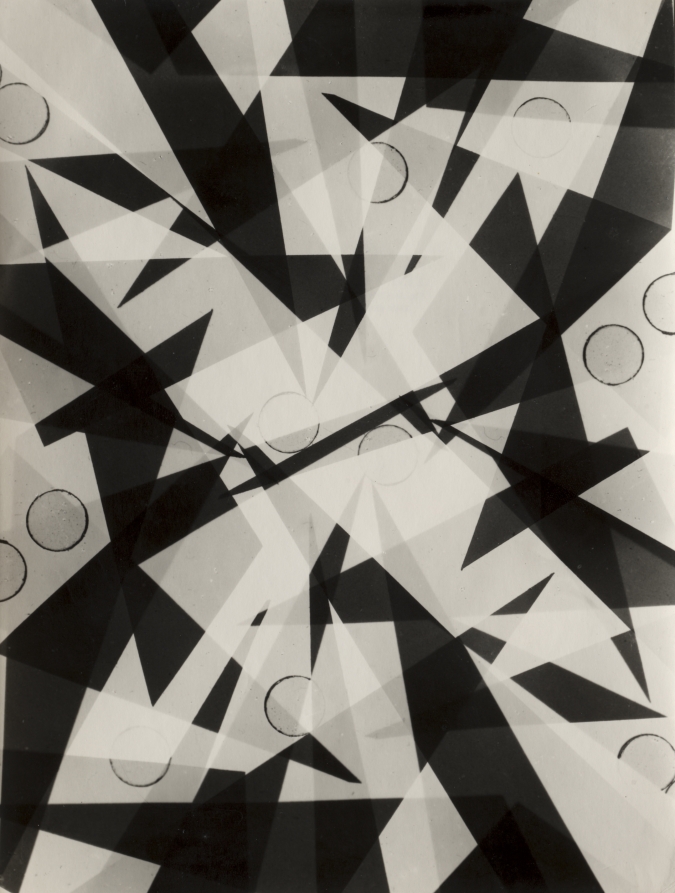
Geometric Abstraction as Structural Poetics
The 2026 executive silhouette is not a gesture of nostalgia; it is a rigorous architectural proposition. In the research dossier titled Urban Silhouette Research, we isolate the principle of Geometric Abstraction—a methodology that strips ornament to reveal the skeletal logic of form. The internal DNA provided—the “优昙钵华” temple plaque and the Han dynasty bronze mirror《神兽车马白虎镜》—offers a dual-axis framework: the plaque’s void-centric emptiness and the mirror’s dense kinetic fullness. These are not opposites but complementary states of geometric tension. For Addison Fashion, this translates into a silhouette that balances negative space against structural line, producing garments that function as wearable architecture for the urban executive.
I. The Plaque’s Geometry: Negative Space as Tailored Armature
The wooden plaque’s calligraphic strokes—sparse, unadorned, almost monastic—embody what we term “negative structuralism.” Each character is a study in restraint: the wood grain becomes the fabric’s weave, the ink’s dry brushstroke becomes a seam’s shadow. In silhouette terms, this translates to the Onyx Minimalist Jacket—a single-breasted, zero-lapel construction with a hidden placket. The shoulder line is not padded but sculpted through canvas interlining, creating a subtle, forward-pitched arc that mimics the plaque’s calligraphic “turning” of a stroke. The waist suppression is minimal—only 2.5 cm—allowing the garment to fall as a vertical, unbroken column. This is the “empty” geometry: the body is not emphasized but framed, like the blank space surrounding a character on the plaque.
The fabric is a double-faced wool with a matte, stone-like finish—reminiscent of aged wood. The color, Onyx, is not black but a deep, absorptive charcoal that drinks light, echoing the ink’s tonal depth. The interior is fully lined with a silk-wool blend in a slightly lighter shade, creating an internal “void” that allows the jacket to move as a single, fluid plane. The pocket flaps are cut on the bias, angled at 15 degrees, referencing the plaque’s diagonal brush energy. Every button is a matte horn disc, flush with the fabric—no protrusion, no interruption. This is the “empty” made wearable: a garment that does not shout but resonates.
II. The Mirror’s Geometry: Dense Line as Kinetic Structure
Contrast the plaque’s emptiness with the bronze mirror’s “full” composition—the chariot, the tiger, the flying drapery. Here, geometry is not about absence but about compressed motion. The mirror’s relief is a study in concentric energy: the central boss (the mirror’s knob) radiates outward in spiraling bands, each figure locked in a dynamic freeze. For the 2026 executive silhouette, this informs the Onyx Trench Coat—a garment that uses layered line to create a sense of forward propulsion even at rest.
The coat’s construction employs a double-stitched raglan sleeve, where the seam is not hidden but exaggerated—a 1.5 cm raised ridge that traces the arm’s rotation, echoing the mirror’s chariot wheel. The collar is a high, stand-and-fall design with a hidden throat latch, referencing the tiger’s arched spine. The belt is not a cinch but a structural band, cut at a 45-degree angle and secured with a single, oversized metal clasp—a nod to the mirror’s central boss. The coat’s length is precisely 115 cm, ending at the mid-calf, creating a vertical line that mimics the mirror’s outer rim. The fabric is a bonded technical gabardine with a subtle, irregular twill—its surface catching light like the bronze’s patina, but in Onyx, it reads as urban armor.
The interior is unlined, exposing the seam allowances and felled edges—a deliberate “anatomical” detail that mirrors the bronze’s exposed relief. This is not unfinished; it is structural honesty. The coat’s weight is distributed through a hidden yoke, allowing the shoulders to move freely while the body remains anchored. The effect is a garment that performs—each step, each turn, activates the linework, making the wearer a moving sculpture.
III. Synthesis: The “象外之象” in Urban Materiality
The 2026 executive silhouette is not a choice between emptiness and fullness; it is a dialectical synthesis. The plaque teaches us that less is not minimal—it is a concentration of meaning. The mirror teaches us that more is not maximal—it is a compression of energy. In our collection, this manifests as a three-piece system: the Minimalist Jacket (plaque), the Trench Coat (mirror), and a new foundational piece—the Onyx Culotte.
The culotte is cut with a wide, flat front and a tapered, pleated back, creating a silhouette that is simultaneously static and kinetic. The front is a single panel of fabric, unbroken by pockets or darts—a nod to the plaque’s blank space. The back is pleated into a fan-like structure, each pleat pressed at a 30-degree angle, referencing the mirror’s radiating bands. When the wearer walks, the pleats open and close like the mirror’s chariot wheels—motion within stillness. The fabric is a wool-cashmere blend with a slight, dry hand, and the color is Onyx with a faint, almost imperceptible silver thread woven through—a whisper of the mirror’s metallic sheen.
This system is designed for the urban executive who navigates glass towers and concrete plazas. The garments are not costumes; they are instruments of spatial negotiation. The jacket’s empty front allows for unencumbered movement through crowds; the coat’s dense linework provides visual authority in boardrooms; the culotte’s dual nature transitions from day to evening without alteration. Each piece is a geometric abstraction of the wearer’s intent—not a reflection of the body, but a projection of will.
IV. Materiality and the 2026 Executive
Material selection is paramount. We reject synthetic sheen in favor of matte, tactile surfaces that absorb rather than reflect—like the plaque’s wood, like the mirror’s oxidized bronze. The Onyx palette is not monolithic; it is a spectrum of blacks: jet, charcoal, graphite, and shadow. Each fabric is chosen for its drape memory—the ability to hold a crease or a fold exactly as the garment was pressed, ensuring that the geometric lines remain crisp from morning to midnight.
The construction techniques are equally deliberate. We employ hand-felled seams on all primary structures, not for nostalgia but for tensile integrity—a machine stitch can break; a hand-felled seam yields and recovers. Buttonholes are cut and bound by hand, their edges rolled to create a micro-relief that catches light like the mirror’s carved lines. The result is a garment that ages with intention, developing a patina of wear that enhances, rather than diminishes, its geometric clarity.
V. Conclusion: The Definitive Silhouette
The 2026 executive silhouette is not a shape; it is a system of relationships—between void and mass, between line and surface, between stillness and motion. The plaque and the mirror are not historical artifacts; they are blueprints for urban poetics. Our collection translates their principles into garments that do not decorate the body but define its presence. The Onyx Minimalist Jacket, the Onyx Trench Coat, and the Onyx Culotte form a triad that answers the question: What does it mean to dress for a city that never stops moving? The answer is not in the garment’s surface but in its structural core—a core that, like the plaque’s emptiness and the mirror’s fullness, holds the tension between what is seen and what is felt. This is Geometric Abstraction as a lived practice—a silhouette that is at once a shield, a statement, and a silent meditation on form.