Urban Form: Tunic or Shawl Ornament
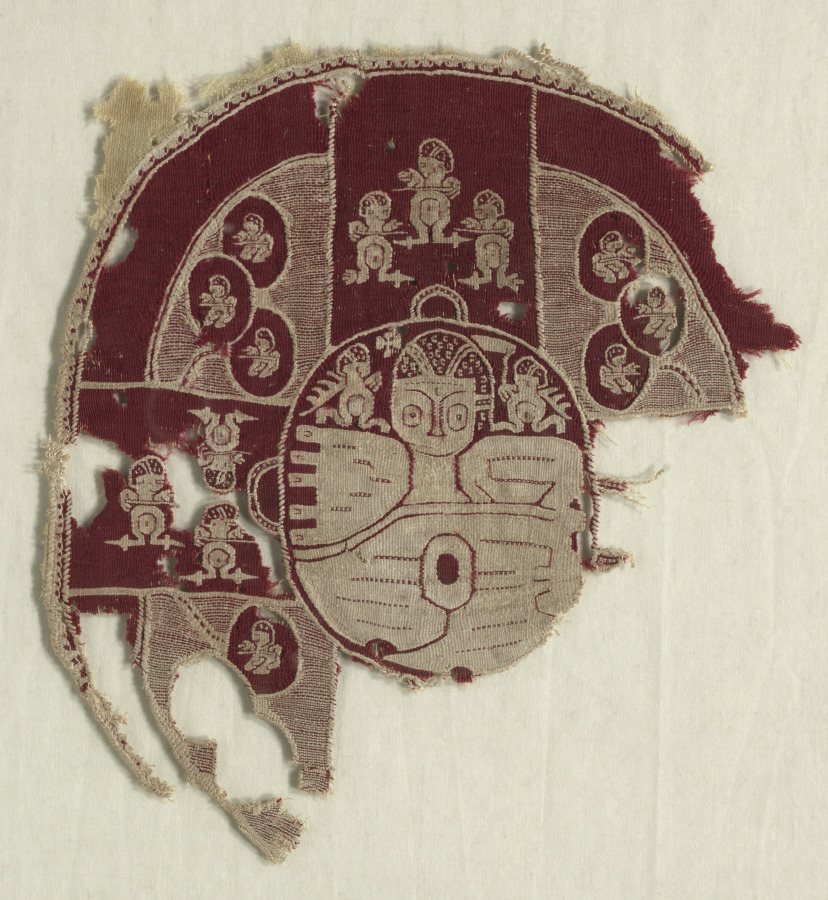
I. Form as Philosophical Construct: The Tunic-Shawl Hybrid
The subject—a tunic or shawl ornament—is not a garment in the conventional sense but a spatial argument. Drawing from the dialectical tension between Jacques-Louis David’s *The Death of Socrates* and the Shang-Zhou bronze *fang you* (方卣), the design brief demands a form that reconciles narrative stasis with ritual circulation. The tunic-shawl hybrid achieves this through a deliberate negation of tailoring’s assertive geometry. It is neither a fitted shell nor a draped afterthought; it is a negative-volume envelope that frames the body as a vessel for intellectual and ceremonial presence.
1.1 The Silhouette: From Rectilinear to Fluid
David’s composition relies on a triangulated stability—Socrates’ outstretched arm, the cup’s vertical axis, and the disciples’ descending curves—to freeze a moment of rational transcendence. The tunic-shawl translates this into a single continuous plane that drops from the shoulders with a slight A-line expansion, terminating at the mid-calf. The shawl component, when worn over the tunic, introduces a secondary layer of asymmetry: one side falls straight, the other is pinned at the clavicle, creating a diagonal that echoes the painting’s light source. This is not drapery for comfort; it is drapery as choreographed interruption.
Conversely, the *fang you*’s cubic body and flared neckline suggest a contained monumentality. The tunic borrows this via a structured shoulder seam—slightly extended, never dropped—that imparts a bronze-like rigidity to the upper torso. Below the bust, the fabric releases into a soft, unbroken column. The result is a silhouette that oscillates between architectural and organic, much like the vessel’s taotie (饕餮) motifs that alternate between zoomorphic terror and geometric order.
1.2 Ornament as Index, Not Decoration
In the *fang you*, ornament is semantic: the thunder pattern (雷纹) and kui-dragon (夔龙) are not embellishments but cosmological maps. The shawl ornament—a detachable bronze-toned clasp or a series of onyx bead chains—functions similarly. It is placed at the sternum, the body’s ritual center, to mark the point where breath (life) and speech (philosophy) converge. The clasp’s geometry is a reduced square, referencing the vessel’s base, while its matte finish absorbs light rather than reflecting it, aligning with David’s chiaroscuro that models form through controlled darkness.
II. Color: Onyx as the Chromatic Zero
Onyx is not a color but a material condition. It is the black of polished stone—deep, non-reflective, yet capable of revealing internal striations under direct light. In the context of this design, onyx serves three functions: it erases temporal markers, compresses visual noise, and elevates the wearer’s gesture to the status of a primary text.
2.1 The Death of Color: Rationality in Monochrome
David’s palette in *The Death of Socrates* is deliberately restrained—ochres, umbers, and a single shaft of pale light. This is not austerity but epistemological clarity. Onyx replicates this by stripping the garment of chromatic distraction. The tunic-shawl in onyx allows the wearer’s skin tone, posture, and movement to become the only variable elements. In a 2026 NYC executive context—where visual noise from digital screens, glass facades, and synthetic materials dominates—onyx functions as a cognitive filter. It signals that the wearer’s attention is directed inward, toward logic and decision, not outward toward spectacle.
2.2 Bronze Memory: The Subsurface Glow
The *fang you*’s patina—a green-black corrosion that accrues over millennia—is echoed in onyx’s undertone of graphite. When the fabric is a heavyweight wool-cashmere blend with a slight sheen, the garment catches light in a manner analogous to bronze’s aged surface: not reflective, but luminous from within. This is achieved through a double-faced weave—matte exterior, satin interior—so that when the shawl is draped, the inner layer peeks out at the edges, creating a micro-contrast that mimics the vessel’s incised lines. The effect is subtle, almost subliminal, but it prevents the onyx from reading as flat or lifeless.
2.3 Color as Ritual Time
In the Shang-Zhou ritual, the *fang you* held wine for ancestral libation—a liquid that was poured, not consumed, marking a temporal loop between the living and the dead. Onyx, in this garment, performs a similar function for the executive. It is the color of end-of-day deliberation, of boardroom silence, of the moment before a verdict is announced. It does not participate in the diurnal cycle of bright mornings and dim evenings; it exists outside time, as a constant. This is why onyx is paired with the minimalist category: it refuses the seasonal shifts of fashion, offering instead a permanent uniform for the thinker who operates across quarters, not collections.
III. Technical Construction: Engineering the Void
3.1 Seam Architecture
The tunic’s seams are felled and hidden, following the body’s median line without interrupting the fabric’s fall. This is a direct response to David’s linear perspective, where every line leads to a focal point. Here, the focal point is the clasp at the sternum. All seams—shoulder, side, and sleeve—are angled toward this coordinate, creating an invisible vector field that guides the eye. The shawl’s hem is left raw, cut with a laser to prevent fraying, echoing the *fang you*’s sharp edges that are never softened by polishing.
3.2 Weight and Drape
Fabric weight is critical. A 380 GSM wool-cashmere blend provides the gravitas of bronze while allowing the shawl to hold a fold without collapsing. The tunic’s body is cut with a center-front seam that is slightly curved, mimicking the vessel’s convex belly. This curvature ensures that when the wearer sits, the fabric pools in controlled folds rather than bunching—a nod to the *fang you*’s stable base, which never tips. The shawl’s length is calibrated to the wearer’s height, ending at the wrist bone when arms are relaxed, so that any gesture—reaching for a document, raising a glass—becomes a deliberate act, framed by the garment’s stillness.
3.3 The Clasp as Ritual Object
The onyx clasp is not sewn but magnetized, allowing for quick release and reattachment. This is a functional nod to the *fang you*’s removable lid, which permitted the ritual pouring of libation. In the executive context, the clasp can be detached and used as a paperweight or conference-call mute button—a literal object of control. Its surface is carved with a single incised line, referencing the thunder pattern’s most reduced form. This is ornament as mnemonic device: it reminds the wearer that every decision is a libation, a pouring out of one state to enter another.
IV. Conclusion: The Garment as Dialectic
The tunic-shawl ornament in onyx is not a trend piece. It is a philosophical instrument that operationalizes the tension between David’s rational death and the *fang you*’s cyclical rebirth. For the 2026 NYC executive, it offers a uniform that is simultaneously a shield and a conduit—shielding against the chaos of market noise, while conducting the wearer’s own intellectual gravity into every room. The form is minimalist because it must be; any additional line would break the spell. The color is onyx because it must be; any other hue would introduce time. This garment does not clothe the body. It houses a mind that has already accepted the terms of its own mortality—and chosen to act anyway.