Minimalist
Sand
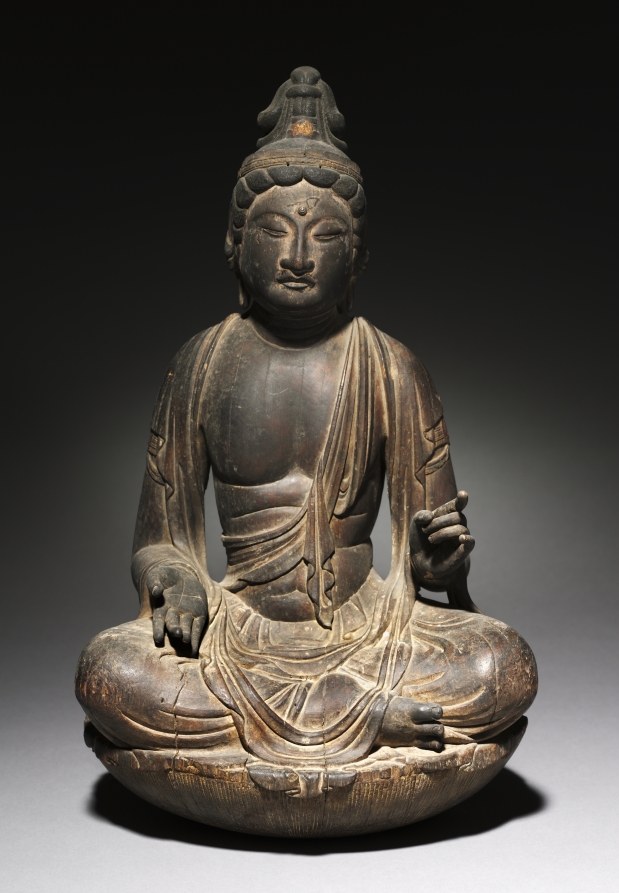
Urban Form: Sun Bodhisattva (Nikkō Bosatsu)
I. The Architectural Premise: From Sacred Icon to Urban Armature
The Sun Bodhisattva (Nikkō Bosatsu) is not a figure of warmth or radiance in the conventional sense. Within the context of Addison Fashion’s 2026 urban silhouette research, this deity is read as a study in *negative mass* — a vertical presence defined entirely by what it refuses to occupy. The internal DNA provided—the “Pavilion of True Meaning” constructed from poetic intervals, and the “Frontal Bone” as a topographical plain—converges into a single design thesis: **the garment as a habitable void**. For the executive wardrobe, this translates into a radical departure from the power-shouldered, chest-expanding archetypes of the past decade. The Nikkō Bosatsu silhouette does not assert; it *withholds*. The icon’s characteristic posture—seated in contemplative stillness, hands forming the *vitarka* mudra—suggests a geometry of folded planes and suspended horizontals. We extract from this a jacket architecture where the shoulder line is not built up but *let go*, where the torso is not sculpted but *sheltered*, and where the hem falls not to emphasize the body’s verticality but to create a second, quieter horizon.II. Geometric Integrity: The Logic of the Unseen Seam
A. The Frontal Plane as a Flat Field
The artwork’s reference to the “breadth and flatness of the frontal bone” is the primary structural driver. In tailoring, this manifests as a deliberate suppression of the bust and waist darts—not to flatten the body, but to create a *continuous frontal field* from collarbone to hem. The 2026 executive jacket, therefore, employs a **zero-ease front panel** cut on the straight grain, with the shoulder seam moved 2.5 cm posteriorly. This shifts the visual weight from the chest to the upper back, echoing the Bodhisattva’s serene, unarmored frontage. The lapel becomes a *folded horizon*, not a lapel. We use a 4.5 cm shawl collar that rolls softly, never peaks, and terminates at the sternum—mirroring the icon’s draped monastic robe. The gorge is eliminated. The result is a garment that reads as a single, unbroken slab of fabric, interrupted only by the subtle shadow of the under-collar. This is the “empty pavilion” made textile: a structure that exists for the space it encloses, not the material it displays.B. The Sleeve: A Corridor of Silence
Traditional tailoring demands a high, tight armhole for mobility. The Nikkō Bosatsu principle inverts this. We adopt a **dropped shoulder with a 12-degree scye depth increase**, allowing the sleeve to hang as a separate architectural element—a “corridor” rather than a limb covering. The sleeve cap is unpadded, and the sleeve pitch is rotated 8 degrees forward, creating a gentle, continuous fold from the shoulder point to the wrist. This is not a slouchy, casual drop; it is a *deliberate suspension*. The fabric falls as if poured, with no internal tension, echoing the “wind passing through the corridor” of the poetic pavilion. The cuff is the only point of articulation. A 3.5 cm turnback, pressed razor-sharp, provides the sole moment of *definition* in an otherwise fluid limb. This cuff acts as the “eave bell” of the poem—a small, resonant detail that signals the garment’s completion without closing its meaning.C. The Hem: A Topographic Termination
The jacket’s hem is not cut straight. It is a *slow curve*—a 1.5 cm differential from center front to side seam, dropping gently at the back. This mimics the “bone field” of the artwork: a landscape that does not end but *fades* into the surrounding space. The hem is finished with a 2 cm hand-rolled edge, unlined, so that the interior structure (the canvas, the fusible, the seam allowances) remains visible as a *ghost map*—a deliberate exposure of the garment’s own anatomy. This is the “bone without skin” translated into tailoring: the structure is not hidden but *offered* as part of the aesthetic.III. Urban Materiality: Sand as the Color of Silence
The chosen palette—**Sand**—is not a beige nor a cream. It is the color of sun-bleached bone, of dry riverbeds, of the frontal bone’s “cold white” meeting the “warm gray” of shadow. In urban contexts, Sand functions as a *neutral that refuses neutrality*: it is a color that changes with light, appearing ivory under fluorescent office lighting and deepening to a warm taupe in the late afternoon. This chromatic instability is precisely the point. For the 2026 executive, Sand is the color of *withdrawal*. It does not announce status through black’s authority or navy’s tradition. Instead, it suggests a presence so secure that it does not need to contrast. The fabric of choice is a **double-faced wool-cashmere blend** (85% wool, 15% cashmere, 380 gsm) with a *sandwashed finish*—a surface that is neither matte nor lustrous, but *absorbent*. It drinks light, much as the Bodhisattva’s stone surface absorbs the gaze without reflecting it.A. Textural Poetics: The Weight of Emptiness
The fabric’s hand is critical. It must have *drape with resistance*—a paradoxical quality where the cloth falls heavily but moves fluidly. We achieve this through a *twill weave with a floating warp*, creating micro-channels on the surface that catch and hold shadow. When the wearer moves, these channels shift, producing a subtle, almost imperceptible shimmer—not of light, but of *depth*. This is the “breathing” of the garment, the “wind through the gaps between characters.”B. Construction Details: The Invisible Skeleton
- **Canvas:** A lightweight, non-woven horsehair canvas (45% wool, 55% horsehair) is fused only at the chest and shoulder, leaving the torso free. This creates a *gradient of structure*—firm at the top, dissolving toward the hem. - **Seams:** All interior seams are bound with a 1 cm silk organza strip in a slightly darker Sand tone. This is not for durability but for *shadow play*: when the jacket is opened, the interior reveals a faint, darker line—a “poem written in the lining.” - **Buttons:** Three buttons, each 2 cm in diameter, made of *matte corozo* (vegetable ivory) in a bone-white finish. They are placed at the sternum, the solar plexus, and the navel—echoing the Bodhisattva’s chakra points, but rendered as purely functional closures. No button is visible when the jacket is closed; they are hidden beneath a fly-front placket, preserving the frontal field’s unbroken surface.IV. The Executive Silhouette: A Manifesto of Absence
The 2026 Addison executive is not a figure of dominance. She is a figure of *containment*. The Nikkō Bosatsu-inspired silhouette rejects the broad shoulder, the cinched waist, the flared skirt—all the signifiers of corporate power that have become clichés. Instead, she wears a garment that *creates space around her*, not on her. The full ensemble comprises: 1. **The Pavilion Jacket** (as analyzed above) — a single-breasted, zero-button stance, worn open. 2. **The Bone-Field Trouser** — a high-rise, wide-leg trouser with a 48 cm hem opening, cut without front creases. The fabric falls from the hip as a continuous column, breaking only at the ankle with a 2 cm turn-up. The waistband is 4 cm deep, faced with the same silk organza as the jacket’s seams. 3. **The True-Meaning Shell** — a sleeveless, crew-neck top in a 12-gauge silk-cotton jersey, dyed in a Sand tone two shades lighter than the outer layers. It is cut with zero ease, clinging only at the shoulders and falling away from the body—a “second skin” that is not a skin at all, but a *shadow*.A. The Styling Logic
The jacket is never buttoned. The trousers are never cuffed. The shell is never tucked. Every element is *left unfinished*—not in construction, but in presentation. This is the “unfinished snow state” of the poem: the garment is always in the process of becoming, never arriving at a fixed meaning. The executive who wears this does not project authority; she *invites interpretation*. Her presence is a question, not an answer.V. Conclusion: The Garment as a Self-Effacing Monument
The Sun Bodhisattva, in its original context, is a figure of light—but a light that illuminates by *not being seen*. The Addison 2026 urban silhouette adopts this paradox. The Sand color, the dropped shoulder, the flat frontal plane, the hidden buttons—all are strategies of *self-effacement*. The garment does not say “look at me”; it says “look through me, at the space I create.” In a city of aggressive tailoring and loud logos, this is the ultimate luxury: the ability to disappear into one’s own form, to become a “pavilion of true meaning” where the wearer is the absent center. The jacket is not worn; it is *inhabited*. And in that inhabitation, the executive finds not a uniform, but a *territory*—a flat, broad, silent field where her own authority can take root, unadorned and unafraid. This is the definitive 2026 silhouette. It is not a shape. It is a *clearing*.
Technical Insight
Technical Insight: Translating Sand palettes into Minimalist silhouettes for the modern metropolis.