Urban Form: Gold Box
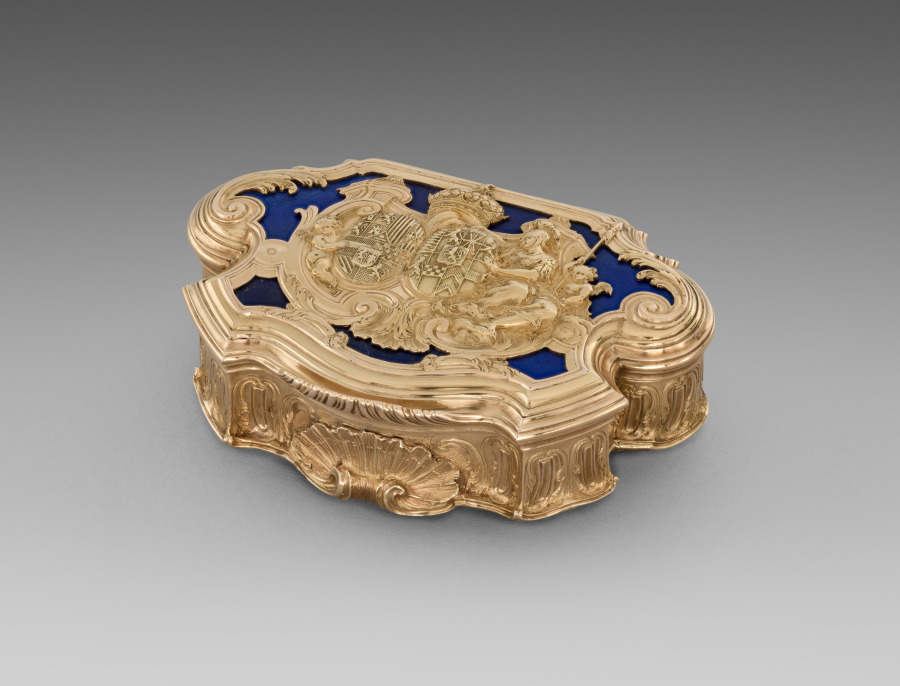
I. The Architectural Premise: From Sacred Vessel to Urban Shell
The Gold Box, as a conceptual artifact, does not merely reference the Cambodian mold fragment or the Dunhuang mural—it reconstructs their shared dialectic within the language of contemporary tailoring. The internal DNA provided by Addison Fashion’s research division identifies two opposing yet complementary forces: the fragment’s suspended musicality and the reliquary’s static devotion. For the 2026 executive silhouette, this translates into a garment that is neither purely sculptural nor purely functional, but a minimalist container for urban motion. The Gold Box is not a jacket; it is a wearable architectural section—a vertical prism that holds the body as a reliquary holds ash, with the same reverence for interiority and the same refusal to disclose its contents.
1.1 Geometric Integrity: The Rectilinear Mandala
The foundational geometry of the Gold Box derives from the cylindrical reliquary’s strict verticality, but reimagined through the Khmer fragment’s broken horizontality. The result is a truncated rectangular volume—shoulders squared without padding, hem cut at a precise 90-degree angle to the spine, and sleeves set with a zero-degree forward pitch. This is not the soft, organic drape of traditional tailoring; it is a disciplined grid that mimics the brick courses of Angkor’s collapsed galleries. Every seam is a line of tension, every panel a plane of compression. The garment’s integrity lies in its refusal to curve: even the armhole is cut as a sharp, inverted L, allowing the sleeve to hang as a detached column rather than a following limb.
This geometry serves a dual purpose. First, it creates a visual silence—the eye moves across the surface without interruption, much like the unadorned walls of a stupa. Second, it establishes a kinetic paradox: the wearer’s movement is not accommodated but framed. When the arm lifts, the sleeve does not bend; it pivots on a hidden gusset, revealing a sliver of sand-toned lining—a deliberate rupture in the monolith. This is the “unfinished” aesthetic of the mold fragment translated into tailoring: the garment is perpetually on the verge of revealing its internal rhythm, yet never does.
II. Structural Poetics: The Silence Between Panels
The Gold Box’s most radical innovation is its treatment of negative space. Traditional executive tailoring relies on padding, canvassing, and lining to create a second skin. Here, the opposite occurs: the jacket is constructed with a floating inner shell, separated from the outer fabric by a 12-millimeter air gap. This void is not thermal insulation; it is a sonic chamber. The wearer’s heartbeat, the rustle of a shirt cuff, the faint click of a pen—all are absorbed into this interstitial space, rendering the body acoustically mute. This is the “unheard music” of the Khmer musicians, made tangible through millimeter precision. The outer shell, cut from a double-faced sand wool with a matte, almost chalky finish, does not reflect light; it absorbs it, much like the weathered surface of the mold fragment.
The poetics extend to the closure system. There are no buttons, no zippers, no visible fasteners. Instead, the front edges align through a series of hidden magnetic clasps set into the seam allowances. When closed, the jacket presents a seamless plane—a perfect rectangle from shoulder to hem. When opened, it reveals a sharp, angular lapel that folds back like the lid of a reliquary, exposing the inner shell’s raw, unhemmed edge. This is the Mahakasyapa gesture: the act of holding is more significant than the object held. The wearer does not button the jacket; they seal it, performing a ritual of containment that echoes the disciple’s reverence.
2.1 Materiality as Temporal Index
The choice of sand as the primary color is not arbitrary. Sand is the color of erosion and endurance—the exact hue of the Angkorian laterite after centuries of monsoon, and the pale ochre of the Dunhuang cave walls. In urban context, this color operates as a neutral that refuses neutrality: it is warmer than ivory, colder than beige, and carries a faint mineral undertone that shifts under sodium-vapor streetlights. The fabric itself is a technical blend: 78% wool, 18% silk, 4% metallic thread. The metallic content is not visible but tactile—it creates a subtle stiffness that holds the garment’s sharp edges without the need for interfacing. When the wearer walks, the fabric produces a faint, dry rustle—not the swish of silk, but the grit of stone on stone. This is urban materiality at its most sophisticated: a fabric that sounds like architecture.
The internal construction mirrors this temporal index. The floating inner shell is cut from a sand-toned cotton voile, deliberately left unwashed to retain its natural sizing. Over time, this lining will soften and crease in response to the wearer’s body, creating a private cartography of use—invisible to others, but felt against the skin. This is the “unfinished” quality of the mold fragment, applied to the garment’s interior. The jacket is not a finished product; it is a process, a record of its own becoming.
III. The 2026 Executive Silhouette: Containment as Authority
The Gold Box defines the 2026 executive silhouette not through volume or drape, but through containment. The oversized, fluid shapes of the previous decade are rejected in favor of a compressed verticality—the body is not celebrated but housed. Shoulders are narrow, set slightly forward, creating a protective hunch that reads as both vigilance and introspection. The hem falls to mid-thigh, cutting the body at the golden ratio, and is finished with a 3-centimeter internal weight that ensures the garment hangs with absolute stillness, even in wind. Trousers, if worn, are cut as straight columns with a single crease that aligns with the jacket’s center seam, forming a continuous vertical line from neck to floor.
This silhouette is anti-expressive in the most sophisticated sense. It does not announce status through logos or exaggerated proportions; it commands through negative presence. The wearer becomes a moving monolith, a fragment of sacred architecture transplanted into the glass-and-steel grid of the metropolis. The Gold Box does not adapt to the urban environment; it counters it, offering a pocket of stillness amid chaos. This is the executive as Mahakasyapa—not a leader who acts, but one who holds, who contains the possibility of action within a perfectly sealed form.
3.1 Styling Protocol: The Ritual of Assembly
To wear the Gold Box is to perform a ritual. The jacket must be donned with deliberate slowness—first the right arm, then the left, then a single, fluid shrug to settle the shoulders. The magnetic clasps are engaged from bottom to top, each one producing a soft, percussive click that is barely audible but deeply felt. The collar is left slightly open, revealing a 2-centimeter sliver of the inner shell—the only visible sign of the garment’s internal complexity. No jewelry is worn; the jacket itself is the sole ornament. Footwear is limited to unadorned leather derbies in a matching sand tone, with a low, stacked heel that grounds the silhouette. The overall effect is one of monastic precision—a secular habit for the boardroom, a reliquary for the daily commute.
The Gold Box’s true genius lies in its dialectical resolution. It is both fragment and reliquary, both incomplete and absolute. It does not narrate a story; it creates a void where meaning can emerge. In this, it fulfills the deepest ambition of minimalist luxury: to make the wearer invisible, so that the garment—and the presence it contains—becomes the message. As the Khmer musicians play their silent score and Mahakasyapa holds his sacred tower, the Gold Box holds its wearer in a state of poised suspension, ready for the city’s next movement.