Minimalist
Slate
Urban Form: Apollo and Daphne
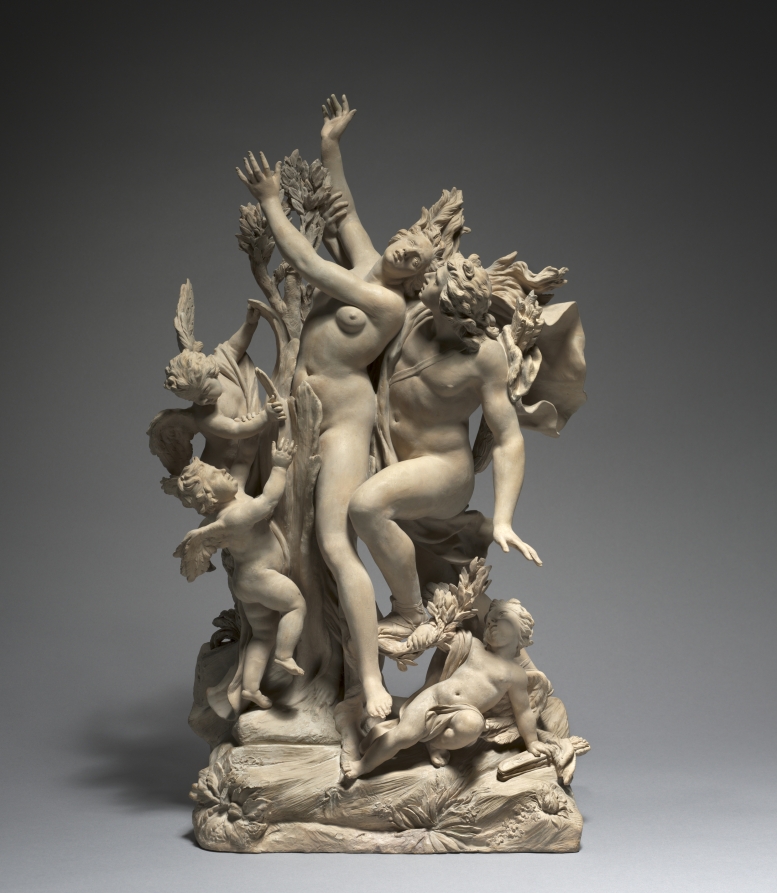
Formal Deconstruction: The Dialectics of Materiality and Spatial Logic in Apollo and Daphne
The transposition of the Shōsōin repository’s *Udumbara Flowers Temple Plaque* and the *Square Wine Container (Fangyou)* into contemporary urban sartorial language requires a rigorous extraction of their underlying structural principles—not their iconography, but their *operational grammar*. For the 2026 NYC executive wardrobe, these two Tang-dynasty artifacts offer a binary framework: one rooted in organic flux, the other in geometric stasis. The resulting silhouette system is neither nostalgic nor decorative; it is a functional response to the city’s fragmented temporal rhythms, where the wearer oscillates between moments of contemplative pause and high-velocity negotiation.Materiality as Structural Ethos: Wood’s Breath vs. Bronze’s Boundary
The plaque’s technique of *suíwù fùxíng*—allowing material to dictate form—translates directly into fabric selection and garment construction. In the executive wardrobe, this manifests as **unstructured tailoring** in heavyweight Japanese wool or double-faced cashmere, where the cloth’s natural drape is permitted to govern the shoulder line and lapel roll. There is no internal canvas stiffening; instead, the garment relies on the fabric’s inherent memory to create a soft, almost imperceptible architecture. The lapel does not cut a sharp V; it *settles* into a gentle notch, mimicking the wood grain’s flow around the udumbara petals. This is not negligence—it is a deliberate surrender to material intelligence, a rejection of the aggressive, fused constructions that dominate fast-fashion executive suiting. Conversely, the Fangyou’s bronze rigidity demands **precision-cut panels** and **geometric seam lines**. Here, the blazer becomes a study in controlled tension: a high, structured armhole, a suppressed waist achieved through vertical darting, and a hemline that terminates with mathematical exactness at the hip bone. The fabric—a technical stretch twill with a matte, oxidized finish—is chosen for its ability to hold a crease without appearing stiff. The result is a garment that *declares* its boundaries, much like the vessel’s four faces. Each seam is a line of demarcation, signaling to the observer that the wearer operates within clear, self-imposed parameters—a critical asset in boardrooms where ambiguity is misread as weakness.Spatial Rhetoric: The Inward Void and the Outward Grid
The plaque’s floating, rootless flower creates what the source text terms a *non-substantive, introspective space*. In garment terms, this translates to **negative-space construction**—a technique where the absence of fabric is as deliberate as its presence. Consider a slate-toned, single-breasted overcoat with a concealed placket and no visible buttons. The front panel is unbroken, creating a monolithic surface that directs the eye inward, toward the wearer’s vertical axis. Pockets are hidden within the side seams; there are no chest darts. The garment does not *display* the body; it *frames* a void, allowing the wearer’s posture and movement to become the primary visual event. This is the executive equivalent of the udumbara’s “nowhere-ness”—a presence achieved through absence, ideal for the leader who commands attention not by volume but by stillness. The Fangyou’s compartmentalized surface, however, demands **explicit segmentation**. Here, the wardrobe deploys a three-piece suit with a visible waistcoat, each component functioning as a distinct “register” of information. The jacket’s peak lapels and the waistcoat’s sharp V-neckline create a series of nested triangles, echoing the vessel’s banded friezes. Trousers are pleated, with a single, sharp crease that bisects each leg—a nod to the bronze’s incised lines. The effect is a garment that *narrates* its own logic, guiding the observer’s gaze through a sequence of defined zones: shoulder, chest, waist, hip. This is not mere decoration; it is a spatial argument, asserting that the wearer’s authority is structured, legible, and reproducible.Temporal Construction: The Instant vs. The Accumulation
The udumbara’s mythic three-thousand-year bloom, frozen in wood, speaks to a temporality of *compressed eternity*. In the 2026 wardrobe, this is realized through **transformative layering systems**. A slate-toned, unstructured jacket is designed to be worn over a sheer, high-neck knit that appears almost weightless—a nod to the flower’s ephemeral quality. The knit is cut with a raw, unfinished hem, suggesting impermanence, while the jacket’s soft shoulders imply a form that could dissolve at any moment. This combination is engineered for the executive who moves between a morning meditation session and a midday pitch, where the garment must adapt to shifting psychological states without requiring a costume change. The “instant” is the wearer’s current state; the “eternity” is the garment’s ability to remain relevant across contexts. The Fangyou’s patina—centuries of oxidation—offers a counterpoint: *accumulated gravitas*. This is translated into **deliberate aging techniques** in fabric finishing. A slate-colored, double-breasted overcoat in a wool-cashmere blend is treated with a subtle, uneven dye process that mimics the vessel’s verdigris. The color is not uniform; it deepens at the elbows, shoulders, and hem, as if the garment has absorbed the wearer’s history. Buttons are matte, horn, with visible grain—each one unique, like a bronze inscription. The coat’s silhouette is long, almost floor-sweeping, with a deep center vent that allows for a slow, deliberate stride. This is not a garment for the impatient; it is a statement that the wearer’s authority is *earned*, not assumed—a direct parallel to the ritual object’s role as a repository of collective memory.Color as Spatial and Temporal Signifier: Slate’s Dual Nature
The selection of **Slate** as the operative color is not arbitrary. Slate exists between the organic warmth of wood and the cold rigidity of bronze. It is a color of *transition*—the hue of a sky before a storm, of stone worn by centuries of rain. In the wardrobe, slate functions as a neutral that does not retreat; it asserts a quiet, mineral presence. For the unstructured jacket, slate reads as *softened charcoal*, absorbing light and creating a sense of depth that mirrors the plaque’s wood grain. For the structured overcoat, slate takes on a *metallic sheen* when woven with a hint of silk, echoing the bronze’s oxidized surface. This dual application allows the color to bridge the two temporalities: it can be the color of a fleeting moment (the flower) or the color of enduring substance (the vessel). Moreover, slate’s undertones—a hint of blue, a whisper of green—prevent it from becoming a mere corporate default. It is a color that demands attention without shouting, much like the artifacts themselves. In a sea of black and navy, slate marks the wearer as someone who understands nuance, who has read the source text not as a historical curiosity but as a living design philosophy.Synthesis: The 2026 Executive as a Walking Dialectic
The final wardrobe is not a collection of garments but a *system of oppositions* held in tension. The unstructured jacket and the structured overcoat are not alternatives; they are the two poles of a single dialectic. The wearer begins the day in the unstructured jacket—open, receptive, attuned to the “empty” space of possibility. By afternoon, they switch to the structured overcoat—closed, authoritative, projecting the “grid” of decision. The transformation is not a costume change but a *shift in spatial rhetoric*, mirroring the way the plaque and the vessel coexist in the Shōsōin as complementary expressions of a unified aesthetic worldview. In this system, the executive’s body becomes the site where “empty” and “solid” are reconciled. The garments do not merely clothe; they *argue*. They argue that true authority is not monolithic but dialectical—capable of both yielding to material truth and imposing structural order. This is the lesson of Apollo and Daphne, refracted through Tang-dynasty material culture: the pursuit of form is never about the object itself, but about the *relationship* between the maker’s intention and the material’s resistance. The 2026 NYC executive, dressed in this system, embodies that relationship—not as a static image, but as a living, breathing negotiation between the instant and the eternal, the void and the grid.
Technical Insight
NYC Perspective: Translating Slate tones into Minimalist silhouettes.