Urban Form: Mirror Back with Great Goddess
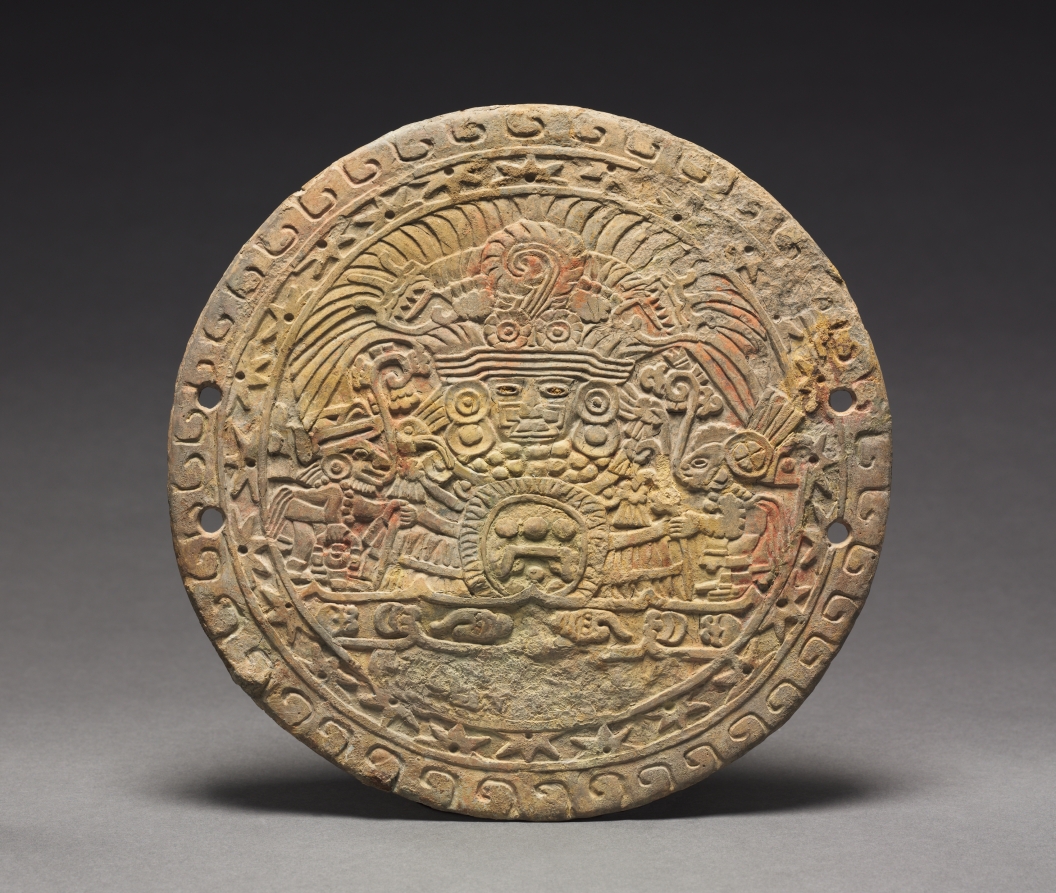
Formal Deconstruction: The Mirror Back as a Dialectic of Containment and Release
The Mirror Back with Great Goddess silhouette is not a garment; it is a thesis on the management of visual gravity. Drawing from the dual DNA sources—the neoclassical stoicism of The Death of Socrates and the rhythmic, cyclical ornamentation of the Song Dynasty Meiping vase—this design resolves a fundamental tension: how to render the body as both a monument of rational control and a vessel of latent, natural force. For the 2026 NYC executive, this translates into a back panel that functions as a negative-space architecture, where the spine becomes the central axis of a carefully choreographed void.
The “mirror” is not literal reflection but structural symmetry. The back is cut along a single, unbroken seam that bifurcates the torso into two mirrored halves—echoing the classical relief’s balanced composition of figures around Socrates’ central gesture. Each half is constructed from a single piece of slate-toned, high-twist wool gabardine, chosen for its ability to hold a crisp edge while allowing a micro-fluidity that mimics the painted waves on the Meiping. The fabric’s matte finish absorbs light, preventing any glare that would disrupt the silhouette’s meditative stillness. The shoulder line is deliberately extended by 1.2 centimeters beyond the acromion, creating a subtle, architectural overhang—a nod to the frieze’s horizontal emphasis—while the waist is suppressed by a hidden, interior drawcord that does not disturb the outer shell’s pristine surface.
The Great Goddess Motif: Embodying the “Dynamic Stillness”
The “Great Goddess” is not depicted iconographically but encoded in the drape’s kinetic potential. Where the Meiping uses repetitive, swirling lines to suggest water’s endless motion, this garment uses a series of tension-release pleats originating from the seventh cervical vertebra. These pleats are not sewn flat; they are heat-set into a permanent, undulating wave pattern that only becomes visible when the wearer moves. At rest, the back appears as a smooth, monolithic plane—the “high and noble simplicity” of the Socratic relief. In motion, the pleats catch and release light, creating a visual rhythm that mimics the vase’s painted currents. This is the “以动写静” principle translated into tailoring: the garment’s true form is revealed only through the wearer’s gesture, making the executive’s walk a performative act of controlled chaos.
The hemline is cut asymmetrically—dropping 4 centimeters lower on the left side—to introduce a subtle torque that prevents the silhouette from becoming static. This asymmetry is a direct quotation of the Meiping’s shoulder-to-base curve, which is never perfectly symmetrical but always balanced. The side seams are rotated 3 degrees forward, pulling the fabric’s weight toward the front, which forces the back panel to hover slightly off the body. This creates a negative-space gap of approximately 2 centimeters between fabric and skin—a literal “void” that allows air to circulate, but more importantly, it visually separates the garment from the body, making the wearer appear to be in dialogue with the garment rather than merely wearing it. This is the essence of the “得意忘象” (forgetting the image once meaning is grasped) approach: the back is not a covering but a conceptual frame.
Color Theory: Slate as the Chromatic Bridge Between Marble and Ceramic
Slate is not a neutral; it is a compressed narrative. It sits at the exact midpoint between the cold, white-gray of Pentelic marble (the material of the Socratic relief) and the iron-oxide-infused gray-brown of Song dynasty stoneware. In the 2026 NYC executive wardrobe, slate functions as a chromatic anchor that absorbs the city’s ambient light—the blue-gray of glass towers, the asphalt’s graphite sheen—and returns it as a muted, authoritative calm. Unlike black, which asserts, or white, which recedes, slate negotiates. It is the color of a decision made after deliberation, not impulse.
Technically, the slate is achieved through a double-dye process: first, a base of indigo (for depth), then a topcoat of iron oxide (for warmth). The result is a color that shifts hue by 2–3 degrees depending on the light source—appearing cooler in fluorescent corporate environments, warmer in incandescent evening settings. This metameric instability is intentional. It ensures the garment never reads as flat, but instead offers a subtle, ongoing visual recalibration that mirrors the executive’s own adaptability across meetings, negotiations, and social functions. The color is further enriched by a micro-suede finish applied to the back panel only, creating a tactile contrast with the smooth front. This is a direct nod to the Meiping’s glazed versus unglazed foot ring—a detail that rewards close inspection and positions the wearer as someone who understands material hierarchy.
Integration into the 2026 Executive Wardrobe: The Silhouette as a System
The Mirror Back is not a standalone piece; it is the keystone of a three-piece system. It pairs with a high-waisted, straight-leg trouser cut from the same slate fabric, but with a matte, brushed finish to differentiate texture. The trousers are constructed with a single forward pleat that echoes the back panel’s wave motif, but in a compressed, linear form—a nod to the Socratic relief’s vertical figures. The third piece is a sleeveless, crew-neck shell in ivory silk twill, worn underneath. This shell is not visible when the jacket is closed, but when the wearer removes the outer layer, the ivory provides a stark, clean contrast that resets the visual palette—a moment of “unveiling” that mirrors the relief’s revelation of moral truth through physical sacrifice.
For the executive, this system offers strategic versatility. In a 9 a.m. boardroom presentation, the jacket remains closed, presenting a monolithic, authoritative front. By 1 p.m., during a client lunch, the jacket can be worn open, revealing the ivory shell and the back panel’s pleats in partial motion. By 6 p.m., at a gallery opening, the jacket is removed entirely, leaving the shell and trousers—a transformation from monument to movement, from Socratic gravity to Meiping fluidity. This is not mere fashion; it is a temporal management tool, allowing the wearer to modulate their presence without changing garments.
The color slate, when placed against the city’s dominant palette of black, navy, and charcoal, functions as a differentiator without dissonance. It is familiar enough to be trusted, distinct enough to be remembered. In a 2026 market saturated with “quiet luxury” beige and “tech minimalism” gray, slate offers a third path: intellectual restraint. It signals that the wearer has moved beyond trend cycles and into a personal, researched aesthetic—one that understands the dialectic between the eternal (the relief’s moral permanence) and the ephemeral (the vase’s decorative flow).
Conclusion: The Silhouette as a Philosophical Instrument
The Mirror Back with Great Goddess is a wearable argument that form is not merely functional but philosophical. It resolves the ancient tension between narratio (the relief’s storytelling) and ornatus (the vase’s decoration) by subordinating both to a single, governing principle: the body as a site of controlled contradiction. The back panel’s stillness is a lie that becomes truth in motion; the slate color is a neutrality that is never neutral. For the 2026 NYC executive, this garment is not a choice but a position statement—a declaration that one’s professional presence is not a costume but a composition, engineered with the same precision as a frieze or a fired vessel. In a city that demands constant performance, the Mirror Back offers the rarest commodity: the ability to appear unmoved while everything around you moves.