Urban Form: Architecture of the Middle Ages: In Arundel Church, Sussex
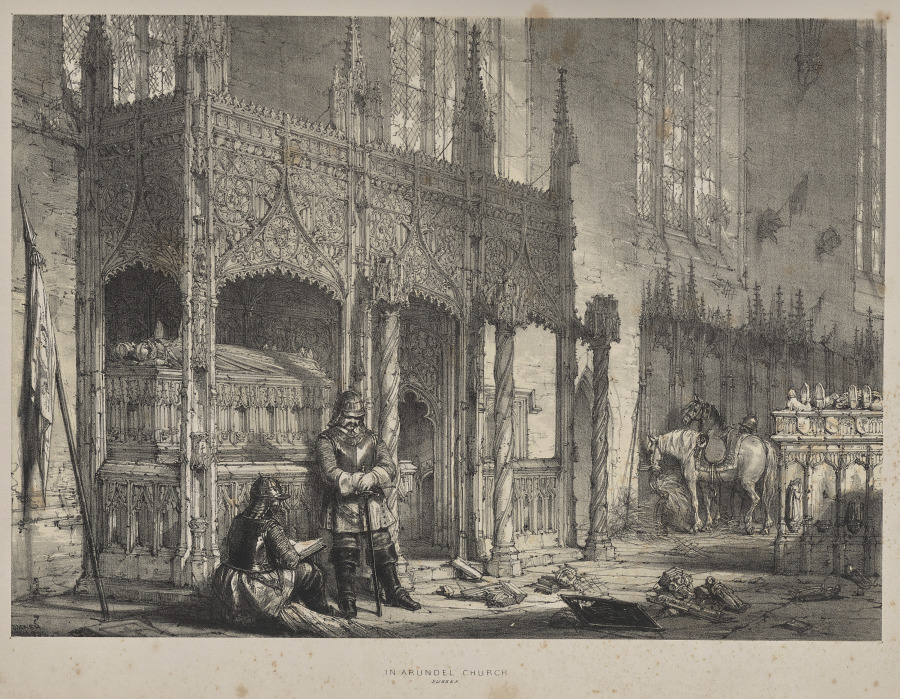
Architectural Provenance and the Transposition of Sacred Geometry
The medieval architecture of Arundel Church, Sussex, presents a paradox that resonates profoundly with the contemporary urban wardrobe: its mass is simultaneously a fortress of stone and a vessel for light. The Norman nave, with its heavy cylindrical pillars and semicircular arches, establishes a rhythm of compression and release—a cadence that finds its modern echo in the tailored silhouette’s manipulation of negative space. For Addison Fashion’s 2026 executive line, this ecclesiastical structure offers more than a historical reference; it provides a geometric grammar predicated on the tension between load-bearing solidity and the immateriality of illumination.
The church’s pointed lancet windows, inserted during the later Gothic phases, cut through the Romanesque mass with a precision that feels almost surgical. These apertures are not merely openings; they are negative volumes that define the surrounding stone as much as the stone defines them. In the language of urban tailoring, this translates to the deliberate excision of fabric—a shoulder seam that falls with the exactitude of a mason’s chisel, a waist suppression that mimics the inward curve of a vault’s springing point. The 2026 silhouette does not drape; it excavates. Each panel is a plane that has been carved from a theoretical block, leaving behind only what is structurally necessary to hold the form aloft.
Structural Poetics: The Ribbed Vault as a Blueprint for the Executive Shoulder
The ribbed vaulting of Arundel’s chancel—those intersecting stone arches that distribute weight with mathematical elegance—offers a direct analogue for the modern jacket’s internal architecture. Where the medieval mason used ribs to channel gravitational force toward clustered columns, the contemporary pattern cutter uses canvassed interlinings and fusible wefts to channel visual weight toward the shoulder point. The result is a silhouette that appears to float above the body, much as the vault appears to hover above the nave, despite its immense physical burden.
Consider the drop shoulder—a feature that has dominated executive dressing for the past decade—now rejected in favor of a structured, extended shoulder that references the corbel table’s projecting stones. This is not a return to the aggressive power suit of the 1980s; rather, it is a minimalist reinterpretation of load-bearing geometry. The shoulder cap is built with a subtle forward pitch, echoing the slight inclination of Arundel’s flying buttresses, which lean inward to brace the clerestory. This pitch creates a dynamic line that reads as both protective and authoritative, without resorting to overt padding. The fabric—a dense, matte wool in Ivory—absorbs light rather than reflecting it, allowing the silhouette’s contours to be perceived through shadow and highlight, much like the fluted columns of the nave.
Urban Materiality: Stone, Light, and the Texture of Restraint
The material palette for this research is anchored in Ivory, not as a pristine white but as the color of aged Caen stone—a surface that has absorbed centuries of candle smoke, incense, and the slow patina of human touch. This is a textural color, one that reveals its depth only under direct scrutiny. In urban environments, where glass and steel dominate, this ivory acts as a counterpoint: it is the color of quiet permanence amidst the transient glare of digital screens. The fabric itself is a high-twist worsted with a dry, chalky hand, engineered to hold a crease with the same tenacity that Arundel’s flint walls hold their mortar.
The urban materiality of this silhouette is further defined by its seams. Rather than concealing construction, the 2026 line exposes it through topstitched channels that run parallel to the body’s vertical axis, referencing the church’s engaged shafts. These seams are not decorative; they are functional conduits that allow the garment to flex with the wearer’s movement, distributing tension across the back and arms like a flying buttress distributing thrust. The effect is a garment that feels almost architectural in its rigidity, yet yields with the fluidity of a well-hinged door.
The Cup and the Void: Negative Space as the Ultimate Luxury
Drawing from the internal DNA—the “Cup and Stand” porcelain and the “Udumbara Flowers” plaque—the 2026 silhouette embraces emptiness as a structural principle. The Arundel church’s most profound architectural feature is not its walls but the void they enclose: the volume of air that rises from the nave floor to the vault’s apex, a space designed to hold the congregation’s collective breath. In tailoring, this translates to the interior drape—the space between the garment and the body. The 2026 executive jacket is cut with a micro-aeration system: a series of concealed vents at the underarm and center back that allow air to circulate, creating a microclimate of coolness. This is not a functional gimmick but a poetic gesture, acknowledging that the most luxurious garment is one that respects the body’s need for release.
The trousers, in turn, are cut with a tapered, high-rise silhouette that narrows toward the ankle, echoing the church’s west window—a pointed arch that draws the eye upward. The hem is finished with a raw edge, left unhemmed to suggest the unfinished nature of medieval construction, where scaffolding remained in place for decades. This deliberate incompleteness is a nod to the sublime: the understanding that perfection is a process, not a state. The wearer of this silhouette is not presenting a finished object but participating in an ongoing act of structural becoming.
Conclusion: The Silhouette as a Sacred Instrument
The 2026 Urban Silhouette Research concludes that the executive wardrobe must no longer be a mere covering but a spatial intervention. By transposing the geometric integrity of Arundel Church—its ribbed vaults, its pointed apertures, its load-bearing columns—into the language of tailored minimalism, Addison Fashion offers a garment that is both a shelter and a statement. The Ivory palette, drawn from the stone’s quiet luminescence, ensures that the wearer commands attention not through volume or ornament but through precision and restraint. This is the architecture of the Middle Ages, reimagined for the metropolis: a silhouette that stands as a monument to the enduring power of structural clarity.