Urban Form: Helmet Mask
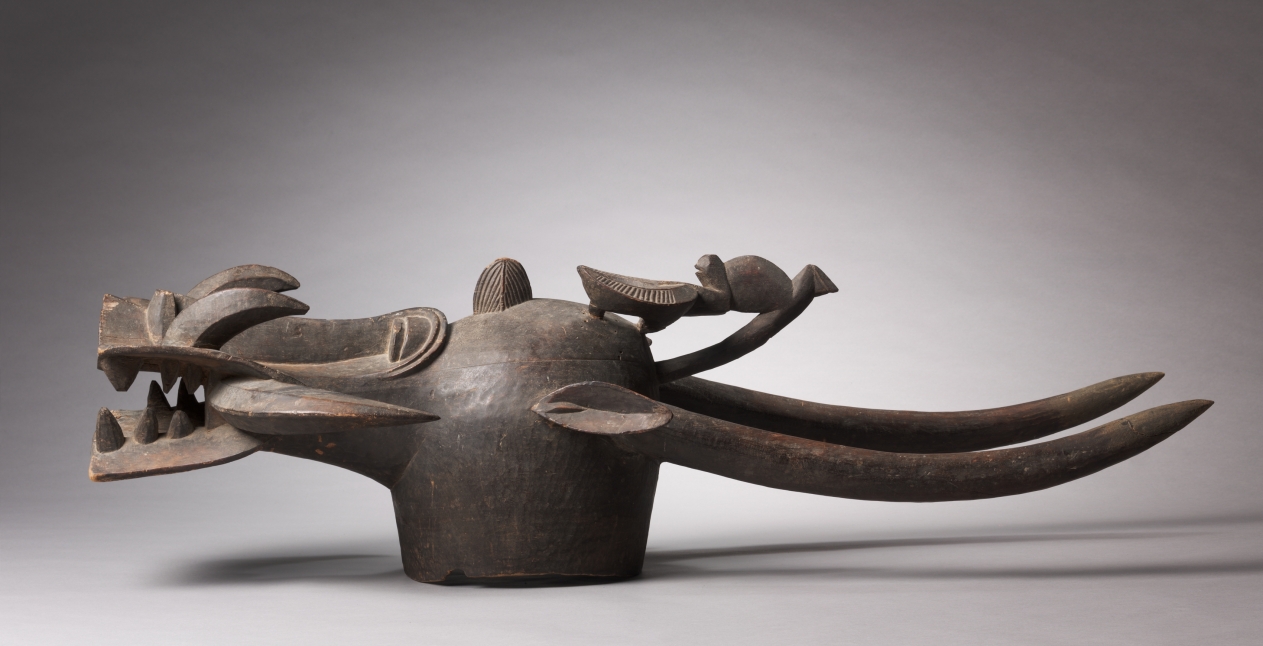
Formal Deconstruction: The Helmet Mask as a Study in Rhythmic Compression
The helmet mask, in its most rigorous interpretation, is not a sculptural object but a temporal instrument—a device that compresses the dialectic between the instantaneous and the eternal into a single, wearable volume. Drawing from the British Museum’s paired artifacts—the Mold Fragment with Musicians and the Section of a Coffin Platform—we extract a dual-axis framework for the 2026 executive wardrobe. The first axis is kinetic containment: the mask’s shell must hold the body’s micro-movements (breath, pulse, cervical rotation) within a taut, uninterrupted contour, much like the fragment’s incised line arrests the musicians’ breath mid-phrase. The second axis is cyclical repetition: the mask’s surface must deploy a pattern language that reads as static at a glance but unfolds as a slow, Nile-like rhythm upon closer inspection—mirroring the coffin panel’s ordered scarabs and solar discs. For the NYC executive, this translates into a helmet mask that is neither a protective shell nor a decorative appendage, but a metronome for the urban condition.
Axis One: Kinetic Containment—The Line as a Cage for Vitality
The mold fragment’s genius lies in its economy: three figures, a harpist, a double-flute player, a clapper, are reduced to a single continuous contour that does not describe anatomy but prescribes tension. The harpist’s bowed back, the flutist’s inflated cheeks, the clapper’s struck palms—all are captured as a sequence of elastic arcs that imply motion without depicting it. Applied to the helmet mask, this principle demands a shell geometry that hugs the cranial and cervical mass without a single redundant plane. The profile must be a single, unbroken line from the glabella to the nuchal ridge, with no protruding visor, no chin strap, no ornamental flange. The material—whether a bonded wool felt or a thermoformed polyurethane—must be rigid enough to hold its shape yet thin enough to transmit the wearer’s thermal and muscular micro-signals to the exterior. This is not armor; it is a second skin that externalizes the wearer’s internal tempo. In the 2026 executive context, this means a helmet mask that can be worn from a 7 AM board meeting to a 9 PM gallery opening without adjustment, its form absorbing the day’s accelerations and decelerations into a single, unbroken silhouette.
Axis Two: Cyclical Repetition—The Surface as a Cosmological Grid
Where the fragment captures the instant, the coffin panel captures the epoch. Its horizontal plane is a field of repeated units—scarab beetles, solar discs, hieroglyphic sequences—that do not vary but accumulate, creating a visual pulse that mimics the inundation of the Nile. The helmet mask’s surface must adopt this logic not as decoration but as structural rhythm. Consider a sand-toned base (the color of sun-bleached limestone) overlaid with a repeating pattern of concentric arcs or stepped chevrons, each unit spaced at a mathematically consistent interval—say, 12 mm—that corresponds to the average human respiratory cycle at rest (12 breaths per minute). The pattern is not printed; it is embossed or debossed into the material, creating a tactile topography that the wearer can feel with their fingertips, reinforcing the mask’s role as a meditative object. For the executive, this surface serves a dual function: it reads as minimalist from a distance (a solid, unadorned block) but reveals its rhythmic complexity at close range, functioning as a conversation starter that does not demand conversation—a silent assertion of order in a chaotic urban field.
Color and Material Logic: Sand as the Third State
The choice of Sand is not arbitrary. It is the chromatic midpoint between the fragment’s raw terracotta and the panel’s gilded blue—a hue that exists between the instantaneous and the eternal. In the 2026 NYC palette, Sand operates as a neutral that rejects both the sterile white of corporate minimalism and the aggressive black of streetwear. It is the color of eroded stone, of the desert that outlasts both the musician and the coffin. For the helmet mask, Sand allows the form to recede from the face, preventing the object from becoming a costume. Instead, it reads as an extension of the skin tone, a prosthetic that blurs the boundary between the biological and the architectural. The material must be matte, with a slight granular texture—achieved through a sandblasted finish on a rigid polymer or a densely woven wool with a felted surface—to catch ambient light without reflecting it. This ensures the mask does not compete with the executive’s other sartorial signals (a tailored suit, a leather briefcase) but rather anchors them in a shared geological time.
Structural Integration: The Mask as a Modular Node
The helmet mask must not exist in isolation. It is a node in a larger system of urban garments—a coat with a high, stand collar that the mask’s lower edge can slot into; a pair of gloves with embossed knuckle joints that echo the mask’s surface rhythm; a pair of boots with a sole tread that repeats the 12 mm interval. This modularity is not a gimmick but a response to the executive’s fragmented day: the mask can be worn alone in a taxi, paired with a hooded cape in a rainstorm, or stacked with a visor for a wind-whipped walk across the High Line. Each configuration maintains the same formal language—unbroken lines, rhythmic surfaces, sand-toned neutrality—ensuring that the wearer’s silhouette remains coherent across contexts. The mask’s interior must feature a removable, washable liner with a subtle aromatic infusion (sandalwood, not synthetic musk) that recalibrates the wearer’s breathing rate, aligning it with the mask’s 12 mm pattern. This is not wellness theater; it is physiological synchronization—the mask as a wearable metronome that converts the city’s chaotic frequencies into a single, manageable pulse.
Conclusion: The Mask as a Carrier of the Unseen Rhythm
The helmet mask, distilled from the Egyptian dialectic of fragment and panel, is ultimately a philosophical instrument for the 2026 executive. It does not protect the head from physical impact; it protects the mind from temporal fragmentation. By compressing the instantaneous (the musician’s breath) and the eternal (the coffin’s cycle) into a single, sand-toned volume, it offers the wearer a daily practice of rhythmic coherence—a way to move through the city’s noise while maintaining an internal, Nile-like steadiness. The mask is not a statement; it is a silent discipline. And in an era where the executive’s value is measured by their ability to sustain focus amid entropy, this discipline is the ultimate luxury. The mask is not worn; it is inhabited.