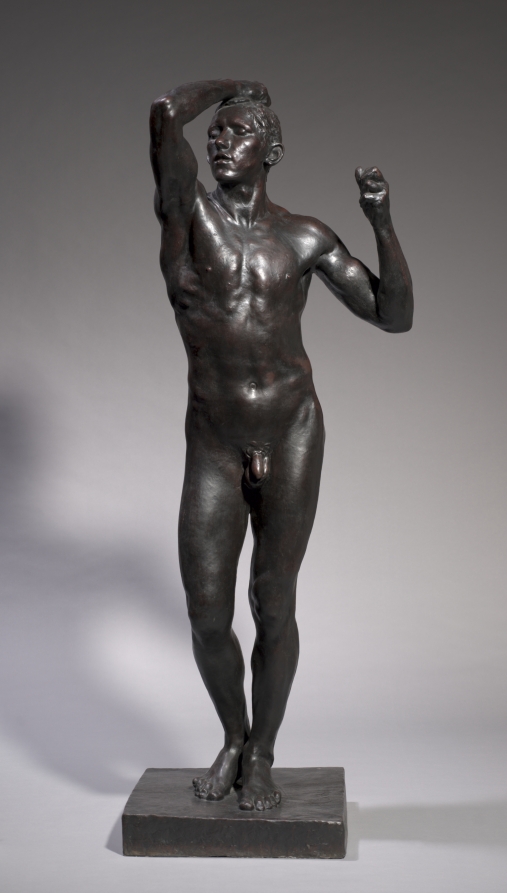
Urban Form: The Age of Bronze
I. Conceptual Framework: The Dialectics of Void and Finality
The Age of Bronze is not a nostalgic revival; it is a structural thesis on termination and continuity. The dual DNA sources—Socrates’ hemlock ritual and the Eastern jar’s silent capacity—converge into a single sartorial argument: garments must negotiate the space between presence and absence. In Western metaphysics, the body is a temporary vessel for rational transcendence; in Eastern ontology, the vessel itself is the locus of meaning through its emptiness. For the 2026 NYC executive, this translates into a wardrobe that rejects ornamentation as noise and embraces negative space as authority. The silhouette must not cling to the body like a confession, nor drape it like a shroud. Instead, it operates as a controlled void—structured enough to assert intent, hollow enough to allow breath.
The color slate is not a compromise between black and gray; it is the chromatic equivalent of philosophical distance. Slate carries the coolness of stone, the residue of ancient quarries, and the neutrality of a mind that has already processed the outcome. It is the color of post-decision calm. In the boardroom, slate signals that you have already considered the worst-case scenario and are unmoved. It lacks the theatrical finality of onyx and the sterile optimism of ivory. Slate is the color of a verdict delivered without emotion—precise, irreversible, and quietly monumental.
II. Form Analysis: The Socratic Line vs. The Ceramic Volume
A. The Vertical Rationale
From The Death of Socrates, we extract the linear discipline of the philosopher’s gesture. His raised index finger is not a plea but a geometric proof. In tailoring, this translates to a sharpened shoulder line—not padded to aggression, but cut with a clean, almost architectural precision. The lapel notch is narrowed to a 60-degree angle, mimicking the acute focus of rational inquiry. The jacket’s length extends to mid-hip, creating a vertical ratio that elongates the torso without theatricality. This is not a power suit; it is a reasoning suit. Every seam is a syllogism: the side panel’s slight inward curve suggests the body’s mortality, while the straight back seam asserts the mind’s indifference to it.
The trousers follow a parallel logic. A high-rise, straight-leg cut with a single forward pleat—not for comfort, but for the visual suggestion of a column. The hem breaks at the shoe’s instep with a crisp, deliberate fold, as if the fabric itself has reached a conclusion. There is no tapering to the ankle; that would imply anxiety. Instead, the leg falls like a plumb line, indifferent to the body’s movement. This is the silhouette of a man or woman who has already accepted the outcome of the meeting before entering the room.
B. The Ceramic Volume
From the Eastern jar, we borrow the principle of contained emptiness. The garment’s interior volume is not a failure of fit but a deliberate allowance. The jacket’s chest is cut with a subtle drape—not a slouch, but a controlled fullness that creates a micro-climate of air between fabric and sternum. This is the sartorial equivalent of the jar’s hollow center: it holds nothing, yet enables everything. The sleeve head is set slightly lower than the anatomical shoulder, allowing a gentle fold at the bicep. This is not a casual gesture; it is a philosophical one. The fold acknowledges that the body will eventually fail, but the garment’s structure remains indifferent to that failure.
The overcoat—a critical piece for the NYC executive—adopts the jar’s silhouette in its most literal form. A cocoon shape, cut from a dense wool-cashmere blend, falls from the shoulder with no visible closure. The front edges meet but do not overlap, creating a vertical slit that suggests an opening without revealing what lies within. The collar stands at a 3-inch height, framing the neck like the rim of a vessel. When worn, the coat does not announce the body; it houses it. The wearer becomes the jar’s content—temporary, replaceable, but essential to the object’s purpose.
III. Color Theory: Slate as the Chromatic Middle Ground
A. The Death of Black
Black is the color of absolutes—mourning, rebellion, or power. It is too declarative for the Age of Bronze. Slate, by contrast, is the color of aftermath. It is what remains after the fire has cooled, after the argument has ended, after the verdict has been read. In the 2026 executive wardrobe, slate functions as a neutral that does not defer to other colors but absorbs them. A slate suit with a slate shirt and slate tie creates a monolith of quiet authority. The absence of contrast is not monotony; it is the visual equivalent of Socrates’ calm—no internal conflict, only resolved tension.
Slate also performs a specific optical function in urban environments. Under the fluorescent glare of a conference room, slate reads as gray; under the amber sodium lights of a late-night taxi, it shifts toward blue. This chromatic instability is an asset. It prevents the garment from becoming a fixed statement, allowing the wearer to remain an open question. The jar does not insist on its color; it reflects the light of its surroundings. Slate does the same.
B. Pairing with Bronze Accents
The Age of Bronze demands a secondary accent—not for decoration, but for the acknowledgment of mortality. A bronze-toned watch case, a bronze buckle, or a bronze thread in the lining serves as the single point of warmth in an otherwise cool palette. This is not a flourish; it is a reminder. Bronze is the metal of time—it oxidizes, it patinas, it records the passage of years. The executive who wears a bronze accent is not hiding from decay but wearing it as a credential. The Socrates figure does not deny the hemlock; he drinks it. The bronze accent is the hemlock in miniature—a small, tasteful admission that all form eventually returns to earth.
IV. Technical Construction: Engineering the Void
A. Fabric as Membrane
The primary fabric for the Age of Bronze collection is a 380-gram wool twill with a 2% elastane content. The elastane is not for stretch; it is for memory. The fabric must return to its original shape after being crushed, sat upon, or stressed—just as the jar returns to its emptiness after being emptied. The weave is tight enough to resist wind but not so dense as to feel armored. A subtle herringbone pattern, visible only at a 45-degree angle, references the Greek key motif without literal quotation. The pattern is a ghost—present but not intrusive.
For the overcoat, a 520-gram double-faced wool is used. The outer face is slate; the inner face is a deep bronze-brown. When the wearer turns a cuff or lifts a collar, the inner color flashes—a momentary revelation of the vessel’s interior. This is the only moment of drama in the entire collection. It is not a statement; it is a leak. The jar does not announce its emptiness, but a crack in its surface reveals the void within. The flash of bronze-brown is that crack.
B. Seam Construction and the Philosophy of the Stitch
All seams are flat-felled—not for durability, but for the visual absence of bulk. A flat-felled seam lies flush against the body, creating a continuous surface that does not interrupt the garment’s volume. The stitching is done in a tonal slate thread, invisible at three feet. This is not a rejection of craftsmanship; it is a rejection of craftsmanship as spectacle. The Socrates figure does not perform his philosophy; he embodies it. The seams are the unspoken premises of the argument—necessary but unseen.
The button stance is set at the natural waist, not the anatomical waist. This creates a subtle V-shape that draws the eye upward, toward the face—the only part of the body that remains undeniably alive. The buttons themselves are made of corozo nut, dyed to a matte slate finish. They are not shiny; they do not reflect light. They are the jar’s lid—functional, unadorned, and easily removed.
V. The 2026 NYC Executive: Wearing the Question
The executive who wears the Age of Bronze does not dress for success; they dress for sufficiency. The silhouette is not designed to impress but to endure. In a city where every interaction is a negotiation, the slate minimalist form offers a strategic advantage: it does not reveal intent. The garment’s emptiness is a holding cell for strategy. The wearer’s thoughts remain as invisible as the jar’s interior, while the outer form projects a calm that borders on indifference.
This is the final lesson of the dual DNA source. Socrates’ death is not a tragedy; it is a completion. The jar’s emptiness is not a lack; it is a capacity. The 2026 executive, clad in slate and structured void, embodies both: a mind that has accepted the terms of its existence, and a form that remains open to whatever may fill it. The Age of Bronze is not a collection of clothes. It is a position—on mortality, on time, and on the quiet power of a garment that says nothing but means everything.