Urban Form: Arch in Farmyard, Swansea
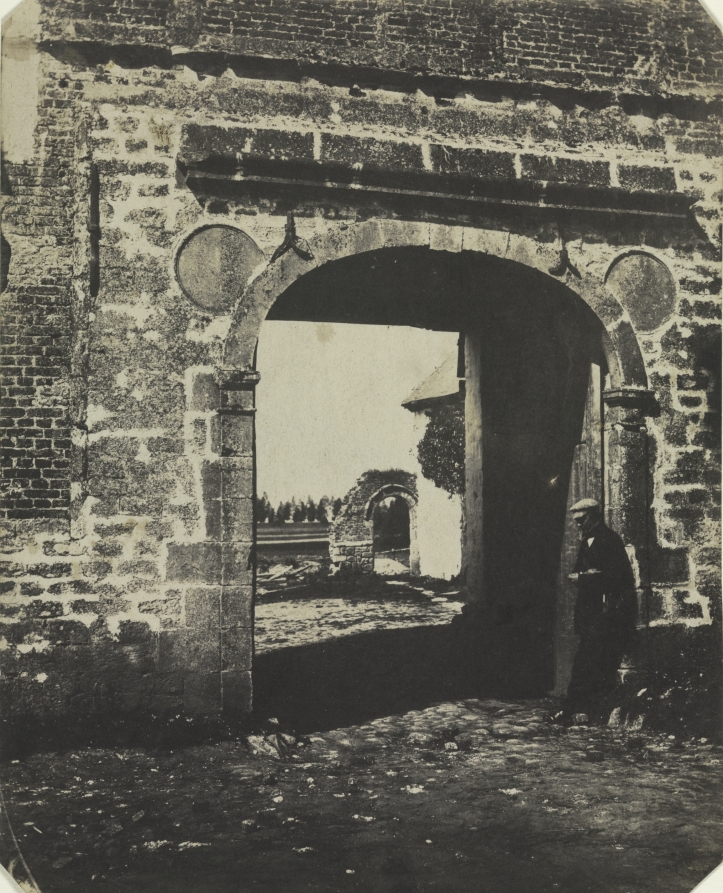
Structural Poetics of the Arch: A Study in Negative Volume
The subject—Arch in Farmyard, Swansea—presents itself not as a monument but as a threshold. Its geometric integrity lies in the deliberate absence of closure: a semicircular void cut into a mass of weathered stone and timber, framed by the utilitarian chaos of a farmyard. For Addison Fashion’s 2026 executive silhouette, this arch functions as a masterclass in negative volume. The arch does not assert; it withholds. It carves space from matter, allowing the surrounding environment—the rusted corrugated iron, the damp cobbles, the grey Welsh sky—to become the garment’s true fabric. In our design language, this translates to a jacket that is defined not by its seams but by the air it contains. The shoulder line is softened, the chest panel is cut with a subtle concavity, and the back drape falls in a single, uninterrupted plane. The wearer does not occupy the garment; the garment occupies the space around the wearer, creating a halo of controlled emptiness.
Geometric Integrity: The Arch as a Sectional Blueprint
From a technical standpoint, the arch’s geometry is a study in compression and release. Its voussoirs—the wedge-shaped stones that form the curve—are arranged in perfect radial symmetry, each unit bearing the weight of the next until the keystone locks the structure into stasis. This is not a static equilibrium but a dynamic tension, a frozen moment of load-bearing. In the 2026 executive silhouette, we replicate this through a segmented panel construction. Each panel of the outer shell is cut with a slight bias, mimicking the radial thrust of the arch. The result is a garment that holds its shape without internal padding, relying instead on the interlocking tension of its own fabric. A slate-toned, high-twist wool gabardine serves as the primary material—its dense weave provides the structural memory of stone, while its fluid drape honors the arch’s inherent lightness. The hem is cut on a subtle curve, echoing the arch’s spring line, and the side vents are angled to mirror the voussoir joints, allowing movement without disrupting the overall silhouette.
Urban Materiality: From Farmyard to Metropolis
The farmyard setting is not a pastoral escape but a site of industrial entropy. The arch stands amid rust, mud, and discarded machinery—elements that, in their decay, reveal a raw materiality. For the urban executive, this translates into a palette and texture that reject polish in favor of patina. The primary color, Slate, is drawn directly from the Welsh sky and the wet stone of the arch itself. It is a color of quiet authority, neither black nor grey but a mutable intermediate that shifts with light. The fabric is treated with a nanotechnology-based water repellent, not to shield the wearer from rain but to create a surface that beads and sheds moisture like the arch’s own weathered face. This is not a luxury of protection but a luxury of non-absorption—the garment remains impervious to the urban environment’s emotional and physical residue. The lining, in contrast, is a raw silk in a pale ivory, a hidden nod to the arch’s interior shadow, which, when the jacket is opened, reveals a flash of unexpected softness.
The “Udonge” Principle: The Unseen as Structural Core
Drawing from the internal DNA of the Udonge (优昙钵花) plaque, the arch’s true power lies in what it does not show. The flower that never blooms, the plaque that names without depicting—this is the essence of negative ontology. In the 2026 silhouette, this manifests as a hidden interior pocket, invisible from the exterior, accessed through a concealed placket. The pocket is not for utility but for ritual—a place to hold a single object, perhaps a folded note or a key, that carries personal significance. The garment thus becomes a reliquary, its structural integrity secondary to its capacity for concealment. The arch’s voussoirs, in this reading, are not stones but guardians of the unseen, each panel of the jacket a sentinel protecting the wearer’s inner life from the urban gaze. The shoulder seam is set slightly forward, creating a subtle forward pitch that suggests both readiness and introspection—a posture of one who carries a secret.
The Chest of Garments: Closure as Aesthetic Tension
Parallel to the Udonge principle, the medieval Chest for Storing Garments offers a counterpoint of opaque containment. The arch in Swansea, though open, is framed by a farmyard wall that is itself a form of enclosure. The chest’s locked lid, its carved biblical scenes, its heavy iron hinges—all speak to a desire to seal the sacred within the profane. For the executive silhouette, this translates into a closure system that is both deliberate and ceremonial. The front fastening is not a simple zipper or button but a double-layered fly, hidden beneath a placket that is secured by three hand-set horn buttons, each carved to mimic the arch’s curve. The act of closing the jacket becomes a ritual of sealing—a moment where the wearer transitions from the public to the private, from the farmyard’s chaos to the arch’s stillness. The interior waistband is reinforced with a corset-like structure of boning, not to shape the body but to create a rigid internal frame that holds the outer fabric away from the torso, preserving the arch’s negative volume even when the garment is fully fastened.
Conclusion: The Arch as a Portable Threshold
The 2026 executive silhouette, distilled from the Arch in Farmyard, Swansea, is not a garment but a portable threshold. It borrows the arch’s geometric integrity—its radial tension, its negative space, its material honesty—and translates it into a form that moves through the city as a quiet declaration of structural poetics. The slate-toned exterior, the hidden pockets, the ceremonial closures, the uncompromising drape—all converge to create a silhouette that is at once monumental and ephemeral, rooted in the farmyard’s earth yet lifted by the arch’s skyward curve. This is minimalist luxury in its purest form: not the absence of detail, but the presence of restraint. The wearer does not don a jacket; they step through an arch, leaving behind the noise of the world and entering a space of their own making. The garment is the threshold, and the threshold is the garment—an urban poetics of silence, structure, and the sacred in the everyday.