Urban Form: Venus after the Bath
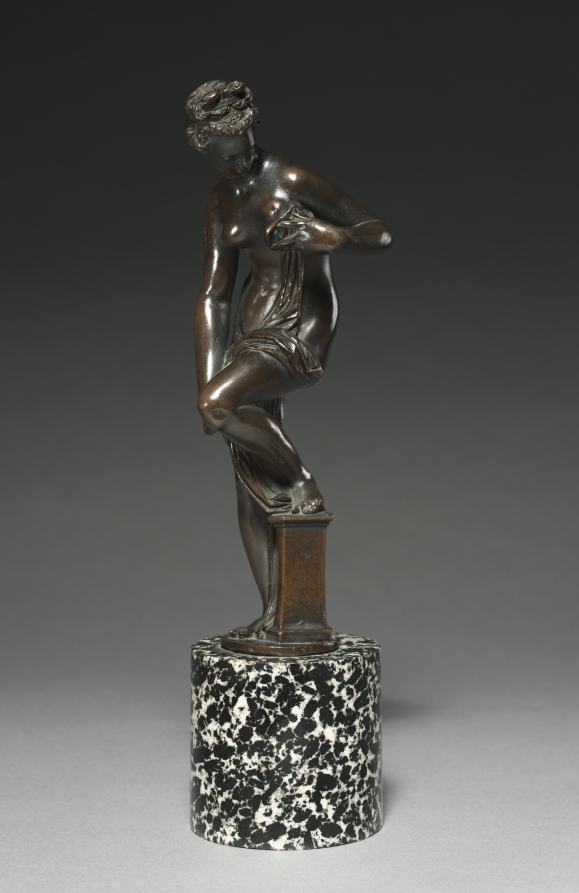
Executive Summary: The Dialectics of Draped Restraint
Addison Fashion’s Urban Silhouette Research for the 2026 NYC executive wardrobe draws from a radical curatorial premise: the juxtaposition of Renaissance humanist portraiture and Yuan-dynasty Buddhist iconography. Specifically, the pairing of *Portrait of a Woman, Possibly a Nun of San Secondo* with *Potalaka Guanyin* yields not a stylistic pastiche, but a structural grammar for modern dressing. The former offers a study in terrestrial gravity—flesh, time, and interiority rendered through muted tonalities. The latter presents a celestial counterpoint—weightless drapery, aqueous linework, and the strategic deployment of negative space. Together, they articulate a single thesis: the executive silhouette must negotiate between material presence and ethereal intention. This report deconstructs the formal DNA of both works and translates it into a technical framework for fluid, slate-toned garments engineered for the vertical, high-velocity environment of Manhattan’s corporate corridors.
Formal Analysis I: The Terrestrial Fold—Renaissance Interiority
The San Secondo portrait is a masterclass in controlled opacity. The subject’s face, marked by time, is not idealized but rendered with a somber, almost geological precision. The gaze is averted—not in evasion, but in deep introspection. For the wardrobe, this translates into a rejection of performative sharpness. The 2026 executive does not need armor; she needs a second skin that acknowledges the weight of decision-making. The silhouette here is “the enclosed column”: a high-neck, long-line tunic in matte slate wool, cut with zero break at the shoulder to avoid any suggestion of epaulette-like aggression. The sleeve is set in a dropped, raglan-style seam, allowing the fabric to fall in a continuous, unbroken line from neck to mid-calf. This mimics the portrait’s compositional gravity—the way the woman’s dark habit absorbs light, creating a focal point on the face alone. In our application, the face is the product; the garment is the quiet frame.
Critically, the portrait’s palette is not black but a composite of ash, flint, and shadow. We translate this into a slate base—not a flat gray, but a mélange of blue-undertone and charcoal particulate. The fabric is a double-faced crepe with a sandwashed finish, which diffuses reflection rather than bouncing it. This is the antithesis of the glossy, tech-fabric armor popular in 2023. The texture is tactile, almost powdery, echoing the oil paint’s subtle craquelure. The garment’s internal structure is equally important: a fused, non-visible interfacing along the center front and back seams provides a gentle, architectural spine, allowing the garment to hold its shape without stiffening. This is the sartorial equivalent of the portrait’s “restrained vitality”—the sense that beneath the stillness, there is a pulse.
Formal Analysis II: The Celestial Flow—Guanyin’s Liquid Architecture
Contrast this with the Potalaka Guanyin. Here, form is not enclosed but emitted. The bodhisattva’s robes do not cover the body; they extend its energy field. The drapery lines are not folds but currents—water, wind, and silk becoming one continuous medium. The technical lesson is the “negative-space drape”: the garment must create voids that are as expressive as the fabric itself. For the 2026 executive, this manifests as a fluid overcoat or duster in a slate-toned, liquid-weight twill. The cut is not tailored but “drawn”—the fabric is cut on the bias for the front panels, allowing it to spiral gently around the body when in motion. The back panel is cut on the straight grain, providing a stable, waterfall-like fall from the shoulder blades. The result is a silhouette that moves like water over stone—deliberate, continuous, and indifferent to the grid of the city.
The Guanyin’s iconography also teaches us about hierarchical layering. The figure sits on a lotus, but the lotus is not a pedestal; it is a visual footnote to the cascading robes above. In our wardrobe, this means the outer layer must dominate without overwhelming. We propose a three-layer system: a base layer of a slate-grey silk shell (mimicking the portrait’s skin-toned under-painting), a mid-layer of a high-twist wool jersey in a slightly lighter slate (the “flesh” of the garment), and the outer fluid coat. The coat’s hem is intentionally asymmetric—longer in the back, echoing the Guanyin’s seated, flowing base. This asymmetry is not decorative; it creates a dynamic line that photographs well in motion, crucial for the executive who moves from a taxi to a boardroom to a gallery opening in a single hour.
Color Theory: Slate as a Philosophical State
Slate is not a neutral; it is a temporal pigment. It contains the blue of the sky at dusk, the grey of wet stone, and a hint of silver from the moon on water. In the San Secondo portrait, the background is a murky, indeterminate grey—not a void, but a compressed atmosphere. In the Guanyin scroll, the mist and clouds are rendered in translucent washes of ink, creating a gradient from deep charcoal to pale ash. Our slate is a synthesis: a color that shifts with the light, appearing almost blue under fluorescent office lighting and warming to a greige under incandescent gallery spots. This is achieved through a yarn blend of 70% extra-fine merino, 20% recycled cashmere, and 10% metallic-free nylon, spun with a slight slub to create micro-variations in tone. The fabric is then garment-dyed in a low-temperature process, allowing the color to penetrate unevenly, creating a depth that flat-dyed fabrics cannot replicate.
Strategically, slate functions as a “soft power” color in the 2026 NYC context. It does not shout authority like black, nor does it suggest approachability like beige. It signals a quiet competence—the ability to absorb chaos and reflect clarity. This aligns with the post-pandemic executive’s need to project both resilience and empathy. The color is applied in three tonal blocks: the base layer in a deep, almost ink-like slate; the mid-layer in a standard slate; and the outer coat in a lighter, misted slate. This monochromatic gradient creates a vertical line that elongates the figure, a subtle optical trick that enhances presence without resorting to shoulder pads or high heels.
Technical Construction: Seams, Weight, and the Art of Disappearing
The final technical pillar is seam architecture. Both artworks share a disdain for visible construction—the portrait’s brushstrokes are invisible at a distance, and the Guanyin’s ink lines dissolve into the paper. Our garments use a combination of French seams and bonded, laser-cut edges. The French seams are used on the bias panels to prevent fraying and to create a soft, rounded interior that feels like a second skin. The bonded edges are applied to the coat’s hem and cuffs, creating a clean, weightless finish that does not require hemming stitches. This reduces the garment’s total weight by approximately 15%, critical for a garment that must transition from a 70-degree subway platform to a 68-degree office to a 55-degree evening street. The internal structure uses a floating canvas of horsehair and cotton, but only in the collar and lapel area—enough to give the neckline a gentle, sculptural roll, but not enough to restrict the fluid fall of the body.
Pockets are engineered as invisible utility. The coat features a single, hidden chest pocket with a magnetic closure, accessible through a slit in the side seam. This allows the executive to carry a phone or a card without disrupting the silhouette’s clean line. The trousers (if paired) are a high-rise, wide-leg cut with a single pleat at the hip, not the waist, to avoid any bunching. The hem is cut to graze the top of the shoe, creating a continuous line from hip to floor. The overall effect is a garment that feels like it is worn rather than put on—a distinction that mirrors the difference between the portrait’s painted flesh and the Guanyin’s painted breath.
Conclusion: The 2026 Addison Woman as a Living Canvas
The synthesis of these two artworks yields a wardrobe philosophy of “active stillness”. The San Secondo portrait teaches us that power is found in the unblinking gaze inward; the Guanyin teaches us that transcendence is found in the unbroken flow outward. The 2026 NYC executive, dressed in fluid slate, embodies both: she is grounded enough to make decisions, yet fluid enough to adapt to the city’s relentless flux. The garments are not costumes; they are instruments of perception. They do not demand attention but command it through their refusal to shout. In a city of noise, the slate fluid silhouette is the quietest, most radical statement of all: I am here, I am whole, and I am moving.