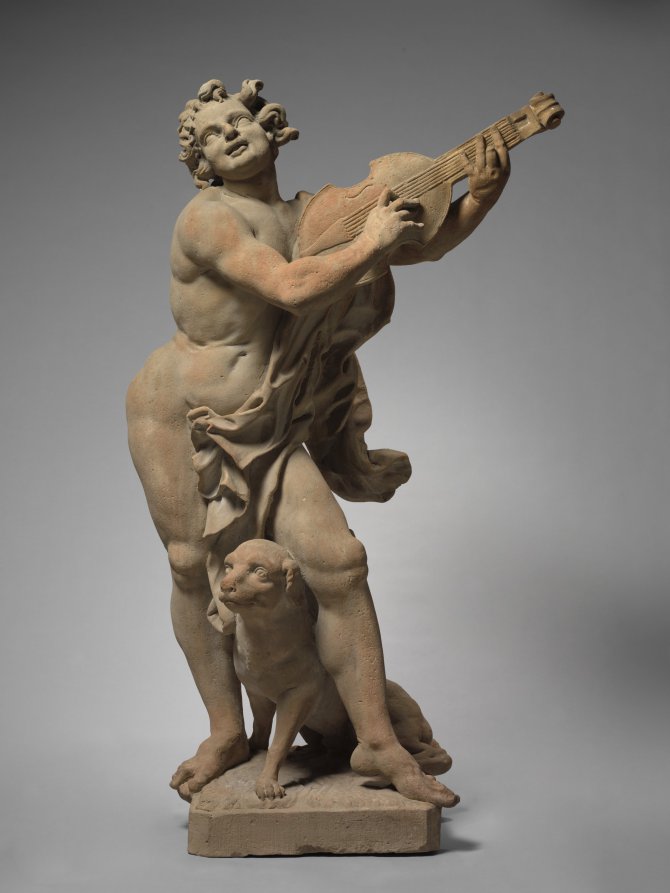
Urban Form: Orpheus and Cerberus
Executive Summary: The Dialectics of Terminal Form
This research brief translates a dualistic meditation on mortality—Jacques-Louis David’s neoclassical Death of Socrates and a Song Dynasty celadon Meiping vase with incised wave patterns—into a wearable urban silhouette system for the 2026 New York executive. The source material presents not a binary opposition but a tension of resolutions: one resolves death through narrative climax and rational geometry; the other dissolves it through cyclical texture and volumetric stillness. For Addison Fashion, the operative synthesis is “static dynamism”—garments that hold the body in a state of poised finality while their surface architecture suggests perpetual motion. The resulting wardrobe is not about mourning or morbidity; it is about managerial transcendence—the executive who commands the room not through volume of gesture but through the compression of intent into precise, repeatable form.
Formal Deconstruction: From Pictorial Geometry to Wearable Architecture
1. The Socratic Line: Rational Restraint as Power
David’s composition is a masterclass in hierarchical verticality. The philosopher’s outstretched arm creates a diagonal that bisects the canvas, while the surrounding disciples form a frieze of emotional chaos beneath his calm. For the 2026 executive, this translates into shoulder architecture that does not exaggerate but declares. A tailored jacket with a slightly extended, squared shoulder line—reminiscent of the classical pediment—creates a visual anchor. The lapel is not a lapel but a structural vector: narrow, peak-adjacent, and cut with a severity that mimics the folds of Socrates’ himation. The garment’s interior canvas is the true innovation: a floating chest piece that mimics the painting’s light source, subtly lifting the fabric off the sternum, creating a shadowed recess that reads as interiority—the hidden logic of the rational mind.
The painting’s “orderly chaos” of drapery is reimagined as controlled drape in technical suiting. Trousers are cut with a single forward crease, not as a stylistic afterthought but as a geometric guarantee—a line that bisects the leg from hip to hem, echoing the columnar stability of David’s architectural backdrop. The rise is high, the hip suppressed, and the hem breaks cleanly at the shoe, leaving no excess fabric to suggest hesitation. This is a silhouette of pre-decisional stillness: the body appears ready to act, but the action is always deferred, held in a state of perpetual about-to.
2. The Meiping Counterpoint: Volumetric Stillness and the Cyclical Hem
Where David’s work is narrative, the Meiping vase is anti-narrative. Its form—small mouth, short neck, sloping shoulder, and tapered foot—is a study in contained expansion. The widest point occurs at the upper third, creating a visual center of gravity that feels both grounded and buoyant. For outerwear, this dictates a modified cocoon silhouette in the collection’s signature coat. The shoulder is set slightly inward, allowing the fabric to rise and then fall in a continuous, unbroken arc from the upper arm to the hem. The hem itself is not straight but subtly curved, echoing the vase’s foot ring. This curve is the collection’s secret weapon: it allows the coat to swing with the body’s natural gait without flaring, maintaining a cylindrical integrity that reads as both monumental and mobile.
The incised wave pattern of the vase—not turbulent but respiratory—finds its translation in surface texture rather than print. The executive’s knitwear is engineered with a micro-ribbed structure that runs horizontally across the torso, creating a visual rhythm that mimics the vase’s carved waves. The gauge is fine enough to read as solid from a distance, but upon approach, the ribs catch light and shadow in a slow, meditative pulse. This is not a pattern; it is a materialized tempo. The garment’s surface does not shout; it breathes, offering the wearer and observer a moment of ocular pause—a luxury of stillness in the visual noise of Manhattan.
Color Theory: Slate as the Chromatic Bridge
3. The Rational Blue-Gray and the Ash of Creation
The chosen palette, Slate, is not a compromise but a synthesis of the source’s opposing temperatures. David’s canvas is dominated by warm, theatrical light—ochres, terracottas, and the pale flesh of the martyr. The Meiping, in contrast, is a study in cool, aqueous celadon—a green-gray born of iron and reduction fire. Slate occupies the precise midpoint: a blue-gray with a green undertone, it carries the intellectual coolness of the porcelain while retaining a whisper of the painting’s human warmth. In the 2026 executive wardrobe, Slate functions as a neutral that is not neutral. It is a color of decision, not absence.
Strategically, Slate is deployed in three tonal registers to create depth without contrast. Deep Slate (almost charcoal) anchors the primary suiting and outerwear, absorbing light to create the “shadowed recess” of the Socratic chest. Mid Slate (a true blue-gray) is reserved for shirting and fine-gauge knits, acting as the “light source” that illuminates the face. Pale Slate (a misty, almost silvered tone) appears in interior linings and as a contrast tipping on collars and cuffs—a nod to the celadon’s glaze where light pools at the shoulder of the vase. The effect is a monochromatic system that relies on value rather than hue to construct the silhouette. This is not minimalist in the sense of reduction; it is minimalist in the sense of total control. The executive does not coordinate colors; they calibrate them.
Technical Application: The 2026 Executive Uniform
4. Garment Typologies and Construction Protocols
The Socratic Jacket: A single-breasted, two-button jacket in a 320-gram wool and cashmere blend with a matte finish. The shoulder is constructed with a soft, unpadded roll that mimics the painting’s sculptural drape, but the chest is fused with a floating canvas that creates a subtle, convex curve—the “rational chest.” The waist suppression is minimal (4 cm), prioritizing a columnar line over a nipped waist. The sleeve head is set slightly forward, echoing the raised arm of Socrates, creating a line that visually lengthens the torso.
The Meiping Coat: A three-quarter length, raglan-sleeved coat in a double-faced wool felt. The raglan sleeve is essential—it allows the shoulder to slope without a seam, preserving the vase’s continuous arc. The coat is unlined, with all seams bound in pale slate silk, creating a weighted drape that falls with the slow gravity of the celadon glaze. The hem is cut in a subtle, continuous curve, and the front closure is a hidden placket, eliminating visual interruption. The collar is a high, stand-and-fall design that frames the neck like the vase’s small mouth—an aperture that draws the eye upward.
The Wave Knit: A crewneck pullover in a 12-gauge merino, knitted with a proprietary horizontal micro-rib that is denser at the center front and gradually loosens toward the side seams. This creates a subtle, optical expansion and contraction as the wearer moves—a living wave that does not distort the garment’s overall solidity. The shoulder seam is dropped 2 cm, allowing the knit to sit as a soft, secondary layer over the jacket’s structure.
Conclusion: The Wardrobe as a Philosophical Instrument
The Orpheus and Cerberus collection for Addison Fashion does not offer the executive a costume of power or a shield of anonymity. It offers a wearable dialectic. The Socratic jacket provides the rational frame—the ability to present a thesis, to hold a line, to command a room through stillness. The Meiping coat provides the cyclical container—the reminder that every decision, every quarter, every fiscal year is but a wave in a larger pattern, and that true authority lies not in the climax but in the recognition of the loop. Slate is the color of that recognition: neither the heat of the moment nor the cold of detachment, but the temperature of sustained thought. In a city that demands constant performance, this wardrobe allows the wearer to perform the one act that cannot be faked: composure under terminal pressure. The garment is not an armor; it is a method.