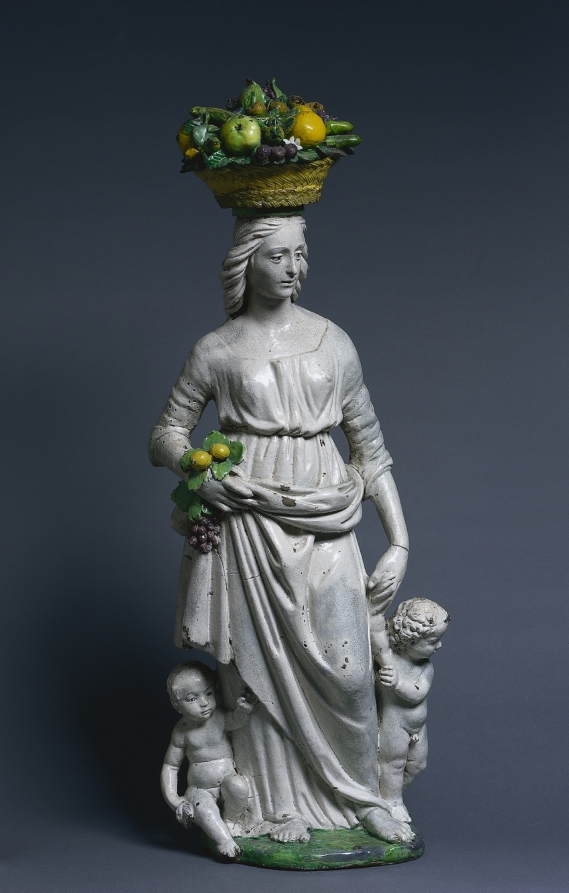
Urban Form: Dovizia (Plenty)
Executive Summary: The Dialectics of Restraint and Release
Addison Fashion’s Urban Silhouette Research for the Dovizia (Plenty) capsule interrogates a foundational paradox: how can a garment embody both the terminal gravity of neoclassical martyrdom and the fluid, self-contained eternity of a porcelain wave? The DNA source—a comparative reading of Jacques-Louis David’s *The Death of Socrates* and an anonymous *Wave-Pattern Meiping Vase*—yields not a synthesis but a productive tension. For the 2026 NYC executive wardrobe, this translates into a Tailored category defined by structural decisiveness (the Socratic moment) and surface-level liquidity (the ceramic breath). The chosen palette, Slate, operates as the chromatic bridge: a blue-gray that carries the cold clarity of Enlightenment reason and the aqueous depth of cobalt glaze. This is not softness disguised as structure, nor structure masquerading as ease. It is the engineering of a silhouette that holds its line like a moral absolute while its fabric moves like a tide under ice.
Formal Analysis: The Socratic Cut and the Meiping Volume
1. The Shoulder as a Declarative Statement
David’s Socrates does not slump; he gestures upward with a hand that is both argument and farewell. The tailored jacket for Dovizia borrows this rhetoric of the raised line. The shoulder is sculpted but not padded—a subtle extension of the acromion that creates a clean, horizontal terminus. This is achieved through a fused canvas that extends 1.5 cm beyond the natural shoulder point, then drops into a sleeve head with a minimal, rolled ease. The effect is not the aggressive power shoulder of the 1980s, but a philosophical shoulder: it states a position without shouting. In slate wool crepe (380 gsm), the shoulder reads as a dark, unbroken horizon—the exact visual weight of the painting’s architectural backdrop.
2. The Torso: From Frieze to Column
The Meiping vase’s profile is famously described as a “plum blossom” curve—swelling gently at the shoulder, tapering to a narrow waist, then flaring slightly at the base. The Dovizia jacket’s torso inverts this logic for the male and female executive frame alike. The waist is suppressed by 4 cm relative to a standard tailored block, creating a subtle hourglass that references the vase’s constriction. However, the hem is cut straight, not flared, to avoid any suggestion of the ceramic foot. This creates a compressed column—a body that is held, not imprisoned. The front edge is cut with a “Socratic drape”: a single, unbroken panel from shoulder to hem, with no horizontal seam, mimicking the philosopher’s seamless robe. The back, however, introduces a Meiping gusset: a diamond-shaped insert at the shoulder blades that allows 3 cm of extra movement. This is the wave hidden within the wall—motion that is structurally permitted but visually denied.
3. The Sleeve: A Study in Controlled Fall
In the painting, Socrates’ left hand reaches for the hemlock cup—a gesture of acceptance. The Dovizia sleeve is cut with a two-piece construction that mimics this reaching line. The front sleeve is cut on the bias, allowing the fabric to fall forward slightly when the arm is at rest, creating a subtle “philosopher’s fold” at the elbow. The back sleeve is cut on the straight grain, anchoring the arm in place. This dual-cut system produces a sleeve that does not wrinkle at the bicep when the wearer gestures—a technical nod to the painting’s frozen clarity. The cuff is extended to 6 cm, with a single, hidden button, echoing the vase’s unadorned neck. The sleeve’s internal canvas is graded to be lighter at the forearm, so that when the wearer reaches for a document or a handshake, the fabric ripples like the painted waves—briefly, then settles.
4. The Trouser: The Lower Register of the Wave
If the jacket is the Socratic torso, the trouser is the Meiping’s lower curvature. The Dovizia trouser is cut with a high-rise (28 cm) and a tapered leg that narrows from a 24 cm thigh to a 17 cm hem. This is not a skinny silhouette; it is a controlled taper that mimics the vase’s contraction toward its base. The front crease is pressed with a sharp, unbroken line—the “iron chain” of the painting’s floor—while the back leg is cut with a slight “wave” seam that follows the hamstring curve. This seam is not decorative; it allows for a 2 cm additional stride length without distorting the front crease. The hem is finished with a 2 cm cuff, echoing the vase’s foot ring, and is weighted with a hidden lead tape to ensure a clean, vertical fall. In slate wool twill, the trouser reads as a dark, liquid column—static in repose, fluid in motion.
Color Theory: Slate as the Chromatic Fulcrum
1. The Blue of Reason and the Gray of Water
Slate is not a neutral; it is a compound color that contains both the cobalt blue of the Meiping’s waves and the gray-white of Socrates’ robe under raking light. In the 2026 NYC context, slate functions as a psychological buffer against the city’s binary of black and navy. It is cooler than charcoal, warmer than steel, and carries a slight green undertone that references the patina of bronze—the material of both classical statues and ancient vessels. For the executive, slate reads as authoritative without aggression, contemplative without passivity. It is the color of a decision made after deliberation, not impulse.
2. Layering Slate: The Transparency of the Glaze
The Meiping’s beauty lies in its layered glazes—the cobalt is not painted on the surface but fired into the body. The Dovizia palette applies this principle through tonal layering. The primary suit is a mid-slate (Pantone 17-3906 TPX). The shirt is a pale slate (Pantone 14-4107 TPX), almost silver, mimicking the white clay body of the vase. The tie or scarf is a deep slate (Pantone 19-3908 TPX), approaching onyx, which acts as the “cobalt” accent—a single, concentrated point of color that draws the eye upward, like the philosopher’s raised hand. This three-tier system creates a chromatic depth that flat monochrome cannot achieve. It is the difference between a painted wall and a glazed vessel.
3. Slate in the NYC Light Spectrum
New York’s winter light—low, diffuse, and reflected off glass and concrete—desaturates most colors. Slate is uniquely suited to this environment because it absorbs and re-emits light rather than reflecting it. A slate suit under fluorescent office lighting reads as a deep, matte gray; under the tungsten of a dinner meeting, it warms slightly, revealing its blue undertone. This chameleon quality is essential for the executive who moves from a 9 AM boardroom to a 9 PM gallery opening. Slate does not fight the light; it negotiates with it, much as the Meiping’s glaze shifts between cobalt and celadon depending on the viewing angle.
Technical Construction: The Invisible Grammar
1. Seam Allowances as Moral Lines
Every seam in the Dovizia capsule is pressed open and taped with a 1 cm cotton twill tape. This is not for durability but for visual immobility—the tape prevents the seam from “breathing” or shifting, ensuring that the garment’s line remains as fixed as the painting’s perspective. The shoulder seam is reinforced with a 2 cm bias-cut silk organza strip, which allows for slight give without visible distortion. This is the technical equivalent of Socrates’ calm: the body can move, but the argument does not.
2. The Meiping Drape: A Hidden Wave
The jacket’s front panel is cut with a 0.5 cm “wave” ease at the hip—an invisible allowance that prevents the fabric from pulling when the wearer sits. This is achieved by cutting the front panel 0.5 cm wider at the side seam, then easing it into the back panel with a 3:1 ratio. The result is a garment that hangs like a cylinder but moves like a wave. This is the most technically demanding element of the capsule, requiring a master tailor to execute without visible puckering. It is the porcelain’s “breath” translated into cloth.
3. Weight and Balance: The Physics of Plenty
Dovizia means “plenty,” but the capsule’s weight is deliberately distributed toward the center of the body. The jacket’s canvas is heavier at the chest (240 gsm) and lighter at the hem (180 gsm), creating a gravitational center at the sternum—the point where Socrates places his hand. The trouser’s weight is concentrated at the waistband (with a 4 cm internal waistband stiffener), allowing the legs to swing freely. This distribution ensures that the garment does not pull the wearer forward or backward, but holds them in a state of poised equilibrium, like the vase standing on its ring foot.
Conclusion: The Silhouette as a Philosophical Instrument
The Dovizia capsule does not offer comfort or ease. It offers clarity under pressure. The tailored silhouette, rendered in slate, is a wearable argument that the executive’s body can be both a monument (the Socratic frieze) and a medium (the Meiping’s surface). In the 2026 NYC context—where attention is fragmented, light is harsh, and decisions are relentless—this silhouette provides a visual and tactile anchor. It is not a uniform; it is a stance. The wearer does not disappear into the garment; they are amplified by it, much as David’s Socrates is amplified by the architecture, or the wave is amplified by the vase’s curve. This is the plenty of form: not abundance of fabric, but abundance of meaning per square inch. For the executive who understands that power is not loud but structural, Dovizia offers a wardrobe that is both a last word and a first gesture.