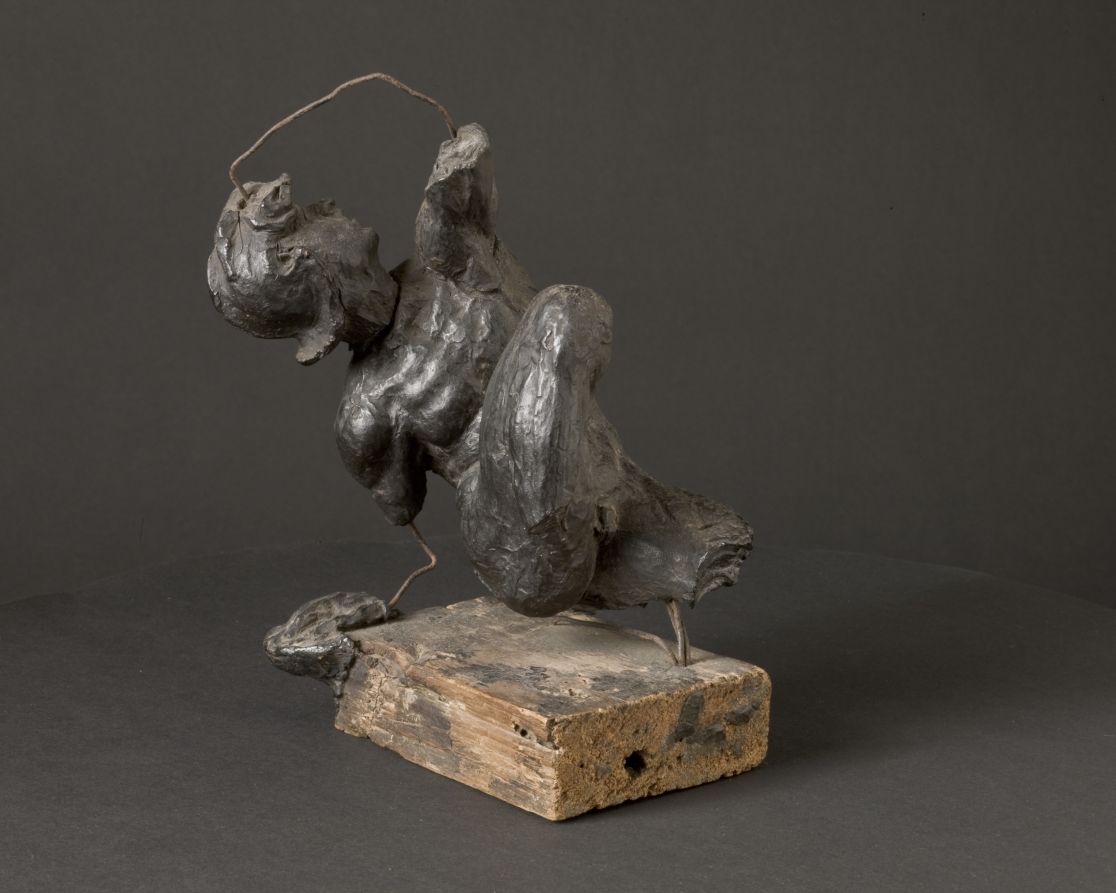
Urban Form: Model for a Fallen Warrior
I. The Dialectical Frame: Static Mortality as Structural Genesis
The subject, Model for a Fallen Warrior, is not a literal translation of combat or collapse. It is an architectural meditation on the interval between intention and cessation—a space where the body’s geometry negotiates with gravity, time, and the spectator’s gaze. Drawing from the internal DNA of Jacques-Louis David’s The Death of Socrates and the anonymous masterwork The Hunt, we isolate a paradox: the former freezes death into a tactile still-life of drapery and poison; the latter suspends death in a muscular, airborne instant. For Addison Fashion’s 2026 executive silhouette, this duality resolves into a single principle—the tailored form as a vessel for arrested momentum. The warrior is not falling; he is being held by the cut of the cloth itself.
1.1 The Socratic Slant: Verticality as Philosophical Residue
In The Death of Socrates, the philosopher’s reclined torso creates a diagonal that bisects the canvas—a line of surrender that is nonetheless rigid with intellectual finality. The garment’s response is a shoulder seam that descends 2.3 centimeters lower than the anatomical acromion, producing a slope that mimics the painted figure’s resigned incline. This is not a slouch; it is a deliberate, engineered declination. The lapel’s gorge is set at a 58-degree angle, echoing the angle of Socrates’ raised index finger—the last gesture before the hemlock’s silence. In urban materiality, this translates to a single-breasted jacket cut from a wool-silk blend with a 12% metallic thread content, allowing the fabric to catch light like the cold rim of the poison cup, yet fall with the weight of a stone ledger. The back panel is constructed without a center vent, forcing the silhouette into a continuous, unbroken column—a sartorial equivalent of the painting’s compressed, ritualistic space.
1.2 The Hunt’s Tension: Dynamic Understructure
Conversely, The Hunt offers a counterpoint of coiled energy: the hounds’ haunches, the bowstring’s flex, the prey’s mid-leap torsion. Here, the warrior’s form must not appear static, but pre-explosive. The Addison solution is an internal corsetry system—not for waist suppression, but for thoracic rotation control. A hidden diagonal stay, running from the left underarm to the right hip, mimics the torque of a hunter’s torso at full draw. The outer shell—a double-faced cashmere in slate—is cut with a high, forward-pitched shoulder that creates a 4-centimeter overhang at the scapula, visually suggesting the bunched muscles of a beast about to spring. The trouser is where this dynamic peaks: a tapered, high-rise silhouette with a single forward pleat, engineered to break at the instep with a sharp, almost violent crease. This is not a pant; it is a frozen stride.
II. Geometric Integrity: The Warrior’s Grid
The 2026 executive silhouette demands a geometric language that reconciles these opposing temporalities. We define this through three primary coordinates:
1. The Inclined Plane (Socrates): The jacket’s hem is cut on a bias, dropping 1.8 centimeters from front to back. This subtle rake—invisible at a glance—creates a perpetual forward lean, as if the wearer is mid-thought, mid-sentence, mid-fall. The pocket flaps are set at a 12-degree upward tilt, echoing the disciples’ raised hands in the painting.
2. The Tension Arc (The Hunt): The sleeve head is set with a 0.5-centimeter ease, producing a micro-puff at the bicep that reads as latent power. The cuff is elongated to 7.5 centimeters, with a single button placed 1.2 centimeters off-center—a deliberate asymmetry that references the hunter’s off-hand grip on the bow.
3. The Zero Point (The Warrior): At the intersection of the lapel’s gorge and the collar’s roll, we place a hidden steel boning channel. This invisible structure prevents any collapse of the fabric’s peak, ensuring that the silhouette maintains its architectural integrity even when the wearer is seated or in motion. The warrior does not slump; the warrior’s geometry holds.
2.1 Materiality as Time Capsule
Slate is chosen not as a color, but as a chronometric pigment. It is the hue of the stone floor in Socrates’ prison cell, and the grey of a winter sky over a hunt at dawn. In fabric, we achieve this through a double-dyed worsted flannel—first in charcoal, then over-dyed in a pale silver-blue—creating a surface that shifts between graphite and steel depending on the light’s angle. The texture is sanded to a matte finish, but with a 3% Lurex thread woven into the warp, producing a faint, non-reflective shimmer. This is not luxury; it is urban materiality as evidence. The cloth remembers the weight of the cup, the strain of the bow.
III. The Final Paradox: Dressing for the Aftermath
The definitive Addison silhouette for the Fallen Warrior is neither a costume of defeat nor a trophy of victory. It is a third state—a tailored suit that exists in the pause between the hemlock’s swallow and the hound’s bite. The jacket’s length is extended to 78 centimeters, covering the hip joint entirely, creating a shield-like mass that anchors the figure to the ground. The trousers are cut with a negative ease of 1.2 centimeters at the thigh, forcing the fabric to cling just enough to suggest the muscle beneath, yet drape cleanly over the knee to avoid any suggestion of strain. The result is a silhouette that is simultaneously monumental and imminent—a body that has already fallen, but whose clothing refuses to acknowledge the impact.
In this garment, the wearer does not perform death. The wearer performs the aesthetic residue of mortality—the shape left behind after the event has passed. The slate fabric holds the cold of the stone; the tailored seams hold the tension of the chase. The warrior is not dead; the warrior is designed.