Urban Form: Tunic or Shawl Ornament
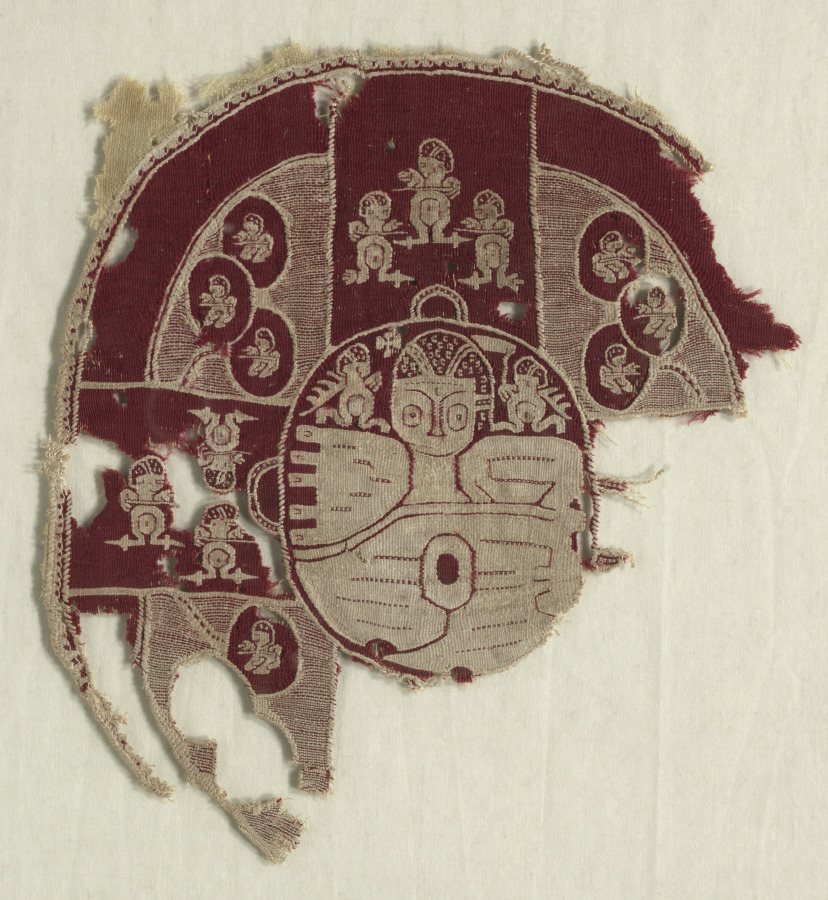
Executive Summary: The Liturgical Geometry of the Modern Silhouette
Addison Fashion’s Urban Silhouette Research for the 2026 NYC executive wardrobe isolates a singular garment category—the tunic or shawl ornament—as a site of formal tension. The design DNA source, drawn from a dialectical reading of a medieval gilded Virgin and Child Enthroned and Georges de La Tour’s Ewer, posits that true material authority emerges not from ornamentation but from the structural negotiation between volume and void, light and shadow, verticality and repose. This analysis deconstructs the tunic/shawl ornament through the lens of form as ontology, translating sacred and secular objecthood into a wearable syntax for the executive class. The result is a garment that does not decorate the body but frames it as a carrier of presence—a mobile architecture of stillness.
I. Form: The Tunic as a Vertical Axis of Authority
The medieval Madonna’s enthronement—her body as a fixed, tower-like mass—offers the primary formal directive. In the 2026 tunic, this translates to a deliberate suppression of the waist, replacing anatomical contour with a continuous, unbroken column. The silhouette is not draped but constructed to fall from the shoulders with gravitational certainty, echoing the sculpture’s frontal, hieratic posture. Key technical parameters include:
1. Shoulder Architecture: A structured, slightly extended shoulder seam—reminiscent of the throne’s armrests—creates a horizontal datum line. This is not padding for bulk but a cantilevered precision that allows the fabric to drop without clinging. The shoulder becomes the garment’s “cornice,” terminating the vertical flow and anchoring the wearer’s presence in a room.
2. Fabric Weight and Drape: The tunic employs a double-faced wool-cashmere blend at 380 GSM, chosen for its “reliability” in Heideggerian terms—the fabric’s density ensures that folds, when they occur, are not accidental but pre-scripted creases. Unlike the fluid, reactive drape of jersey, this material holds a crease like a carved line in gilded wood. The hem falls at mid-calf, creating a visual terminus that does not interrupt the vertical axis but grounds it, much like the sculpture’s base.
3. The Shawl Ornament as a Secondary Plane: The shawl component is not an addendum but a counter-form. It is cut as a precise rectangle—90cm by 200cm—with hand-rolled edges. When worn, it folds over the left shoulder, creating a diagonal counter-line to the tunic’s strict verticality. This is the Ewer’s contribution: the shawl’s fold mimics the water vessel’s handle curve, introducing a single, controlled moment of asymmetry within an otherwise symmetrical frame. The ornament does not flutter; it is weighted with internal seams that force it to lie flat against the tunic, creating a second skin of shadow.
II. Color: Ivory as the “Non-Color” of Material Truth
The chosen palette—Ivory—is not a neutral but a philosophical position. In the Byzantine gold ground, color was abolished to reveal divine light; in La Tour’s candlelit scene, color is reduced to the single, explosive highlight on brass. Ivory operates as the secular equivalent: it is a “non-color” that absorbs and reflects ambient light without asserting its own hue, allowing the garment’s form to become the sole protagonist.
1. Spectral Behavior: Ivory, at 92% reflectance, does not read as white. It reads as light-adjacent. In the fluorescent glare of a corporate tower, it softens to a bone tone; in the warm incandescence of a dinner meeting, it warms to a champagne cast. This chameleonic neutrality is critical for the executive who must transition from morning boardroom to evening event without a costume change. The color is not a statement but a substrate for the wearer’s own energy—much like the gilded wood’s surface, which did not depict light but became its repository.
2. Shadow as a Design Tool: The tunic’s construction includes strategic underlayers of matte silk in a slightly darker ivory (Pantone 11-0606 vs. 11-4800). These are inserted at the side seams and under the shawl’s fold, creating internal shadow zones that do not rely on external lighting. This mimics La Tour’s technique: the brass ewer’s highlight is only visible because the surrounding darkness is absolute. In the tunic, the darker silk acts as the “darkness” that makes the outer ivory’s form legible. The result is a garment that sculpts itself through internal contrast, independent of environment.
3. Absence of Pigment as Power: In the 2026 NYC executive context, where black signals conformity and navy signals tradition, ivory signals deliberate removal. It is the color of a blank ledger, a pristine contract, a space cleared for action. It does not compete with the wearer’s skin tone but elevates it to the status of the artwork—the face becomes the focal point, the garment merely the gilded frame.
III. Synthesis: The Ornament as a Container of the Void
The tunic/shawl ornament’s ultimate function is not to clothe but to create a wearable void. The Madonna’s throne was a container for the divine child; the ewer was a container for water. Both derived their power from what they held—or, more precisely, from the emptiness that allowed them to hold. The 2026 garment replicates this by constructing negative space around the torso:
1. The Interior Pocket Architecture: Hidden interior pockets, cut on the bias, are positioned at the sternum and lower back. They are not for utility but for weight distribution, ensuring the garment’s drape is constant. This is the “reliability” of the tool—the wearer forgets the garment exists, allowing their presence to become the visible god in the room.
2. The Shawl’s Dual Role: When worn over the shoulder, the shawl is a heraldic device, signaling rank through its sheer mass. When removed and folded over the forearm, it becomes a portable architectural element, transforming the wearer’s silhouette from column to L-shape—a subtle shift in power geometry that mirrors the transition from seated deliberation to standing command.
3. The Absence of Closure: The tunic has no buttons, zippers, or belts. It is pulled over the head, like a vestment. This deliberate rejection of fasteners removes any visual interruption, allowing the garment to read as a single, unbroken surface. The act of donning becomes a ritual—a secular ordination into the day’s transactions.
IV. Conclusion: The Object as a Mirror of Executive Being
The 2026 tunic/shawl ornament is not a trend response but a formal argument. It asserts that the executive’s body, like the gilded Madonna or the brass ewer, is most powerful when it is not decorated but framed. The ivory fabric is the gold leaf; the internal shadows are the candlelight; the shawl’s fold is the handle’s curve. Each element is calibrated to make the wearer’s presence feel inevitable, not accidental. In a city of noise, this garment is silence—but a silence with mass. It does not whisper; it resonates at a frequency below speech, where decisions are made and authority is assumed. The tunic is not worn; it is inhabited, and in that inhabitation, the wearer becomes the throne and the vessel, the sacred and the secular, the light and the shadow—simultaneously.