Urban Form: Tightrope Walker
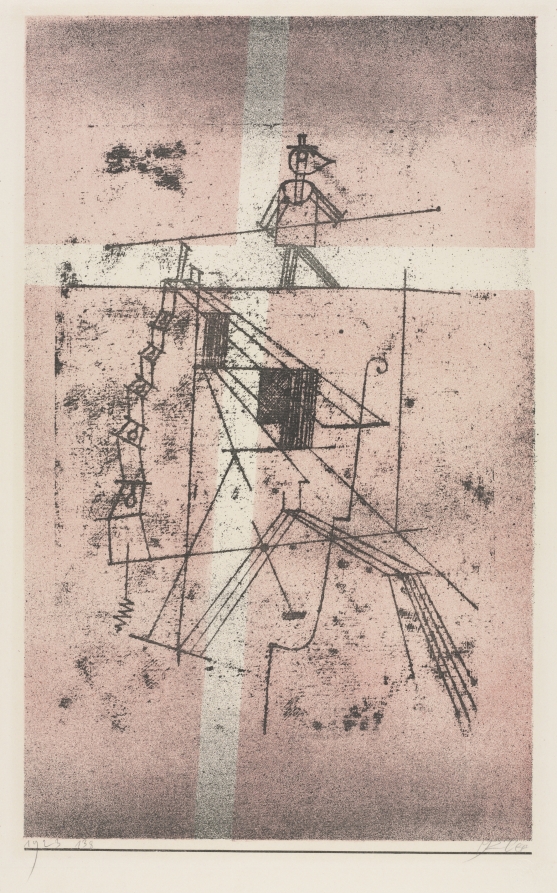
Structural Poetics: The Tightrope Walker as Architectural Paradigm
The Tightrope Walker, examined through the dual lenses of the Bodhisattva and the Amulet in the Form of a Seated Figure with Bovine Head, presents a singular thesis for the 2026 executive silhouette: equilibrium is not a static state but a tensile negotiation between opposing forces. The former sculpture embodies “consummate harmony”—a serene, weightless balance achieved through the disciplined suppression of idiosyncrasy. The latter manifests “composite authority”—a deliberate rupture of natural form, fusing bovine vigor with human posture to create a talismanic presence that intervenes in the mundane. For Addison Fashion, the Tightrope Walker is neither the placid Bodhisattva nor the chthonic amulet; it is the performance of their dialectic. The silhouette must hold the Bodhisattva’s vertical serenity while carrying the amulet’s grounded, protective density—a contradiction resolved through precise tailoring that mimics the taut cable beneath the Walker’s feet.
Geometric Integrity: The Cable as Spine
The defining geometry of this artwork is not the figure itself but the implied line of the tightrope—a horizontal vector of extreme tension that bisects the vertical column of the body. In the Bodhisattva, the central axis is an unbroken, meditative plumb line from crown to lotus seat. In the bovine-headed amulet, the axis is deliberately destabilized by the horizontal mass of the shoulders and the forward thrust of the horned cranium. The Tightrope Walker fuses these: the garment’s primary seam must run from the nape of the neck to the hem, acting as the spine’s architectural shadow, while a secondary, invisible tension line—achieved through internal canvas structuring or a high-gauge fused interlining—runs across the chest at the level of the clavicle. This creates a “cable effect”: the jacket’s lapels do not merely fold; they grip the torso like a balancing pole’s counterweight. The shoulder line, therefore, cannot be soft or dropped. It must be a precise, slightly extended horizontal—reminiscent of the amulet’s bovine breadth—yet tapered sharply at the waist to suggest the Walker’s coiled, ready stillness. The result is a silhouette that reads as suspended animation: every seam, dart, and pocket placement is a point of load-bearing, not decoration.
Urban Materiality: Onyx as the Negotiated Void
Color selection is not aesthetic but functional. Onyx—black with a geological undertone of compressed pressure—serves as the material translation of the Tightrope Walker’s psychological state. Unlike pure black, which absorbs and disappears, onyx reflects a faint, steely glint when light strikes at an acute angle. This property mirrors the Bodhisattva’s “non-human gaze”: the fabric does not invite touch but demands acknowledgment from a distance. For urban environments—glass towers, rain-slicked asphalt, midnight transit—onyx provides a chameleonic gravity. It aligns with the amulet’s protective function, offering the wearer a portable zone of visual authority that deflects the chaotic noise of the city. The material itself must be a high-twist wool crepe (minimum 320 grams per meter) or a technical silk-wool blend with a matte, dry hand. Sheen is prohibited. The weave must be tight enough to hold a crease that could cut paper, yet possess a subtle, almost imperceptible stretch—the fabric equivalent of a safety line. This is not a fabric for comfort; it is a fabric for certitude.
Architectural Detailing: From Sacred Form to Executive Function
The Bodhisattva’s flowing robes are, in reality, a series of highly controlled, rhythmic folds that guide the eye upward. The Tightrope Walker’s garment must translate this upward motion into vertical paneling—not visible seams, but internal princess lines that run from the armhole to the hem, creating a subtle, elongated V-shape over the ribcage. This elongates the torso without resorting to theatrical length. The jacket’s hem should sit precisely at the first knuckle of the thumb, a measurement that echoes the amulet’s compact, seated proportions—neither cropped (which would suggest instability) nor extended (which would imply drag). The collar is the critical juncture. It must rise high at the back—a nod to the bovine head’s protective mass—but fall into a sharp, narrow notch at the front, exposing a sliver of the neck. This is the “tightrope gap”: a millimeter of vulnerability that paradoxically signals supreme control. Sleeves are set with a forward pitch, allowing the arms to swing freely yet return to a neutral, hands-clasped position—the Walker’s pole held at rest. Pockets are concealed, cut on the bias to avoid any horizontal bulge that would break the clean vertical line. Even the buttons—if used—must be hidden beneath a fly-front placket, rendered in the same onyx material, functioning as silent, weightless closures.
The Dialectic of Protection and Transcendence
What the two sculptures ultimately teach is that sacred power operates on two registers: the universal (Bodhisattva’s promise of release) and the specific (amulet’s promise of immediate safety). The 2026 executive operates in both registers simultaneously. They must project an overarching vision (the Bodhisattva’s calm) while navigating daily, tactical pressures (the amulet’s ward). The Tightrope Walker silhouette achieves this through a dual-layer construction: an outer shell of tailored onyx that presents an unassailable, serene front, and an inner layer—perhaps a lightweight, high-tensile knit in the same color—that functions as a second skin, absorbing shock and regulating temperature. This is not visible to the observer, but it is felt by the wearer. It is the internal architecture of confidence. The garment becomes a wearable mandala: outwardly simple, inwardly complex. The Walker’s art is not in the crossing itself, but in the preparation for the crossing—every muscle, every breath, every glance calibrated to the cable’s vibration. Addison’s silhouette must do the same: it must not merely clothe the body but align it with an invisible axis of purpose. The jacket’s shoulder pads, if used, are not foam but molded resin, shaped like the amulet’s bovine horns—rigid, yet angled to deflect rather than confront. The trousers are cut with a single, sharp pleat that falls from the hip to the ankle, mimicking the Bodhisattva’s cascading drapery but rendered in a narrow, tapered line that ends in a clean break over the shoe. No cuff. No excess.
Conclusion: The Silhouette as a State of Grace
The Tightrope Walker, as filtered through these two sacred artifacts, demands a silhouette that is neither heroic nor ascetic. It is a study in controlled risk. The Bodhisattva’s harmony is achieved through stillness; the amulet’s power through hybridity. The Walker’s power is kinetic—held in reserve. For Addison Fashion, the 2026 executive silhouette is therefore a tectonic garment: it appears as a monolith, but upon closer inspection, it reveals the fault lines, the tension cables, the load-bearing seams that make its perfect surface possible. Onyx is the only appropriate color because it is the color of the void between steps—the space where balance is either lost or maintained. The tailored construction is non-negotiable because tailoring is the discipline that transforms fabric into architecture. This is not clothing for sitting. It is clothing for traversing—across boardrooms, through airports, over the abyss of public scrutiny. The Tightrope Walker does not look down. The garment ensures they never have to.