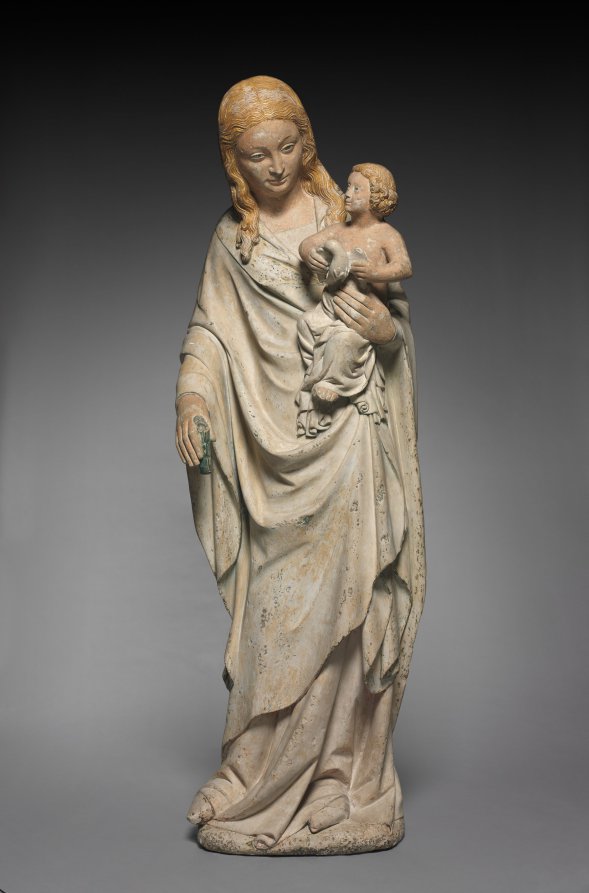
Urban Form: Virgin and Child
Structural Dialectics: The Vessel and the Void in Urban Sartorial Architecture
The iconographic pairing of Jacques-Louis David’s “The Death of Socrates” with a classical Greek Jar presents a profound dialectic—one that transcends art historical discourse and enters the domain of contemporary garment construction. For Addison Fashion’s 2026 executive silhouette, this dialogue is not metaphorical but operational. The painting embodies a narrative of heroic finality, a body frozen in rational triumph; the jar embodies a silent, utilitarian permanence, its interiority a testament to what is held rather than displayed. Our research translates this binary into a design language where the tailored jacket is not merely worn but inhabited—a vessel for the professional self, structured with the precision of a Neoclassical frieze yet hollowed with the quietude of fired clay.
Geometric Integrity: From Pictorial Plane to Three-Dimensional Shell
David’s composition is rigorously architectonic. Socrates’ reclining form creates a stable diagonal, countered by the vertical thrust of his pointing arm and the rigid horizontals of the bed frame and floor. This is geometry as moral statement—a rational grid imposed upon the chaos of mortality. In the 2026 executive silhouette, we extract this principle into the shoulder line and lapel notch. The shoulder is no longer padded into softness; it is cut with a deliberate, almost sculptural angularity, referencing the marble-like stability of Socrates’ torso. The lapel, meanwhile, follows a severe, unbroken line from the collar point to the first button—a visual analogue to the philosopher’s outstretched arm, directing the eye upward and outward, implying authority without aggression.
Contrast this with the jar’s geometry. Its profile is a continuous, unbroken curve—a volumetric ellipse that swells at the belly and contracts at the neck. There is no narrative climax, only a rhythmic expansion and contraction. Our research applies this to the torso block of the coat and the trouser’s drape. The jacket’s waist suppression is not cinched but carved, allowing the fabric to fall from a defined chest block into a gently flared hip—echoing the jar’s capacity to hold mass without rigidity. The trouser, in turn, is cut with a subtle taper from knee to hem, mimicking the vessel’s neck: a controlled aperture that suggests containment rather than release. The result is a silhouette that does not perform action but possesses potential—a static dynamism that aligns with the executive’s need for presence without theatricality.
Urban Materiality: Slate as the Conductor of Silence
Color selection is never arbitrary in our atelier. Slate—a grey that leans toward blue, the color of wet stone and pre-dawn urban canyons—serves as the chromatic bridge between David’s chiaroscuro and the jar’s earthen patina. Slate is not a neutral; it is a negative space made wearable. It absorbs light rather than reflecting it, much like the jar’s unglazed surface, which captures the ambient glow of a gallery without becoming a spectacle. In urban environments—glass towers, asphalt, steel—slate operates as a camouflage of sophistication. It does not shout; it resonates.
The fabric composition for this silhouette is a high-twist wool blended with a trace of technical polyamide. This is not for comfort; it is for memory. The fabric must hold a crease with the permanence of a painted line, yet yield to the body’s micro-movements like clay yielding to the potter’s thumb. We specify a matte finish, devoid of luster, to eliminate any suggestion of the theatrical. The surface is brushed to a low nap, creating a tactile sensation akin to the jar’s fired surface—cool, slightly granular, and utterly indifferent to the passing of time. This is urban materiality at its most refined: a textile that does not narrate but endures.
The Poetics of Emptiness: Tailoring for the Unspoken
Laozi’s axiom—“the vessel’s utility lies in its emptiness”—becomes our tailoring manifesto. The 2026 executive jacket is constructed with a floating canvas that is not fused to the outer shell. This creates an internal air pocket, a literal void between layers. This is not a technical afterthought but a philosophical one. The garment does not cling to the body; it houses it. The wearer’s breath, posture, and even hesitation are absorbed into this cavity, never displayed on the surface. This is the opposite of David’s exposed emotion—here, the executive’s interiority remains inviolate, a private space within a public shell.
Similarly, the sleeve head is set with a deliberate reduced fullness, allowing a slight, almost imperceptible drop from the shoulder point. This references the jar’s neck—a transition from the broad capacity of the body to the narrow lip of the opening. The cuff is finished with a single, hidden button, not for fastening but for weight, ensuring the sleeve falls with the gravity of a drapery fold in a Neoclassical painting. Pockets are cut on the seam, invisible until used, preserving the garment’s uninterrupted plane. Every detail is an act of subtraction, a refusal to decorate, a commitment to the vessel’s integrity.
Conclusion: The Silhouette as a Carrier of Time
David’s Socrates teaches us to face the end with clarity; the jar teaches us to carry the end without naming it. The 2026 Addison executive silhouette synthesizes both. It is a garment of structural poetics—where the shoulder is a statement of rational resolve, and the body is a hollowed form of quiet capacity. It does not depict the wearer’s ambition, stress, or triumph; it simply contains them. In a city of glass and noise, this silhouette is slate-toned silence, a moving vessel that holds the dust of hours without spilling a single grain. It is not designed to be remembered; it is designed to remember—to bear the marks of use, the subtle creases at the elbow, the faint sheen at the collar—and to do so with the unassuming elegance of a jar that has outlived every narrative painted around it.