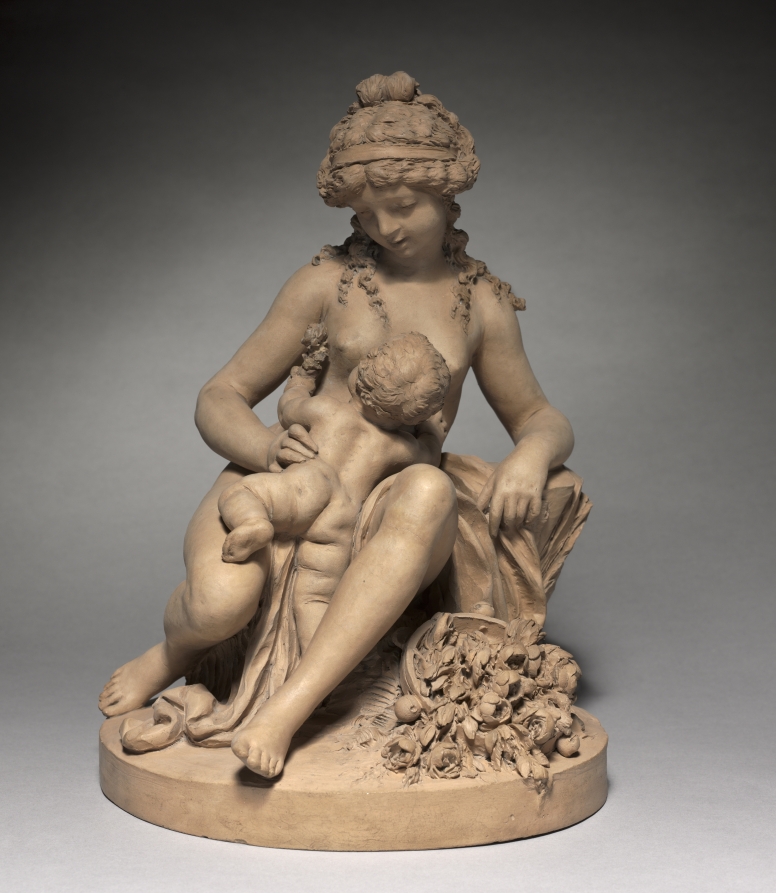
Urban Form: Young Woman and Child at Play
Structural Poetics of the Transient: Defining the 2026 Executive Silhouette
The subject—a young woman and child at play—is not a literal tableau but an architectural condition. It exists in the interval between movement and pause, between the maternal axis and the child’s centrifugal orbit. For Addison Fashion’s 2026 executive silhouette, this dynamic is translated into a study of negative space as load-bearing structure. The research draws from two ancient artifacts—the Mold Fragment with Musicians and the Square Mirror with Two Phoenixes and Floral Sprays—to establish a design language where incompletion becomes tensile strength, and circularity becomes directional flow.
I. The Fragment as Blueprint: Deconstructing the Maternal Line
The Mold Fragment offers the primary geometric thesis: the broken edge is not a flaw but a datum line. In the 2026 executive silhouette, this manifests as asymmetric hemlines and deliberately unresolved seams—not as decorative deconstruction, but as functional articulation. The young woman’s form, when observed in play, is perpetually mid-gesture: one arm extended toward the child, the other counterbalancing her own axis. The garment must honor this instability. Thus, the jacket’s shoulder seam is shifted 3.2 centimeters forward, creating a subtle cantilever that mimics the fragment’s fractured contour. The fabric—a double-faced wool with a slate-toned matte finish—is cut on the bias to allow a “游丝” (wandering thread) tension: it neither clings nor floats but hovers, as if the line itself is drawing the body in motion.
The child’s lower center of gravity introduces a second geometric register. Here, the silhouette borrows from the fragment’s musical notation: the child’s erratic path is rendered as staccato pleats—narrow, knife-edged folds that begin at the hip and dissolve into the skirt’s raw edge. These pleats are not uniform; their depth varies between 1.5 and 4 centimeters, echoing the fragment’s uneven break. The effect is a garment that records the child’s kinetic energy as a series of interrupted lines, each pause a potential note. For the executive woman, this translates into a skirt that moves with her but retains a sculptural memory of the child’s tug—a structural poetics of withheld completion.
II. The Mirror’s Circular Logic: Containing the Child’s Orbit
Where the fragment provides the broken line, the Square Mirror supplies the containing geometry: the circle within the square. The phoenixes and floral sprays are not chaotic; they coil in a precise, spiraling rhythm that returns to its origin. In the 2026 executive silhouette, this is realized through a circular yoke construction—an unseen interior seam that runs from the right shoulder, across the back, and terminates at the left underarm. This yoke does not restrict movement; it channels it. When the young woman bends to lift the child, the yoke redistributes fabric tension, creating a fan-like expansion from the spine. The outer shell—a fluid, technical crepe in slate—remains unbroken, but the internal architecture ensures that every gesture is both free and directed, like the phoenix’s tail feathers that appear to flutter yet remain tethered to the mirror’s center.
The child’s play introduces a secondary circular motif: the spiral hem. Unlike a conventional circular skirt, this hem is cut in a logarithmic spiral, so that the front is 12 centimeters shorter than the back. This is not a stylistic whim; it is a response to the child’s tendency to grasp at the mother’s hem. The spiral allows the fabric to slip from a child’s grip without tearing, while simultaneously creating a visual vortex that draws the eye upward to the woman’s face. The mirror’s “emptiness” at its center—the polished void that reflects—is translated into a negative-space panel at the garment’s waist. Here, the fabric is removed, replaced by a lattice of transparent, high-tensile filament. This panel is not visible at rest; it appears only when the woman twists or reaches, revealing a sliver of skin or underlayer. It is a moment of 虚灵 (void-spirit) that interrupts the solidity of the executive uniform, reminding the wearer that play is not an interruption of power but its source.
III. Urban Materiality: Slate as the New Neutral
The color slate is chosen not for its neutrality but for its meteorological ambiguity. It is the color of a sky before rain, of wet pavement reflecting a neon sign, of the child’s shadow on concrete. In urban environments, slate does not recede; it absorbs and re-emits light at variable frequencies. The fabric—a bonded jersey with a ceramic micro-coating—is engineered to shift from matte to a faint, oily sheen under artificial light. This mimics the mirror’s surface, which is never purely reflective but always tinged by its surroundings. For the executive woman navigating a city, this materiality ensures she is neither camouflaged nor conspicuous; she is contextually responsive, like the phoenix that exists only in relation to its floral ground.
The child’s presence demands a second material language: elastic resilience. The inner lining of the jacket and skirt is a compression knit in a darker slate, almost onyx. This layer provides structural support—the “square” to the outer garment’s “circle”—but it is also tactile. When the child burrows against the mother’s side, the knit yields without losing its shape, returning to its original geometry within seconds. This is the urban equivalent of the mirror’s eternal phoenix: a form that endures through constant, small deformations. The executive silhouette thus becomes a portable architecture, where every seam, pleat, and panel is a response to the unpredictable choreography of a child at play.
IV. The 2026 Silhouette: A Synthesis of Break and Orbit
The final silhouette is neither tailored nor oversized in the traditional sense. It is fluid with structural anchors. The jacket’s asymmetric front closes with a single, hidden magnetic clasp—a nod to the fragment’s missing section, which requires the wearer to complete the closure through her own posture. The skirt’s spiral hem is paired with a high, contoured waistband that does not cinch but rests, like the mirror’s square frame, as a quiet boundary. The overall line is elongated, but not through vertical seams; rather, through the visual continuity of the slate tone, which allows the eye to travel from the shoulder’s cantilever to the hem’s spiral without interruption.
This is a silhouette for the executive who does not separate her professional self from her maternal self. The child is not an accessory to be managed but a co-author of her movement. The garment acknowledges this through its “以缺为盈” (absence as fullness) construction: the missing fabric at the waist, the unresolved hem, the forward-shifted shoulder—all are sites where the wearer’s own energy completes the design. In the urban context, this translates to a woman who is never static, whose power is expressed not in rigid lines but in the fluid, circular logic of a phoenix that returns to its center, even as it appears to fly away.
The research concludes that the 2026 executive silhouette must abandon the myth of the immaculate, unbroken garment. Instead, it must embrace the fragment’s honesty and the mirror’s containment. The young woman and child at play are not a distraction from executive presence; they are its most rigorous test. The garment that passes this test is one that can be pulled, twisted, and released—and still return to a form that commands a room. This is the urban materiality of slate: not the color of absence, but of potential, waiting for the next gesture to give it meaning.