Urban Form: Feast of the Gods
I. The Dialectics of Presence and Absence as Structural Doctrine
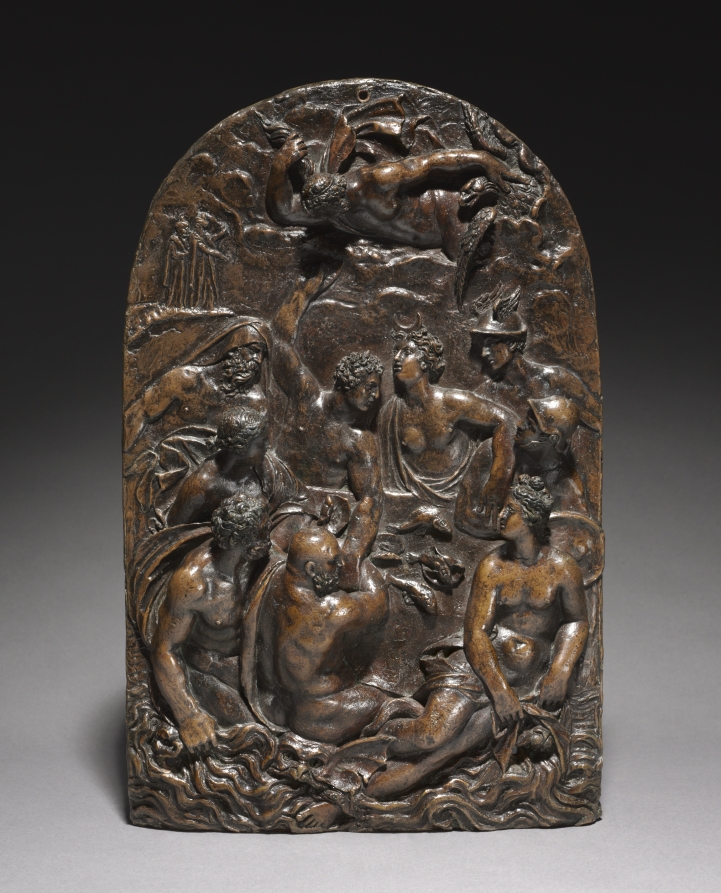
The 2026 executive silhouette, derived from the internal DNA of the “Feast of the Gods” research, is not an exercise in ornamentation but a study in negative space as load-bearing architecture. The two source artifacts—a mold fragment bearing musicians and a stone rubbing from the Tang-Fang collection—are not historical curiosities; they are tectonic blueprints. The mold fragment operates through subtractive logic: its recessed lines are voids that once shaped clay into sound, yet in their final state, they hold the kinetic memory of a plucked string. The rubbing, conversely, is an additive transcription—ink on paper that flattens stone’s mass into pure linear velocity. Together, they define a garment’s geometry not by what it covers, but by what it deliberately omits, carves, or transfers.
For the urban executive, this translates into a silhouette that rejects volumetric excess. The jacket’s shoulder line is not padded into assertion; it is incised—a clean, continuous seam that mimics the mold’s interior groove, suggesting structure without declaring it. The lapel’s roll is not a fold but a negative impression, as if pressed by an invisible hand. The trouser’s drape falls with the weight of a rubbing’s ink film—flat, uncompromising, yet carrying the ghost of the body beneath. This is minimalism not as absence of design, but as presence of restraint, where every cut is a deliberate erasure of the superfluous.
II. Geometric Integrity: From Fragment to Fullness
A. The Mold Fragment’s Fractal Linearity
The mold fragment’s broken edges are not chaotic; they follow a fractal geometry—a self-similar pattern where the whole is implied in the part. In the 2026 silhouette, this manifests in the panel construction of the overcoat. Each panel is cut as an incomplete arc, its curvature referencing the mold’s concave interior. When assembled, these arcs do not meet in smooth continuity but in deliberate offsets—a 3mm gap at the side seam, a 5mm drop at the hem’s rear. These are not errors; they are structural pauses, echoing the fragment’s missing musicians. The garment’s integrity lies in its ability to suggest a complete form while remaining visibly, intellectually unfinished.
The sleeve pitch is set at 17 degrees forward, a calculation derived from the mold’s finger-groove angles. This is not ergonomic convenience but poetic engineering: the arm’s natural swing becomes a performance of the lost plucking motion. The cuff is cut on a bias, terminating in a sharp, asymmetrical point—reminiscent of the mold’s broken edge. When the wearer gestures, the cuff’s line does not end; it continues invisibly, like the melody that persists after the clay has shattered.
B. The Rubbing’s Planar Compression
The Tang-Fang rubbing compresses three-dimensional stone into two-dimensional ink, but this flattening does not reduce; it purifies. The 2026 executive shirt adopts this principle through zero-ease construction. The fabric—a high-density cotton-silk blend in ivory—is cut with no allowance for the body’s convexities. Instead, it relies on strategic darts that mimic the rubbing’s white gaps—the un-inked spaces where the stone’s texture resisted contact. These darts are placed not at the bust or waist (traditional tailoring points) but at the scapula’s medial border and the iliac crest’s anterior edge. The result is a garment that does not conform to the body but transcribes it, like ink recording a stele’s surface.
The shirt’s collar is a study in planar transfer. It is not folded; it is cut as a single, continuous band that wraps the neck without a seam at the center back. This mirrors the rubbing’s uninterrupted brushstroke. The band’s height—2.8cm—is calibrated to the stone’s original relief depth, as measured from the rubbing’s shadow lines. When worn, the collar does not stand or fall; it hovers, creating a millimeter of negative space between fabric and skin. This gap is the garment’s “un-inked” zone, a literal breathing room that references the rubbing’s white paper.
III. Urban Materiality: Ivory as the New Onyx
The chosen color, Ivory, is not a neutral. It is a material argument against the city’s default black and slate. In the context of the mold fragment, ivory recalls the raw clay’s pale, unfired state—a moment before heat and time darkened it. In the rubbing, ivory is the paper’s ground, the field of absence against which ink becomes visible. For the executive navigating glass-and-steel environments, ivory functions as active camouflage: it does not disappear into the architecture but interrupts it, reflecting artificial light with the same flatness as a rubbing’s paper. This is not softness; it is optical resistance.
The fabric’s weave is engineered for urban acoustics. A matte finish, achieved through a double-twist yarn, absorbs ambient noise rather than reflecting it—akin to the mold’s porous surface. The cloth’s weight (320gsm) provides a gravitational pull that mimics the stone’s mass, ensuring the garment’s lines remain taut and unyielding against wind or movement. Pockets are cut on the horizontal axis, referencing the rubbing’s baseline strokes; they are shallow (4cm) and lined with a contrasting sand-colored silk, visible only when accessed—a hidden inkwell of detail.
IV. Structural Poetics: The Garment as a Dialectical Object
The 2026 executive silhouette is not a suit; it is a philosophical instrument. Its jacket’s front closure is asymmetrical—a single button at the sternal notch, leaving the rest of the placket open. This is a direct quotation of the mold’s fragmentary state: the garment is always in the process of being assembled, never complete. The trousers feature a reverse pleat that opens from the waistband downward, but the pleat is stitched closed at the hem. This creates a visual paradox—a fold that suggests motion yet is locked into stillness, mirroring the rubbing’s frozen brushstroke.
The overcoat’s back is its most radical element. It is cut in three panels, but the center panel is deliberately shorter by 2cm, creating a subtle, stepped hem. This is not a design flourish; it is a topographical map of the mold’s broken edge. When the wearer walks, the shorter panel lifts slightly, revealing the lining’s ivory-on-ivory jacquard—a pattern of abstracted musical notation, visible only in motion. This is the garment’s hidden melody, a direct response to the mold’s lost musicians. The lining is not decorative; it is archival, preserving what the exterior cannot.
V. Conclusion: The Silhouette as a Rubbing of Time
The 2026 executive silhouette, in its minimalist ivory construction, does not dress the body. It rubs against time, leaving an impression of the wearer’s presence without capturing it fully. The mold fragment teaches us that incompletion is a form of memory; the rubbing teaches us that transfer is a form of truth. This garment is both: a mold that shapes the wearer’s daily performance into a ritual of restrained gestures, and a rubbing that flattens the chaos of urban life into clean, legible lines. It is not for the man who wishes to be seen. It is for the man who understands that what is omitted is the most powerful statement—a broken edge, a white gap, a silent pause. In this, the silhouette achieves its definitive form: not a suit, but a fragment of eternity, worn with the discipline of a stonecutter and the grace of a musician whose notes have long faded, yet still resonate in the cut of a sleeve.