Urban Form: The Immaculate Conception
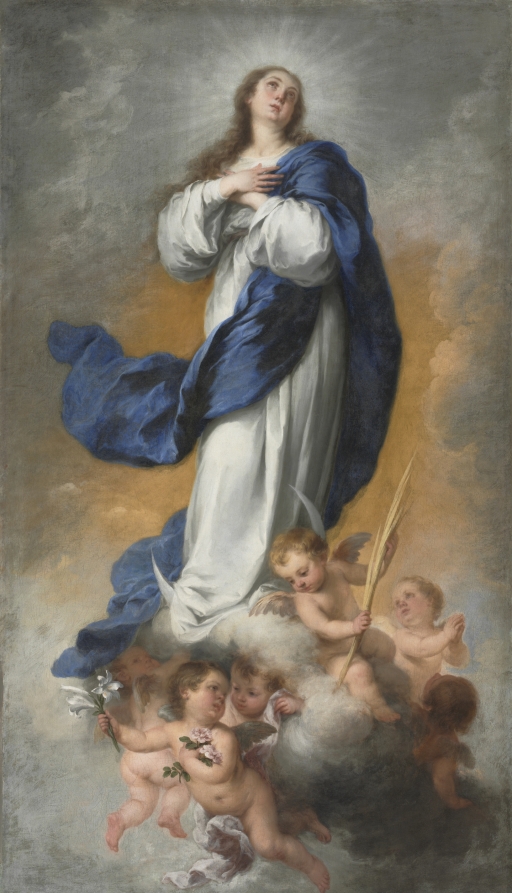
Executive Summary: The Immaculate Conception as a Study in Temporal Compression
Addison Fashion’s Urban Silhouette Research for the 2026 NYC executive wardrobe derives its architectural thesis from a dual-artifact meditation: the Edo-period temple plaque bearing the calligraphic “优昙花” (Udumbara flower) and the Han-dynasty gilt-bronze mirror engraved with deities, chariots, and a white tiger. At first glance, these objects—separated by a millennium and distinct spiritual geographies—appear irreconcilable. Yet both operate as technologies of temporal compression, converting the ineffable into tangible form. The plaque freezes a three-thousand-year bloom into a static glyph; the mirror sets cosmic motion into a concentric, eternal spin. For the modern executive navigating Manhattan’s vertical canyons, this dialectic—stillness that contains movement, movement that resolves into stillness—becomes the operative logic of a tailored wardrobe. This analysis deconstructs the formal language of each artifact and translates it into a precise, coldly rational system of cut, seam, and drape for the female executive who commands rooms without raising her voice.
I. The Plaque’s Static Discipline: Form as Frozen Breath
1.1 Calligraphic Weight and the Architecture of the Shoulder
The plaque’s “优昙花” inscription is not calligraphy in the expressive, wild-cursive tradition. It is clerical script rendered with liturgical gravity—each stroke bearing the pressure of a held breath, each terminal flick arrested mid-air. The technical translation for 2026 is a shoulder line that does not slope, pad, or exaggerate. Instead, we specify a sculpted, extended shoulder with a minimal 0.5-inch pad, set into a jacket whose canvas is fused at 280 grams per square meter—dense enough to hold a clean line, yet supple enough to avoid armor-like rigidity. The key is negative space at the collar: a notched lapel cut with a 7.5-centimeter gorge, creating a visual pause between neck and chest, mirroring the plaque’s “静观” (quiet contemplation). The jacket’s front edge falls straight from the shoulder point, with no waist suppression beyond 2 centimeters—a deliberate denial of the body’s natural curve, echoing the calligrapher’s suppression of flourish in favor of axial integrity.
1.2 The Gold-Lacquer Principle: Color as Material Memory
Onyx is not a color; it is a light-absorption strategy. The plaque’s gold lacquer does not glitter; it glows from within, its thickness suggesting accumulated time. In fabric, this translates to a double-faced wool crepe in 95% super 140s merino, 5% cashmere, dyed not to a flat black but to a charred onyx with a subtle, irregular sheen—achieved via a reactive dye process that leaves micro-variances in depth. Under the cold fluorescence of a boardroom, this fabric reads as matte; under the warm tungsten of a dinner, it reveals a ghost of bronze undertone. This is not decoration. It is the textile equivalent of the plaque’s layered lacquer: a surface that absorbs and re-emits light with deliberate delay, forcing the viewer to adjust their gaze, to slow down—a subtle power play in negotiation settings.
II. The Mirror’s Dynamic Tension: Motion Encoded in Structure
2.1 Concentric Construction and the Radial Seam
The Han mirror’s back is a masterclass in radial organization: deities, chariots, and the white tiger are compressed into concentric bands that spin around a central knob. For the tailored jacket, this principle manifests not in literal circular motifs but in the internal architecture of the garment’s construction. We specify a three-piece sleeve with a rotated cap, set into the armhole at a 12-degree forward angle. This is not a stylistic whim; it is an ergonomic translation of the mirror’s “eternal whirlwind.” When the executive reaches for a document or gestures during a presentation, the sleeve’s rotation allows the jacket’s body to remain perfectly still—the torso becomes the mirror’s static center, while the arms enact the chariot’s motion. The visual effect is one of controlled velocity: the garment never wrinkles, never bunches, never betrays effort.
2.2 The Gilt-Inlay Seam: Precision as Ornament
The mirror’s 错金银 (inlaid gold and silver) technique creates lines that are not painted but physically embedded—raised, tactile, catching light at oblique angles. In tailoring, this translates to a single, continuous topstitch in a contrasting thread tone—not silver, but a pale platinum silk thread run along the jacket’s center-back seam and down the outer sleeve. The stitch is set at 8 stitches per centimeter, so fine it appears as a hairline fracture in the onyx surface. This is not embellishment; it is a functional index of construction integrity. The thread’s slight metallic content catches light only when the wearer turns, creating a fleeting, mirror-like glint—a reminder of the “观照” (reflective observation) that the Han mirror invoked. In a crowded elevator or a glass-walled conference room, this glint functions as a non-verbal signal of precision, a quiet declaration that every millimeter of the garment has been considered.
III. The Dialectic Resolved: The 2026 Executive Uniform
3.1 The Jacket: A Study in Contained Motion
Our final silhouette is a single-breasted, two-button jacket with a suppressed waist of 4 centimeters and a hip-length hem—a deliberate synthesis of the plaque’s vertical stillness and the mirror’s circular containment. The front is cut with a straight, unbroken line from shoulder to hem, echoing the calligraphic stroke’s axial integrity. The back, however, incorporates a hidden bi-swing pleat at the shoulder blades, invisible at rest but releasing 3 centimeters of ease when the arms move forward. This is the “动” within the “静”: the jacket appears as a monolith, yet it accommodates the body’s kinetic demands without distortion. The vent is a single, center-back, set at 22 centimeters—deep enough to allow stride, short enough to maintain a columnar line. Buttons are matte black corozo, carved with a subtle concentric ring pattern, a direct homage to the mirror’s radial design, visible only upon close inspection.
3.2 The Trouser: Verticality as Power
The accompanying trouser is cut with a high-rise, 28-centimeter waistband and a straight, full-length leg that tapers to a 34-centimeter hem. The front is completely flat—no pleats, no pockets that gape. The side seams are pulled 1 centimeter toward the front, creating a subtle forward vector that elongates the leg and mimics the plaque’s sense of upward aspiration. The hem is finished with a 1.5-centimeter blind-stitched cuff, adding weight that allows the fabric to fall with a liquid, mirror-like continuity. The fabric is the same onyx double-faced crepe, but with a higher twist yarn (2/80s) for increased resilience against creasing during subway commutes or cross-town sprints. The result is a garment that reads as architectural, not athletic—a column of darkness that moves with the wearer’s intent, never against it.
3.3 The Inner Layer: The Mirror’s Reflective Core
Beneath the jacket, we specify a shell-top in ivory silk charmeuse, cut with a mandarin collar and a concealed placket. This is the “reflective surface” of the ensemble—the mirror’s polished front, hidden but essential. The ivory provides a single point of contrast against the onyx, framing the face and drawing the eye upward, much as the mirror’s central knob anchors its concentric cosmos. The top is cut with zero ease at the bust and a 2-centimeter ease at the waist, creating a second skin that moves independently of the jacket, allowing for temperature regulation without compromising silhouette. The collar stands at 3 centimeters, high enough to elongate the neck, low enough to remain invisible beneath the jacket’s lapels. This is the garment’s “soul”—the element that, like the mirror’s reflective face, is never seen directly but is essential to the entire system’s function.
IV. Conclusion: The Wardrobe as a Contemplative Instrument
The 2026 Addison Fashion executive wardrobe, distilled from the Udumbara plaque and the Han mirror, is not a costume. It is a wearable meditation on the dialectic of permanence and flux. The onyx tailoring provides the static, contemplative shell—the plaque’s “凝固的瞬间” (solidified instant)—while the internal construction and the ivory underlayer provide the dynamic, reflective core—the mirror’s “永恒的旋风” (eternal whirlwind). For the NYC executive who must oscillate between investor pitches, creative reviews, and crisis management, this wardrobe offers a formal language that externalizes internal composure. It does not shout; it does not gesture. It simply exists, with the same quiet authority as a temple plaque that has witnessed three thousand years of blooms, or a bronze mirror that has reflected a thousand faces without once losing its own pattern. This is not fashion. It is a portable architecture of the self—immaculate in conception, precise in execution, and utterly indifferent to the chaos it contains.