Urban Form: White Flower
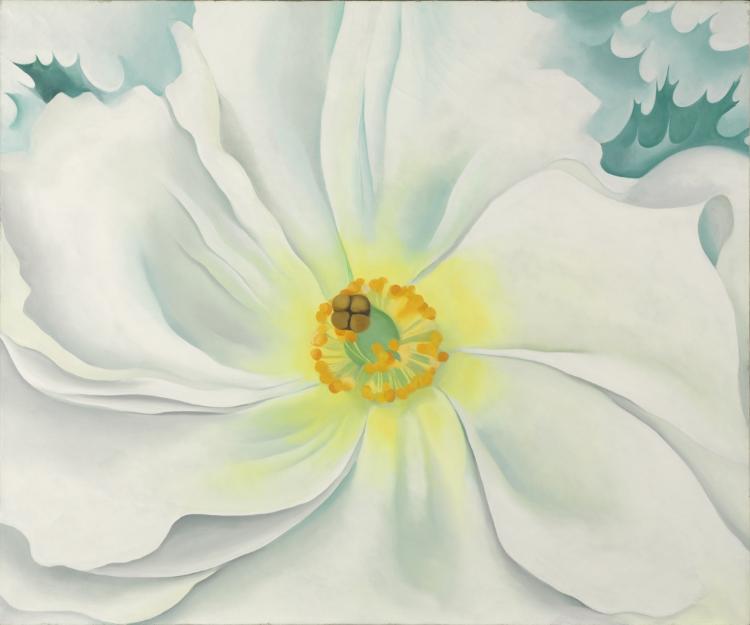
Urban Silhouette Research: The White Flower Protocol
I. Geometric Integrity: The Architecture of the Liminal
The Addison Fashion 2026 executive silhouette finds its structural precedent in two artifacts of civilizational weight: Jacques-Louis David's The Death of Socrates and the Northern Song Meiping vase with waves. These are not decorative references. They are load-bearing geometries. The white flower—our subject—is not a motif but a methodology: the bloom that emerges at the precise intersection of philosophical death and ornamental immortality.
The David canvas operates on a principle of triangular compression. The philosopher's body forms the apex; the disciples' grief-stricken postures create the base. Light enters from the left, carving the white robe into planes of absolute moral clarity. This is not painterly softness—it is architectural drafting. The composition refuses sentiment. Every gesture is locked into a grid of rational containment. For Addison, this translates directly into the 2026 shoulder line: a structured, slightly elevated apex that descends into a controlled drape, never collapsing into the body's natural curvature. The white flower here is the philosopher's hand—suspended, deliberate, refusing to grasp.
Conversely, the Meiping vase presents a continuous curvilinear system. The vessel's profile—broad shoulder, tapered waist, flared foot—is a single unbroken arc. Yet the wave pattern incised upon its surface operates in opposition: dense, repetitive, almost claustrophobic in its rhythmic insistence. The ceramicist has trapped motion within stillness. The vase does not depict water; it is water's disciplined ghost. For the 2026 silhouette, this duality manifests in the tension between a fluid column of fabric and the rigid internal armature that prevents collapse. The white flower is the wave: perpetual, self-referential, indifferent to the vessel's fragility.
II. Structural Poetics: The Executive as Liminal Object
The Addison executive does not dress for the boardroom. She dresses for the threshold—that suspended instant between decision and consequence, between the cup's rim and the lips. The white flower is her emblem because it blooms at the edge of dissolution. It is ivory, not white: a color that carries the weight of bone, of aged paper, of the Meiping's glaze under museum lighting.
Consider the sleeve. In the David, Socrates' left hand points upward—a gesture of instruction, of departure. The fabric falls in a single, unbroken line from shoulder to wrist. No dart interrupts its descent. For 2026, Addison proposes a zero-dart sleeve cut on a radical bias, allowing the fabric to spiral around the arm without a single seam. This is not minimalism as absence; it is minimalism as absolute control. The wave pattern of the Meiping is replaced by the subtle torsion of the weave itself—a self-referential texture that requires no printed ornament.
The torso follows the vase's logic. A Meiping is widest at the shoulder and narrowest at the base. The Addison jacket inverts this: narrow at the shoulder, expanding through the ribcage, then tapering sharply at the waist before releasing into a controlled flare at the hip. This is the inverted vessel—a silhouette that contains rather than pours. The white flower is the point of maximum tension: the waist seam, where the body's breath meets the garment's architecture.
III. Urban Materiality: The Weight of the Invisible
Both the David and the Meiping are objects of heavy lightness. The painting's canvas is stretched taut; the vase's porcelain is fired at 1300 degrees. Neither is fragile in the colloquial sense. They are resilient because their forms have internalized their own destruction. The毒芹 (hemlock) does not shatter Socrates; the kiln does not crack the vase. For Addison, this demands a fabric that behaves like fired clay: compact, cool to the touch, and acoustically dead.
The 2026 collection specifies a triple-ply ivory wool-silk blend, woven in a 2/2 twill with a micro-herringbone that reads as solid from three meters and as a wave pattern from thirty centimeters. This is the urban materiality of the white flower: a textile that reveals its complexity only under scrutiny, that refuses to perform for the casual gaze. The executive who wears it does not announce her presence. She occupies space the way the Meiping occupies a shelf—with the quiet authority of an object that has already survived its own firing.
The finishing is deliberately austere. No visible buttons. No contrast stitching. The closures are hidden magnetic seams, aligned with the body's vertical axis. This is the David's triangle reduced to a single line: the plumb line of the spine. The white flower is not a corsage. It is the structural principle that holds the garment in tension—the invisible force that prevents the wave from breaking, the hand from grasping the cup.
IV. The 2026 Silhouette: A Provisional Definition
The Addison executive silhouette for 2026 is a column with a memory of curvature. It stands at 118 centimeters from nape to hem. The shoulder is extended by 2.5 centimeters beyond the natural acromion, creating a floating plane that echoes the David's leftward light. The waist is suppressed by 4 centimeters, not through darts but through a continuous bias rotation that spirals the fabric inward. The hem falls in a single, unbroken circle—the Meiping's foot, the philosopher's final breath.
This is not a garment for negotiation. It is a garment for the moment before the sentence is spoken. The white flower blooms at the collarbone: a single ivory silk organza petal, stiffened with a hidden wire, positioned precisely where Socrates' gaze meets the void. It does not wilt. It does not open further. It waits.
In the end, both the毒芹杯 and the瓷瓶 teach the same lesson: form is the only available answer to annihilation. The Addison 2026 silhouette does not promise immortality. It promises composure—the composure of the wave that knows it will break, the composure of the philosopher who has already left the room. The white flower is not a symbol of life. It is a symbol of the interval. And the interval, for the urban executive, is the only territory worth inhabiting.