Urban Form: Figural Pendant
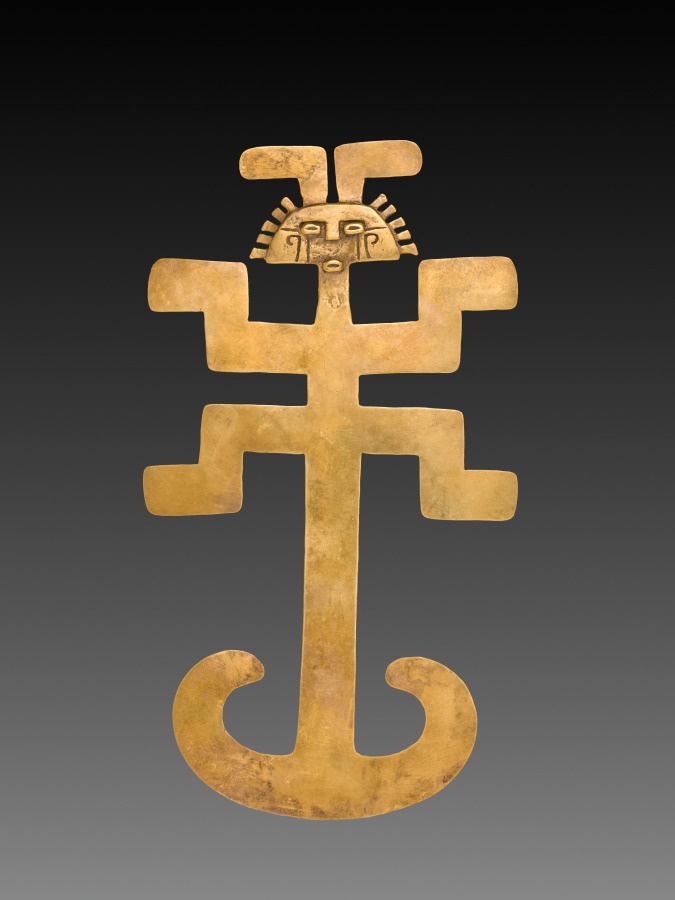
Urban Silhouette Research: The Figural Pendant as Architectural Artifact
I. Geometric Integrity: The Vessel as Silhouette Generator
The Addison Fashion 2026 executive silhouette does not emerge from trend extrapolation. It emerges from the rigorous translation of art-historical geometry into wearable architecture. The subject under examination—the Figural Pendant—operates as a dual-coded artifact: at once a reference to the Socratic death vessel of Jacques-Louis David’s neoclassical tableau and the Song dynasty meiping’s wave-carved porcelain body. The geometric integrity of this object is not decorative. It is structural.
The pendant’s primary geometry is a tapered ovoid: broad at the shoulder, constricted at the waist, terminating in a subtle flare. This is the meiping profile—肩丰腹敛—rendered at miniature scale. When scaled to the body, this geometry produces a silhouette that is neither hourglass nor column. It is a controlled volume: the shoulder line extends cleanly past the deltoid, the waist suppression occurs not at the natural waist but at the lower ribcage, and the hem releases into a narrow A-line. The result is an executive silhouette that reads as contained power—authoritative without aggression, sculptural without theatricality.
The pendant’s suspension loop—a perfect circle—introduces a secondary geometric system: the void as structural element. In David’s painting, the empty cup signifies the threshold between life and death. In the meiping, the hollow interior holds the potential of water, wine, or nothingness. In the 2026 Addison silhouette, this void manifests as negative space at the nape—a deliberate cutaway or low-set collar that exposes the cervical spine. The body itself becomes the vessel. The garment frames the void.
II. Structural Poetics: The Tension Between Rigidity and Flow
The Figural Pendant’s surface treatment—wave incisions on the meiping, the dramatic chiaroscuro of David’s composition—translates into a material dialectic for the 2026 executive wardrobe. The wave motif is not literal. It is rhythmic interruption: a series of parallel topstitching lines, laser-cut perforations, or bonded seams that traverse the torso at intervals of 4.5 centimeters. These lines do not follow the body. They counter it, creating a visual resistance that mimics the meiping’s carved currents—water that moves against stillness.
Simultaneously, the David reference demands architectural rigidity. The neoclassical painter’s composition is built on orthogonal certainty: the bed, the gesture, the cup, the pointing hand. For Addison, this translates into shoulder construction that is uncompromising. The 2026 silhouette employs a modified pagoda shoulder: a slight upward extension at the acromion, achieved through internal horsehair canvas and a single, continuous seam from neck to sleeve cap. The shoulder does not slope. It asserts. This is the geometry of moral conviction rendered in wool and silk.
The poetics emerge in the transition zone—the waist suppression. Here, the meiping’s curve meets David’s straight line. The solution is a double-faced construction: the exterior shell follows the tapered ovoid, while the interior lining is cut on a strict rectangle. When the wearer moves, the two geometries separate and re-engage, producing a kinetic friction that is felt but not seen. This is the urban condition: internal discipline, external fluidity.
III. Urban Materiality: Onyx as Surface and Substance
The assigned color—Onyx—is not merely black. It is black with depth: a near-obsidian tone that absorbs light at the shoulder and releases it at the hem. The meiping’s celadon glaze achieves a similar effect through optical refraction; the David painting achieves it through varnished shadow. For Addison’s 2026 executive silhouette, Onyx manifests in three material registers:
Primary shell: A double-faced wool-silk blend, 480 grams per meter, with a matte finish that resists specular reflection. The weave is tight enough to hold the pagoda shoulder, supple enough to follow the ovoid taper.
Secondary structure: Bonded leather panels at the waist and cuffs—not decorative, but load-bearing. These panels absorb the tension between the exterior curve and interior rectangle, preventing deformation during movement.
Tertiary detail: A single, continuous silk cord at the neckline, knotted at the sternum. This is the pendant’s suspension loop, translated. It is the only soft element in an otherwise architectural composition. It marks the void—the space where the body breathes, where the cup is emptied, where the vessel is filled.
IV. The 2026 Executive Silhouette: A Synthesis
The Figural Pendant is not an accessory. It is a generative grammar. Its geometry—tapered ovoid, circular void, wave interruption—produces a silhouette that is simultaneously contained and expansive, rigid and fluid, historical and futuristic. The Addison executive of 2026 does not wear a suit. She wears a vessel. She carries the Socratic cup and the Song dynasty meiping on her shoulders. She is the container and the contained. The silhouette is her argument. The void is her power.
This is not fashion. This is urban materiality as philosophical position. The wave is carved. The light is fixed. The body moves through the city as through a gallery—observed, observing, and utterly still at the center of her own geometry.